Key Findings
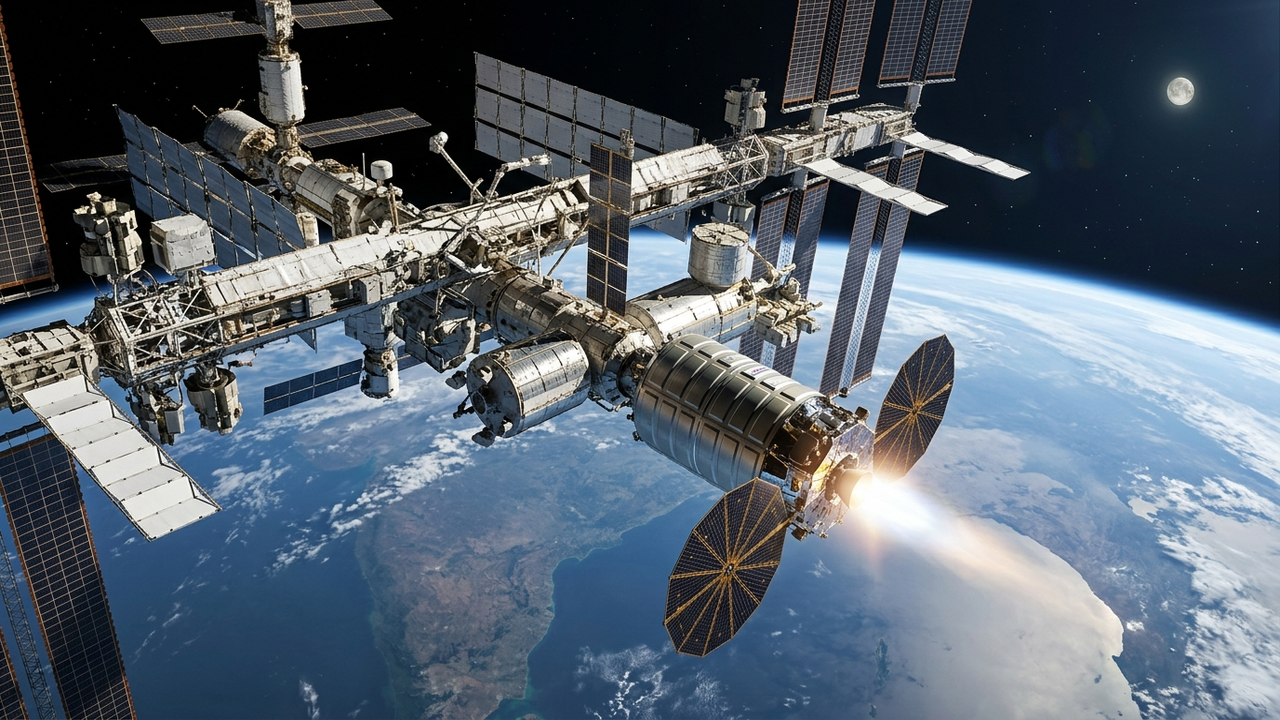
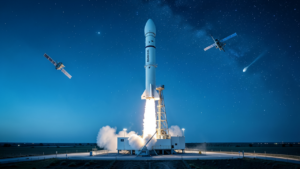
NASA and Northrop Grumman have announced the successful completion of an orbital reboost maneuver for the International Space Station (ISS), utilizing the commercial Cygnus XL cargo spacecraft. The Cygnus XL fired its thrusters for a precise duration of 20 minutes and 43 seconds, successfully elevating the ISS’s orbit by approximately 4.2 kilometers. This precise orbital adjustment is critical for the long-term safe operation of the space station and is indispensable for upcoming resupply and crewed missions.
Technical and Operational Details
The ISS, while orbiting in Low Earth Orbit, gradually loses altitude due to a slight drag from Earth’s residual atmosphere and activities within its microgravity environment. Therefore, regular orbital maintenance (reboosts) is essential. For this particular reboost, Northrop Grumman’s Cygnus XL resupply vehicle played a crucial role. Leveraging its powerful propulsion system, the Cygnus XL executed a thruster burn at a specified time and duration, increasing the ISS’s orbital energy. The precise burn time of 20 minutes and 43 seconds was based on meticulous orbital mechanics calculations. This action resulted in an average altitude increase of about 4.2 kilometers, bringing the ISS back to its planned orbital parameters. This specific reboost was conducted as a ‘phasing’ adjustment in anticipation of the scheduled launch of the Russian Progress 96 resupply spacecraft in early September. Phasing refers to the maneuver of precisely aligning the orbital positions and velocities of the ISS and an approaching spacecraft to enable safe and efficient rendezvous and docking. Such precise orbital control capabilities underpin the foundation of international space cooperation.
Background and Industry Context
Since its initial launch in 1998, the ISS has served for over 25 years as a symbol of humanity’s permanent presence in space, functioning as a platform for scientific research, technological demonstration, and international collaboration. Its operation requires diverse support, including resupply, crew transportation, and orbital maintenance. Commercial spacecraft like the Cygnus resupply vehicle were developed as part of NASA’s strategy to reduce ISS operational costs by leveraging private partnerships and fostering a new space transportation industry. This recent success further demonstrates the indispensable role commercial spaceflight services play in ISS operations, certifying the reliability and maturity of commercial activities in Low Earth Orbit. It also reinforces the importance of overall on-orbit servicing technologies, particularly for debris collision avoidance and life extension.
Strategic Significance and Outlook
The success of this ISS orbital reboost strengthens the foundation for the International Space Station’s continued safe operation into the 2030s and its ongoing scientific and technical missions. Collaboration with commercial partners like Northrop Grumman will remain critical for ISS operations, fostering the growth of the commercial space sector. Furthermore, advancements in orbital maintenance technologies provide vital insights for the construction of future, long-duration space infrastructure, such as commercial space stations and lunar orbital platforms like Gateway. Precision flight management technologies in space are expected to become increasingly vital for addressing the growing challenges of space traffic and debris, and for maintaining a sustainable space environment.
Get our weekly technology intelligence — free
Receive an infographic that lets you judge at a glance whether each field’s analysis report is worth reading.
Subscribe Free — Weekly Tech Intelligence
By subscribing, you’ll receive Troy-Technical’s weekly technology intelligence newsletter.
- Your email and selected fields are used only to deliver the newsletter.
- We never share your information with third parties.
- You can unsubscribe anytime via the link in each email.
See our Privacy Policy for details.
Takes about a minute · Unsubscribe anytime




Comments