Key Findings
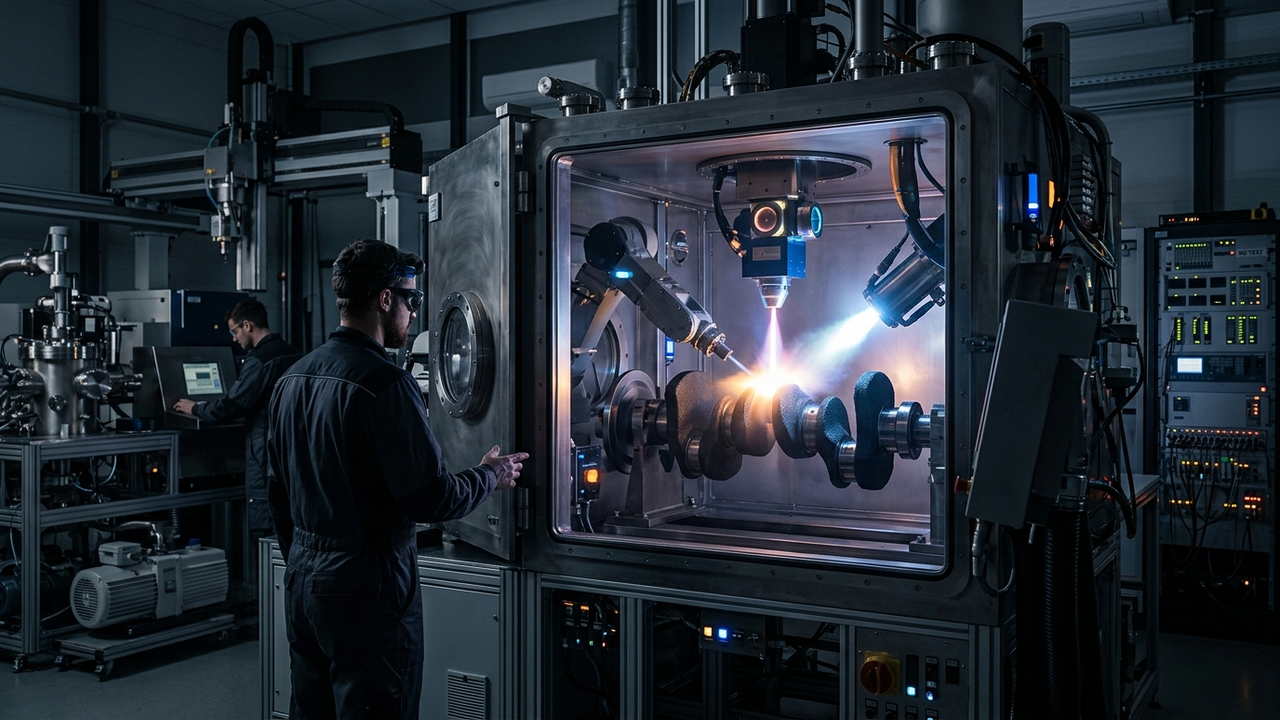
Researchers at the Fraunhofer Institute for Surface Engineering and Thin Films IWS have announced a significant breakthrough in the development of tetrahedral amorphous carbon (ta-C) coatings, achieving extremely high wear resistance and low friction. Leveraging a unique plasma filter technology within their Laser-Arc process, they successfully produced ultrathick ta-C coatings, reaching up to 100 micrometers. This advancement overcomes the long-standing limitations of conventional thin-film systems, promising substantial improvements in the lifespan and energy efficiency of industrial machinery.
Technical / Clinical Details
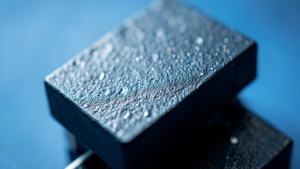
Ta-C coatings, a type of ‘diamond-like carbon’ (DLC), are prized for their exceptional hardness and wear resistance. However, achieving thicknesses beyond a few micrometers has been challenging due to high internal stresses. The Fraunhofer IWS team innovated by integrating plasma filter technology into the Laser-Arc deposition process, which effectively suppresses particulate contamination and reduces internal stresses during deposition. This allows for the formation of coatings up to 100 micrometers thick while maintaining superior adhesion and stability. These ultrathick ta-C coatings are designed for high-load and high-friction industrial applications, such as engine components, cutting tools, and pump parts, offering unprecedented levels of durability and efficiency. The significant reduction in friction coefficient translates directly into lower energy consumption for mechanical systems and considerable operational cost savings.
Background & Context
Modern industry demands ever-increasing productivity, reliability, and sustainability, making high-performance materials and surface technologies indispensable. Component wear and energy loss due to friction represent major challenges for manufacturing. While ta-C coatings have long been recognized for their superior mechanical properties, the technical barrier to achieving greater thickness has limited their widespread application. The Fraunhofer IWS breakthrough dismantles this barrier, vastly expanding the potential application scope for high-performance coatings. This innovation is critically positioned to support ‘Industry 4.0’ and ‘Green Manufacturing’ initiatives.
Strategic Significance & Outlook
The newly developed ultrathick ta-C coating technology is expected to drive innovative applications across diverse sectors, including the automotive, aerospace, mechanical engineering, and medical technology industries. Adoption is likely to be particularly strong in environments demanding extended lifespan and improved energy efficiency. The research team plans to focus on further optimizing coating properties, expanding application to different substrates, and enhancing the scalability of the production process for industrial implementation. This technology is poised to foster the development of high-value products and contribute to the realization of a sustainable society.
Source: https://idw-online.de/en/news876344
Get our weekly technology intelligence — free
Receive an infographic that lets you judge at a glance whether each field’s analysis report is worth reading.
Subscribe Free — Weekly Tech Intelligence
By subscribing, you’ll receive Troy-Technical’s weekly technology intelligence newsletter.
- Your email and selected fields are used only to deliver the newsletter.
- We never share your information with third parties.
- You can unsubscribe anytime via the link in each email.
See our Privacy Policy for details.
Takes about a minute · Unsubscribe anytime



Comments