Key Findings
A team of scientists has achieved a remarkable breakthrough with the development of a next-generation zinc-iodine battery capable of achieving a full charge in just 3 minutes, boasting an extraordinary cycle life exceeding 60,000 cycles, and featuring inherent non-flammability. This innovative battery technology holds the potential to fundamentally resolve longstanding issues concerning safety, charging speed, and durability across a wide range of applications, including electric vehicles (EVs) and large-scale grid energy storage systems. This discovery is attracting significant attention from researchers, engineers, and investors alike as it sets a new benchmark for battery technology.
Technical / Clinical Details
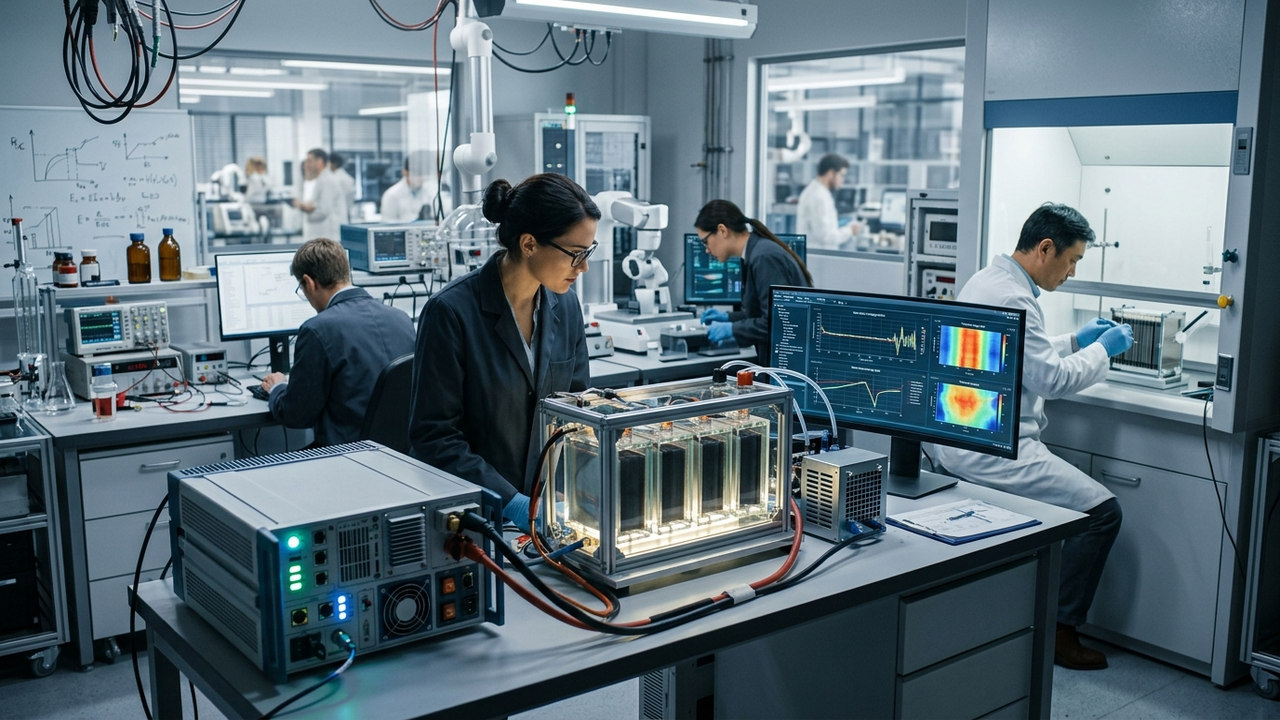
The newly developed zinc-iodine battery is a type of redox flow battery, utilizing zinc as the anode and iodine as the cathode, and employs an aqueous electrolyte, which intrinsically ensures high safety. Its most striking features are its rapid charging capability and extended lifespan. The research team demonstrated over 90% charge completion within 3 minutes through optimized electrolyte composition and electrode structures. Furthermore, it achieved an astonishing 60,000 charge-discharge cycles, several to tens of times greater than typical lithium-ion batteries, attributed to the high stability of its materials and the excellent reversibility of electrode reactions. Critically, because it uses an aqueous electrolyte, the risk of fire—a major concern with lithium-ion batteries—is virtually eliminated, significantly enhancing safety. This superior safety profile is a paramount factor for large-scale deployments in residential and public infrastructure.
Background & Context
Today’s energy storage market is dominated by lithium-ion batteries, but they are consistently challenged by high costs, resource constraints, and the risk of thermal runaway. The rapid adoption of EVs, in particular, has intensified demand for faster charging and enhanced safety. Zinc-based batteries have been researched for many years as a lithium alternative due to their use of inexpensive and abundant resources, though past challenges included cycle life and energy density. This breakthrough in zinc-iodine batteries simultaneously addresses these historical issues, positioning it as a potential game-changer for long-duration stationary storage and the EV sector, where rapid charging infrastructure is essential.
Strategic Significance & Outlook
The development of this next-generation zinc-iodine battery is expected to have an immeasurable impact on the energy storage sector. Its 3-minute charging capability could bring the EV user experience closer to that of gasoline-powered vehicles, accelerating consumer EV adoption. The 60,000-cycle lifespan will dramatically reduce battery replacement frequency, lowering the total cost of ownership (TCO). Its non-flammable nature will facilitate the easier deployment of large-scale energy storage systems in urban areas and residential zones, significantly contributing to renewable energy integration and grid stabilization. Future challenges will involve optimizing manufacturing costs at a practical scale and validating long-term performance under various environmental conditions. Should commercialization succeed, this technology is poised to become a critical pillar in realizing a sustainable energy future.
Get our weekly technology intelligence — free
Receive an infographic that lets you judge at a glance whether each field’s analysis report is worth reading.
Subscribe Free — Weekly Tech Intelligence
By subscribing, you’ll receive Troy-Technical’s weekly technology intelligence newsletter.
- Your email and selected fields are used only to deliver the newsletter.
- We never share your information with third parties.
- You can unsubscribe anytime via the link in each email.
See our Privacy Policy for details.
Takes about a minute · Unsubscribe anytime








Comments