
Key Findings
A review published on ResearchGate reports that carbon nanotube (CNT)-based biosensors are emerging as highly promising platforms for non-invasive biofluid analysis. These sensors leverage their high electrical conductivity, vast surface area, tunable optical properties, and diverse surface chemistry to demonstrate the capability of detecting low-concentration biomarkers with picogram per milliliter sensitivity.
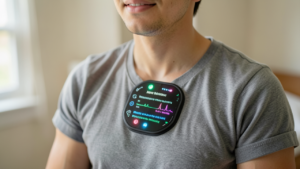
Technical & Clinical Details
CNT-based biosensors, owing to their exceptional material properties, enable the detection of trace biomarkers in non-invasive biofluids, a feat often challenging for conventional sensors. The high electrical conductivity of CNTs contributes to signal amplification and rapid response, while their large surface area facilitates efficient immobilization and binding of analyte molecules. Furthermore, tunable optical properties allow for optimization of sensitivity in fluorescence or Raman scattering-based detection. The review emphasizes that wearable biosensing is transitioning from single-signal activity tracking to multimodal AI-assisted health monitoring, combining biochemical information from various non-invasive biofluids like sweat, interstitial fluid, and tears, with biophysical data streams. Specifically, CNT sensors are reported to detect protein biomarkers such as glucose, myoglobin, and PSA (prostate-specific antigen) at extremely low concentrations, on the order of picograms per milliliter, representing a breakthrough in low-concentration biomarker detection in non-invasive samples.
Background & Context
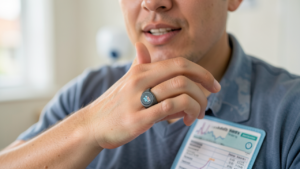
The demand for non-invasive and continuous health monitoring is rapidly increasing with the advancements in personalized and preventive medicine. Traditional blood tests are invasive and limit the frequency of sampling. Biofluids like sweat, interstitial fluid, and tears are valuable sources of disease biomarkers and can be collected non-invasively, making them ideal targets for wearable sensors. CNTs, with their nanoscale structure and superior properties, provide an ideal platform for high-sensitivity detection of trace biomarkers in these biofluids. The combination of multimodal sensing with AI enables the extraction of meaningful information from complex biological data, allowing for a more comprehensive assessment of health status.
Strategic Significance & Outlook
CNT-based biosensors hold the potential to revolutionize the field of non-invasive biofluid analysis. In the future, this technology is expected to evolve towards further integration into wearable devices, enhanced multiplexing capabilities for simultaneous detection of multiple biomarkers, and the provision of personalized health advice through AI-driven real-time data analysis. Broad clinical applications are anticipated, ranging from glucose monitoring to early screening for cardiovascular diseases and cancer, as well as detection of inflammatory markers. This advancement will reduce patient burden while enabling a more detailed understanding of health status and opening new avenues for early disease detection and prevention.
Get our weekly technology intelligence — free
Receive an infographic that lets you judge at a glance whether each field’s analysis report is worth reading.
Subscribe Free — Weekly Tech Intelligence
By subscribing, you’ll receive Troy-Technical’s weekly technology intelligence newsletter.
- Your email and selected fields are used only to deliver the newsletter.
- We never share your information with third parties.
- You can unsubscribe anytime via the link in each email.
See our Privacy Policy for details.
Takes about a minute · Unsubscribe anytime






Comments