
Key Findings
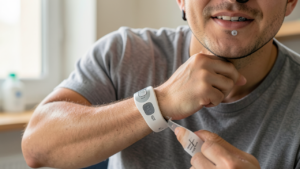
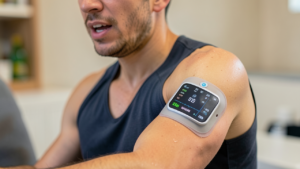
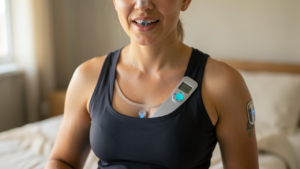
A research team at Binghamton University (State University of New York) has developed a self-powered, disposable paper patch capable of non-invasively monitoring glucose levels in sweat during exercise. This groundbreaking wearable sensor requires no external power supply or complex reading devices, offering an exceptionally convenient diabetes management solution for patients.
Technical / Clinical Details
The core of this paper patch is a glucose/oxygen enzyme fuel cell constructed on a paper substrate. This fuel cell generates electrical energy by reacting glucose in sweat with oxygen from the air, thereby powering the sensor. The sensor measures sweat glucose concentration based on changes in the generated current and can transmit these results to connected devices like smartphones. A key design feature is its flexible, bandage-like form factor, allowing it to adhere snugly to the skin and remain comfortable during exercise. Compared to conventional, expensive, and bulky glucose meters or CGMs, this paper patch offers low-cost mass production potential and significant hygienic advantages due to its disposable nature.
Background & Context
For individuals with diabetes, blood glucose fluctuations, especially during exercise, are difficult to predict, and hypoglycemia poses a serious risk. Traditional finger-prick blood glucose measurement is painful and unsuitable for continuous monitoring. Existing Continuous Glucose Monitoring (CGM) devices are expensive, creating a financial burden for some patients. Binghamton University’s research aims to overcome these challenges by enabling accessible and convenient glucose monitoring. This non-invasive, sweat-based approach opens new possibilities not only in medical fields but also in fitness and sports nutrition for real-time assessment of an individual’s metabolic state.
Strategic Significance & Outlook
This self-powered paper patch is expected to find wide applications in exercise physiology research, optimizing athlete performance, personalized training, and as a general health management tool for consumers. Future research will focus on validating its accuracy and reliability under various environmental conditions and further optimizing the manufacturing process. The long-term vision includes evolving into a multifunctional patch capable of simultaneously measuring other biomarkers such as lactate and electrolytes, potentially forming a new paradigm in wearable biosensor technology.
Get our weekly technology intelligence — free
Receive an infographic that lets you judge at a glance whether each field’s analysis report is worth reading.
Subscribe Free — Weekly Tech Intelligence
By subscribing, you’ll receive Troy-Technical’s weekly technology intelligence newsletter.
- Your email and selected fields are used only to deliver the newsletter.
- We never share your information with third parties.
- You can unsubscribe anytime via the link in each email.
See our Privacy Policy for details.
Takes about a minute · Unsubscribe anytime


Comments