Key Findings
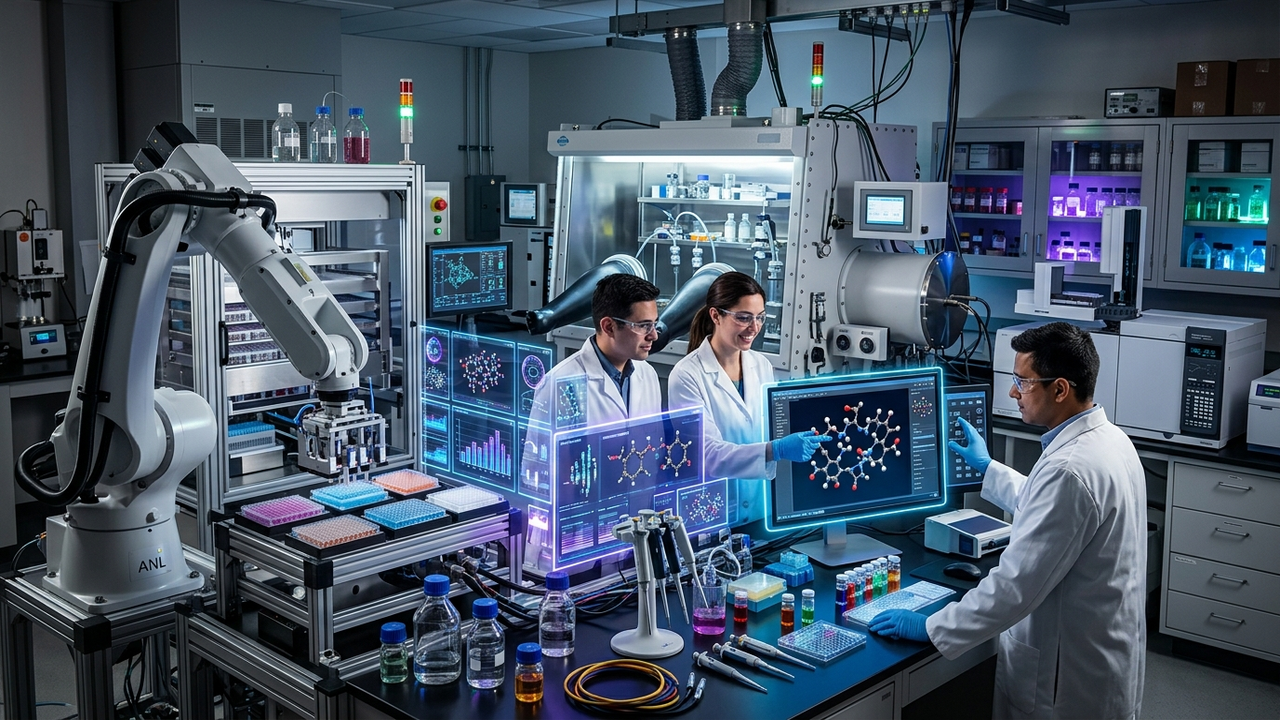
Researchers at Argonne National Laboratory have demonstrated a groundbreaking AI-driven methodology that dramatically accelerates the discovery of new materials for advanced batteries. This innovative approach enabled the identification of 18 promising stable material candidates from a pool of 500,000 virtual options in merely 80 hours, ultimately leading to the pinpointing of five novel materials. Critically, this process directly resulted in the synthesis of the N2116 electrolyte, a sustainable alternative that offers significantly faster charging, higher energy density, and extended lifespan compared to existing battery technologies.
Technical & Clinical Details
The research team employed advanced AI models trained on extensive materials databases to predict materials meeting stringent criteria for stability, electrochemical performance, and sustainability. The AI system showcased an unparalleled ability to execute a process that typically spans years of traditional simulation and experimental work within a matter of days. The initially identified 18 candidates underwent rigorous validation through high-performance computing (HPC) simulations, which further refined the selection to five materials with distinct properties. The N2116 electrolyte, in particular, holds immense potential for pushing the performance boundaries of lithium-ion batteries, paving the way for advancements in electric vehicles (EVs) and grid-scale renewable energy storage systems.
Background & Industry Context
Historically, the discovery of functional materials in materials science has been a painstaking, trial-and-error process heavily reliant on exhaustive experimentation and simulation. The integration of AI and HPC, however, is fundamentally altering this paradigm. Battery materials represent a critical frontier in the global energy transition, with increasing demand for high-performance and sustainable solutions. AI emerges as a powerful tool to navigate the vast chemical space efficiently, rapidly identifying promising candidates and effectively resolving research and development bottlenecks. This shift is crucial for meeting the urgent need for advanced energy storage.
Strategic Significance & Outlook
The success of this AI-driven materials discovery method extends its implications far beyond battery technology, promising transformative impacts across various other scientific and technological domains, including catalysis, pharmaceuticals, and electronic materials. In the future, AI could autonomously conduct ‘inverse design’ of materials, directly deriving material compositions and structures from predefined performance objectives. Argonne National Laboratory’s achievement underscores the critical role of AI in accelerating innovation towards a more sustainable future, setting a new benchmark for computational materials science.
Source: #
Get our weekly technology intelligence — free
Receive an infographic that lets you judge at a glance whether each field’s analysis report is worth reading.
Subscribe Free — Weekly Tech Intelligence
By subscribing, you’ll receive Troy-Technical’s weekly technology intelligence newsletter.
- Your email and selected fields are used only to deliver the newsletter.
- We never share your information with third parties.
- You can unsubscribe anytime via the link in each email.
See our Privacy Policy for details.
Takes about a minute · Unsubscribe anytime





Comments