Key Findings
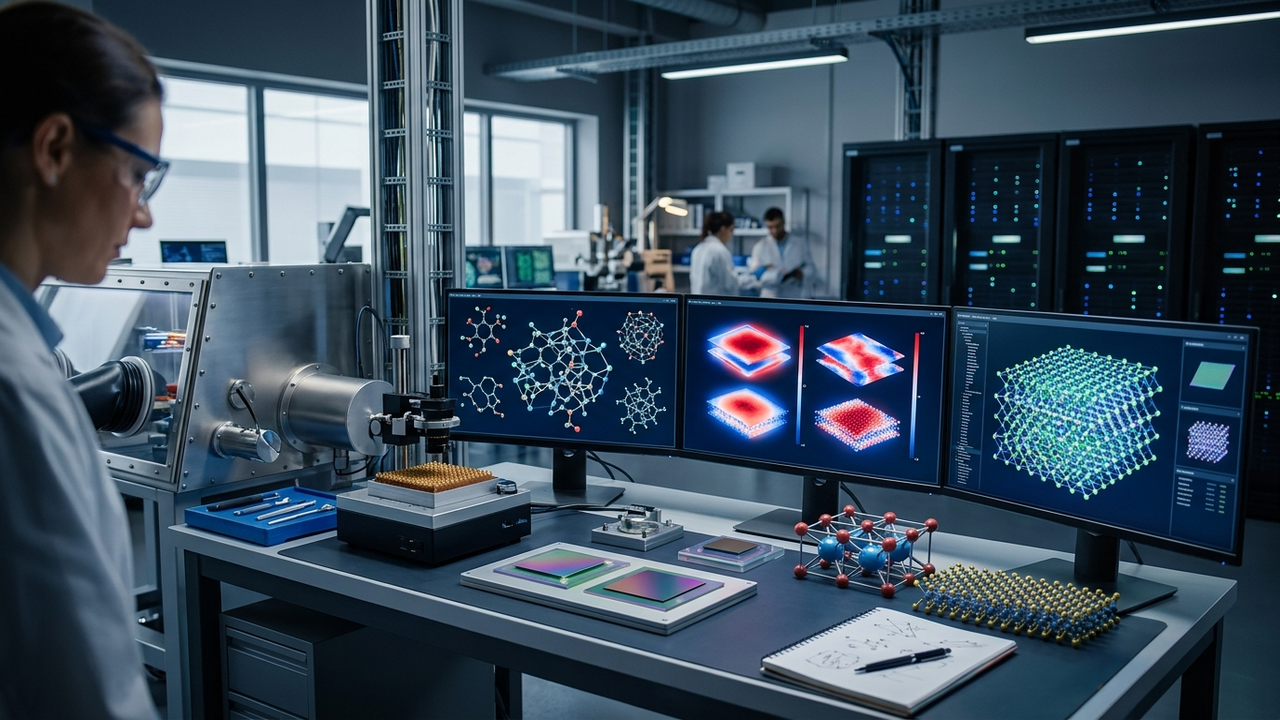
Machine learning (ML) is revolutionizing the design process for magnetic functional alloys (MFAs), particularly accelerating the discovery of novel 2D magnets. An analysis of Web of Science data indicates that ML has significantly contributed to the development of diverse MFAs, including magnetocaloric, magnetostrictive, magnetoresistive, and shape memory alloys, over the past decade. Notably, Elrashidy et al. successfully combined generative Graph Neural Networks (GNNs) with high-throughput Density Functional Theory (DFT) to efficiently discover unprecedented 2D magnets, demonstrating the powerful applicability of ML in this domain.
Technical / Clinical Details
The application of ML in MFA design is predicated on learning complex non-linear relationships between material composition, microstructure, and magnetic properties. This enables researchers to efficiently screen promising candidates from the vast material space, significantly reducing experimental validation efforts. Generative GNNs possess the capability to learn from existing material data and propose new MFA candidates with novel crystal structures and compositions. High-throughput DFT calculations are essential for rapidly and accurately evaluating the magnetic properties and stability of these candidates, identifying materials worthy of experimental synthesis. The integrated approach employed by Elrashidy et al. effectively explored a design space for 2D magnets that might have been overlooked by traditional search methods, illustrating a paradigm shift in discovery methodology.
Background & Context
Magnetic functional alloys play a critical role in a wide array of advanced technologies, including data storage, sensors, energy conversion, and medicine. However, the vastness of their compositional space and the complexity of property prediction have made new material discovery exceptionally challenging. ML offers a powerful tool to overcome these hurdles. Particularly, as demand for higher-performance and more energy-efficient devices grows, ML-driven materials design is becoming an indispensable factor for maintaining and enhancing industrial competitiveness. Leading research institutions in Japan, Europe, and the United States are actively pursuing materials genome projects and materials informatics research, accelerating international competition and collaboration in this field.
Strategic Significance & Outlook
The future of ML-applied MFA design will further evolve with more advanced algorithms, the construction of larger high-quality datasets, and enhanced integration with autonomous laboratories. Generative models are expected to play an increasingly central role in inverse materials design, bolstering AI’s ability to autonomously ‘create’ materials that fulfill specific functional targets. This acceleration is anticipated to lead to the discovery of innovative MFAs supporting next-generation technologies, such as room-temperature magnetocaloric materials, highly efficient magnetic recording media, and biocompatible magnetic materials. Going forward, the closed-loop integration between computational predictions and experimental validation will intensify, leading to a dramatic increase in the efficiency and speed of MFA research, impacting industries globally from consumer electronics to sustainable energy solutions.
Get our weekly technology intelligence — free
Receive an infographic that lets you judge at a glance whether each field’s analysis report is worth reading.
Subscribe Free — Weekly Tech Intelligence
By subscribing, you’ll receive Troy-Technical’s weekly technology intelligence newsletter.
- Your email and selected fields are used only to deliver the newsletter.
- We never share your information with third parties.
- You can unsubscribe anytime via the link in each email.
See our Privacy Policy for details.
Takes about a minute · Unsubscribe anytime









Comments