Key Findings
China is taking a proactive leadership role in the international standardization of solid-state batteries for electric vehicles (EVs). On August 21, 2026, the International Electrotechnical Commission (IEC) approved a China-led proposal for an international standard on solid-state traction batteries. This international standard aligns with China’s national standard GB/T 43568-2026, which includes a 0.5% mass loss threshold for clear classification of solid-state batteries. Complementing this, the Chinese government introduced preferential policies, levying a 2% consumption tax on conventional lithium-ion batteries starting September 1, 2026, while exempting solid-state and sodium-ion batteries from this tax until the end of 2028 to foster industry growth.
Technical and Manufacturing Details
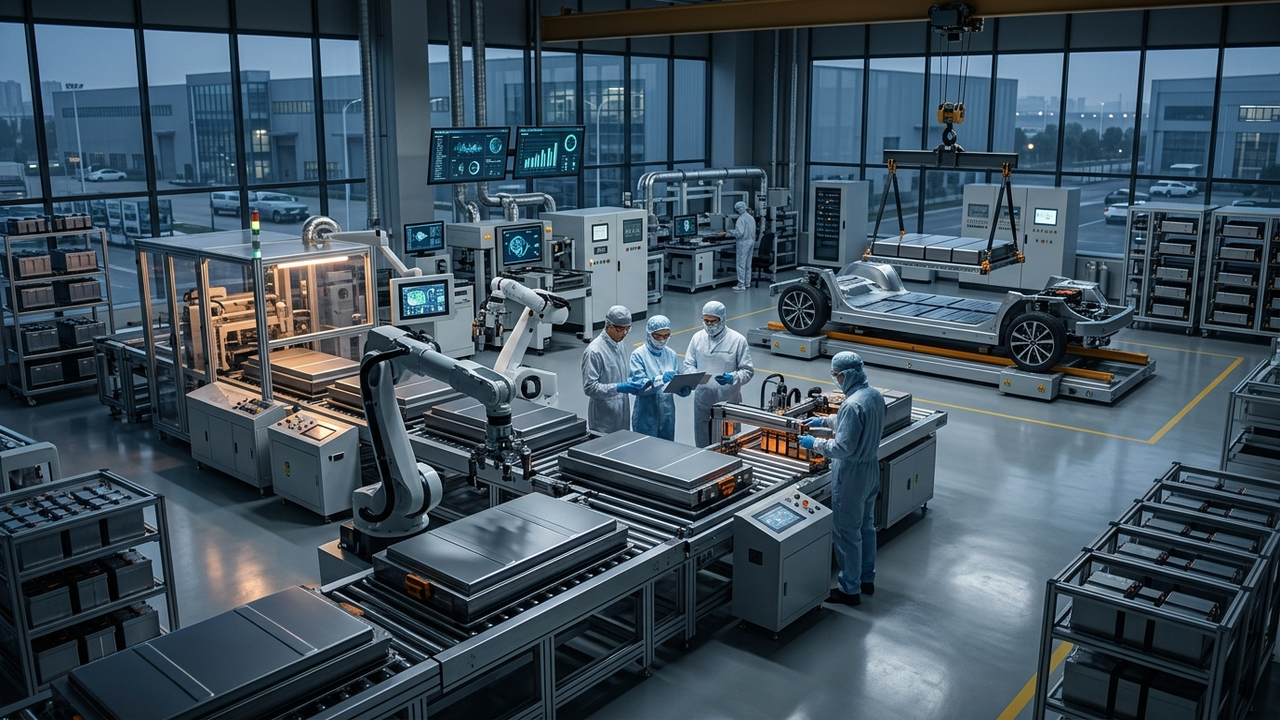
Domestic battery manufacturers are responding actively to these developments by accelerating pilot line expansions and technological advancements. Sunwoda, for instance, has commenced operations of its 0.2 GWh solid-state battery sample production line, targeting an energy density of 400 Wh/kg. Furthermore, the Yibin Smart Solid-State Battery Innovation Centre has successfully achieved roll-to-roll production of composite lithium metal anode materials at gram to kilogram scales, aiming for energy densities of 400-500 Wh/kg. These accomplishments signify China’s comprehensive ecosystem development, spanning from advanced material research to scalable manufacturing processes for solid-state batteries.
Background and Industry Context
Solid-state batteries are garnering significant attention as a next-generation technology poised to outperform current lithium-ion batteries in safety, energy density, and longevity, primarily by eliminating liquid electrolytes. China, a global leader in both the EV market and battery industry, is strategically advancing solid-state battery technology development and standardization to secure international dominance in this sector. The establishment of international standards is crucial for ensuring technological compatibility and facilitating efficient deployment across the entire supply chain. Moreover, the tax exemption policy serves as a powerful incentive for domestic companies to invest in solid-state battery R&D and production, thereby accelerating market penetration.
Future Outlook
China’s push for international solid-state battery standards and its robust support for the domestic industry are expected to profoundly impact the future of the global EV market. The adoption of international standards will set technical benchmarks for battery and automotive manufacturers worldwide, fostering innovation and competition. While significant technical challenges remain for the mass production of solid-state batteries, China’s strong policy backing and substantial R&D investments are highly likely to accelerate their resolution. Automotive manufacturers like Chery and Changan have also announced plans to complete vehicle validation by 2027 and take initial steps towards mass production, indicating that tangible commercialization is drawing nearer.
Get our weekly technology intelligence — free
Receive an infographic that lets you judge at a glance whether each field’s analysis report is worth reading.
Subscribe Free — Weekly Tech Intelligence
By subscribing, you’ll receive Troy-Technical’s weekly technology intelligence newsletter.
- Your email and selected fields are used only to deliver the newsletter.
- We never share your information with third parties.
- You can unsubscribe anytime via the link in each email.
See our Privacy Policy for details.
Takes about a minute · Unsubscribe anytime






Comments