Key Findings
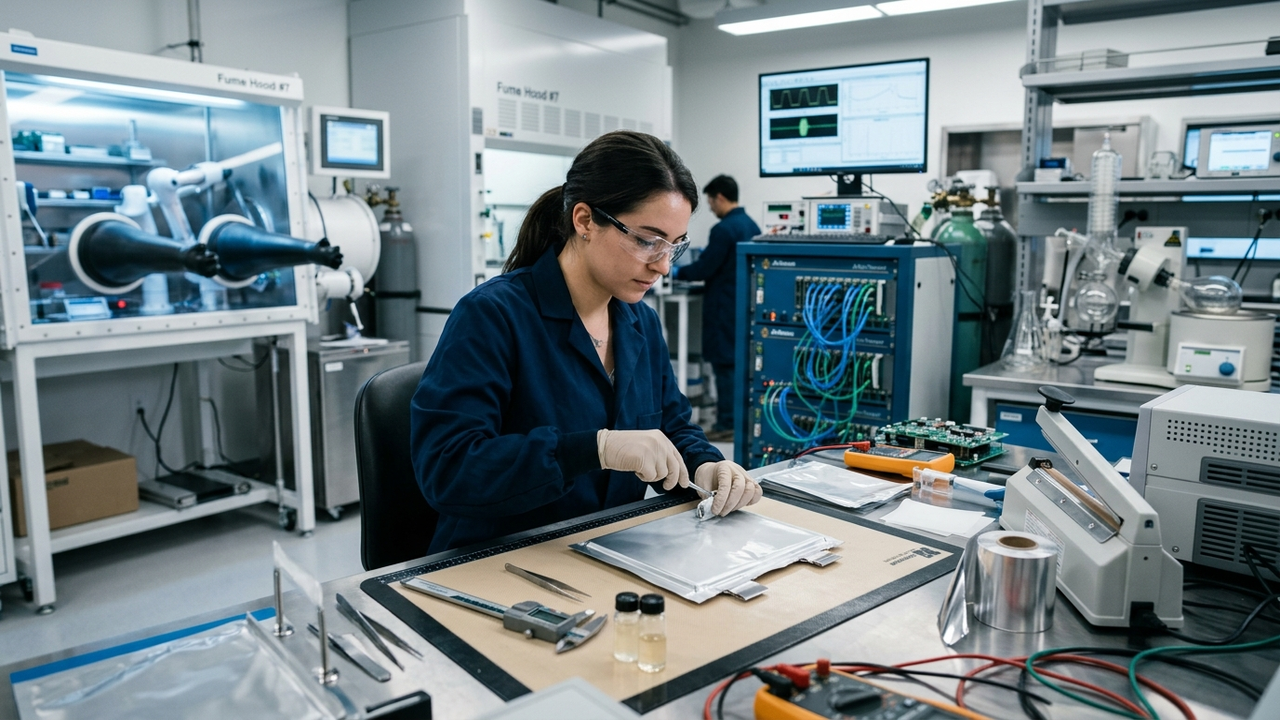
Recent research highlights the transformative potential of locally concentrated gel polymer electrolytes (GPEs) and silsesquioxane-based GPEs to dramatically enhance the performance and safety of all-solid-state lithium batteries. These innovative electrolytes optimize lithium ion (Li+) behavior by forming anion-rich Li+ solvation sheaths, which in turn accelerate Li+ desolvation and effectively stabilize both cathode and anode interfaces. This significant advance has enabled the realization of high-voltage 4.7 V all-solid-state 18650 lithium metal batteries, 4.6 V industrial cylindrical lithium-ion batteries, and 6.08 Ah pouch cells delivering an impressive specific energy of 511.2 Wh kg-1.
Technical Details
Locally concentrated gel polymer electrolytes dissolve high concentrations of lithium salts in minimal solvent, leading to improved lithium ion transference numbers and suppressed undesirable side reactions compared to conventional liquid electrolytes. Silsesquioxane-based GPEs, with their unique molecular architecture, achieve a balance between mechanical strength and ionic conductivity. The deployment of these electrolytes significantly reduces interfacial resistance between the lithium metal anode and the solid electrolyte, effectively mitigating lithium dendrite formation. This leads to substantial improvements in battery cycle life and safety, with the 4.7 V high-voltage operation directly translating to higher energy density. Crucially, multiple chemical design principles have been incorporated into the cell design, ensuring intrinsic safety at various levels.
Background and Industry Context
All-solid-state batteries are anticipated as a next-generation technology to address key limitations of existing lithium-ion batteries, particularly safety concerns (thermal runaway risk) and energy density (EV range limitations). However, major hurdles to commercialization have been the high interfacial resistance between solid electrolytes and electrodes, and dendrite formation when utilizing lithium metal anodes. The highly concentrated gel polymer electrolytes presented in this study offer an effective solution to these challenges, proving particularly groundbreaking by enabling both high voltage and high energy density. This technology holds potential for a breakthrough, especially in electric vehicles and high-power industrial applications.
Future Outlook
These research findings represent a critical milestone towards the practical implementation of all-solid-state lithium metal batteries. The combination of a 4.7 V high voltage and 511.2 Wh kg-1 specific energy could dramatically extend the driving range of EVs and bring about revolutionary changes in sectors such as drones and mobile devices. Future efforts will focus on establishing mass production techniques for these electrolytes and achieving cost reductions. Furthermore, ongoing validation of long-term reliability and stability under various operating conditions is expected to clarify the path toward widespread commercialization.
Get our weekly technology intelligence — free
Receive an infographic that lets you judge at a glance whether each field’s analysis report is worth reading.
Subscribe Free — Weekly Tech Intelligence
By subscribing, you’ll receive Troy-Technical’s weekly technology intelligence newsletter.
- Your email and selected fields are used only to deliver the newsletter.
- We never share your information with third parties.
- You can unsubscribe anytime via the link in each email.
See our Privacy Policy for details.
Takes about a minute · Unsubscribe anytime







Comments