Key Findings
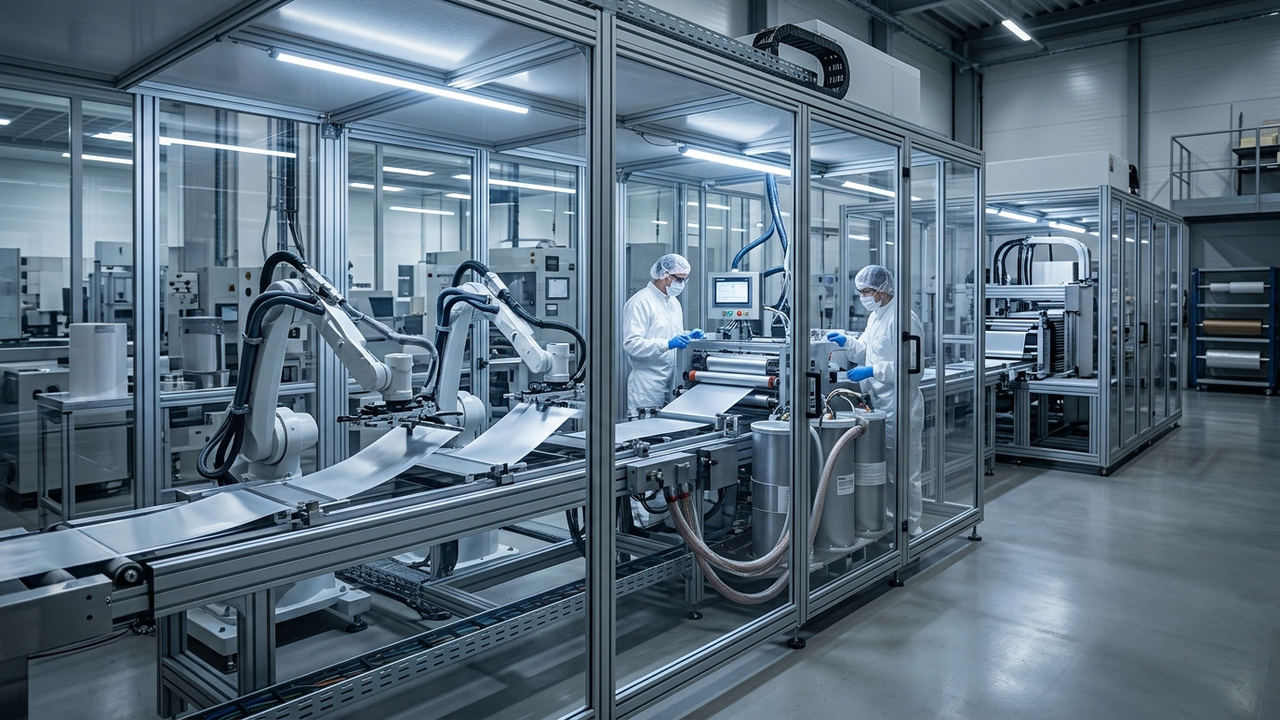
The year 2026 is emerging as a critical inflection point for the commercialization of all-solid-state battery technology. Major battery manufacturers and automotive companies are activating pilot lines and disclosing concrete production roadmaps. Notably, QuantumScape initiated operations of its ‘Eagle’ pilot line in February, and Solid Power is set to launch its continuous electrolyte production line in the fourth quarter, representing significant strides towards the practical application of sulfide-based solid-state batteries.
Technical and Manufacturing Details
Samsung SDI has committed a substantial investment of approximately 25 trillion Korean won (roughly 20 billion USD) to commence mass production of solid-state batteries at its Ulsan factory in South Korea by late 2027. This initiative leverages the company’s proprietary high-capacity and stable sulfide solid electrolyte and anode-free battery technologies. Concurrently, Chinese battery giants CATL and automotive manufacturer BYD have both announced plans to operate their prototype lines by 2027, intensifying competition in the solid-state battery sector. Toyota Motor Corporation maintains its target of introducing solid-state battery technology into its Lexus brand EVs between 2027 and 2028, a development closely watched by the industry given its long-standing research in this field.
Background and Industry Context
Solid-state batteries are widely anticipated as a ‘game-changer’ for electric vehicles (EVs) and energy storage systems (ESS) due to their inherent advantages over conventional lithium-ion batteries, including higher energy density, enhanced safety, and extended lifespan. By replacing liquid electrolytes with solid counterparts, the risk of thermal runaway is significantly reduced, enabling the use of higher-capacity lithium metal anodes. The activation of these pilot lines signifies a critical transition from research and development to scaled manufacturing, with ongoing efforts focused on resolving technical challenges and achieving cost reductions.
Future Outlook
The pilot line operations in 2026 are indispensable steps for technical validation and optimization of production processes. Data collected from these pilot lines over the next few years will largely dictate the commercialization timeline and performance specifications of solid-state batteries. Key determinants for market entry will include the establishment of continuous production technologies, reduction in material costs, and ensuring the reliability and durability of the final products. Investors and the automotive industry are closely monitoring these advancements to gauge the concrete impact solid-state batteries will have on the EV market.
Source: https://exoswan.com/solid-state-battery-stocks
Get our weekly technology intelligence — free
Receive an infographic that lets you judge at a glance whether each field’s analysis report is worth reading.
Subscribe Free — Weekly Tech Intelligence
By subscribing, you’ll receive Troy-Technical’s weekly technology intelligence newsletter.
- Your email and selected fields are used only to deliver the newsletter.
- We never share your information with third parties.
- You can unsubscribe anytime via the link in each email.
See our Privacy Policy for details.
Takes about a minute · Unsubscribe anytime








Comments