Background and Technical Challenges
The rapid evolution of physical AI systems, including humanoid robots, demands increasingly advanced mobility, extended operating hours, and absolute safety. Traditional liquid-electrolyte lithium-ion batteries often pose risks of ignition under specific conditions, and their weight and size can impose significant constraints on system design. All-solid-state batteries (ASSBs) offer the potential to resolve these challenges faced by robots and dramatically enhance their performance. However, hurdles in robustness, flexibility, and mass production costs have remained barriers to their practical implementation.
Key Findings and Technical Breakthroughs
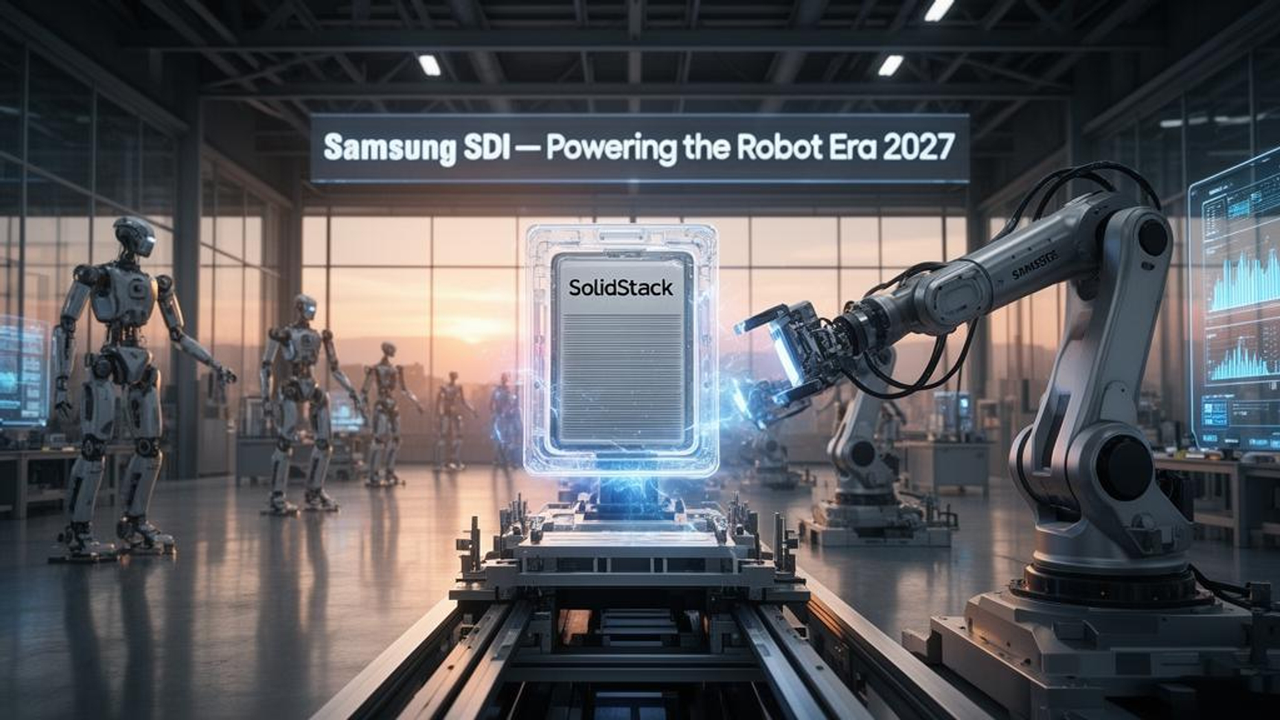
Samsung SDI unveiled groundbreaking advancements in all-solid-state battery technology and its strategic application areas at the “InterBattery 2026” conference in Seoul. The company positioned ASSBs as a “game-changer” for the emerging robotics era.
- Mass Production Readiness Target: Samsung SDI aims to complete preparations for mass production of all-solid-state batteries by 2027. This indicates that the transition from laboratory achievements to commercial production is imminent.
- New Brand “SolidStack”: The company introduced “SolidStack,” its proprietary all-solid-state battery brand specifically for physical AI systems like robots. This strategy aims to provide specialized solutions for particular market segments.
- Pouch-Type for Physical AI: Samsung SDI unveiled initial pouch-type all-solid-state battery samples. Pouch cells are well-suited for integration into complex robot systems due to their high design flexibility and energy density.
- Performance Advantages: The following characteristics of all-solid-state batteries offer significant benefits for robotic applications:
- Absolute Safety: Eliminating liquid electrolytes dramatically reduces the risk of thermal runaway and ignition.
- Lightweight Design: Reduced battery pack weight improves robot mobility, efficiency, and payload capacity.
- High Energy Density: These batteries are expected to extend robot operating times by up to 8 hours. This represents a substantial improvement over existing batteries, reducing charging frequency and increasing productivity.
Samsung SDI predicts that the global service robot market will more than quadruple by 2030 and aims to establish leading technical standards in this rapidly growing sector.
Technical Significance and Outlook
Samsung SDI’s clear targeting of the robotics sector as a primary market for its all-solid-state batteries represents an innovative strategy that expands the application potential of ASSBs beyond EVs to new growth engines. For robots, particularly humanoids, logistics robots, and drones, extended operation, high power output, and absolute safety in collaborative human environments are essential. ASSBs are an optimal solution to meet these stringent requirements.
The concrete target of mass production readiness by 2027 indicates Samsung SDI’s strong intent to exert leadership in this field, which will likely accelerate investment and technological innovation in related industries. Success in the robotics market could potentially lead to expansion into other industrial applications and ultimately the EV sector. Future challenges include establishing cost competitiveness in early adoption markets, managing yields and quality during mass production, and promoting standardization for integration into diverse robotic platforms. Samsung SDI’s “SolidStack” has the potential to set new battery technology standards in the robotics domain.






Comments