Background
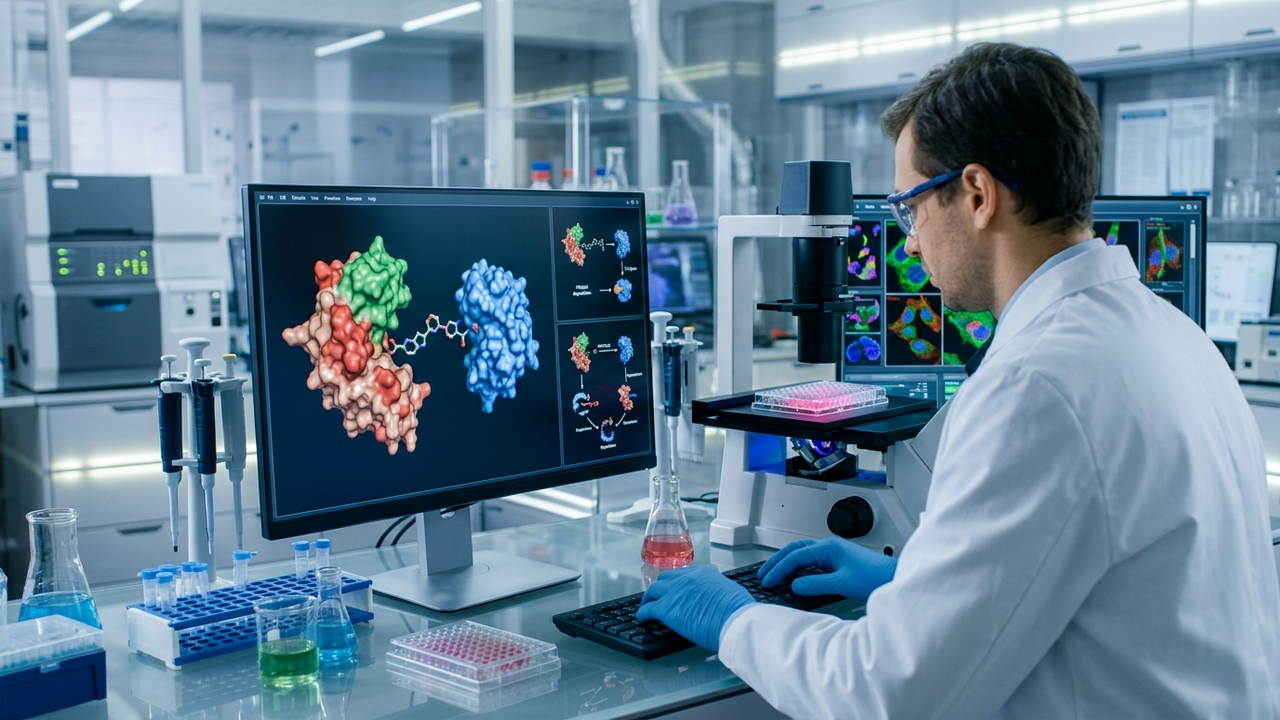
PROTACs (PROteolysis TArgeting Chimeras) have emerged as a revolutionary therapeutic strategy in the pharmaceutical industry, offering a pathway to target and degrade ‘undruggable’ proteins that were previously inaccessible to conventional small molecule inhibitors. Despite their promise, a significant challenge has been the lack of robust biomarkers to predict PROTACs’ clinical success. This new research provides a crucial understanding: PROTAC efficacy is strongly dependent on the target protein’s lifecycle, particularly its accumulation mechanism. This insight offers vital guidance for PROTAC developers, enabling them to select more effective drug candidates and to better stratify patient populations for clinical trials.
Key Findings
A significant discovery by researchers indicates that the mechanism by which cancer-driving proteins accumulate within tumors critically influences the efficacy of PROTAC drugs. The study demonstrated that PROTACs are substantially more effective at removing proteins that accumulate due to inadequate cellular degradation processes than they are at clearing proteins that cancer cells continuously overproduce. This pivotal insight not only provides novel biomarkers for identifying which tumors are most likely to respond favorably to PROTAC therapy but also promises to accelerate the development of more personalized cancer treatment strategies.
Technical Details
PROTACs are bifunctional molecules engineered to hijack the cell’s natural ubiquitin-proteasome system, directing it to ubiquitinate and subsequently degrade specific disease-associated proteins. This research delved into the intricate relationship between intracellular protein dynamics—specifically synthesis and degradation rates—and the precise mechanism of PROTAC action. Utilizing a comprehensive experimental approach involving various cancer cell lines and in vivo models, researchers meticulously analyzed protein synthesis, degradation kinetics, and the resulting changes in protein levels following PROTAC administration. The findings compellingly demonstrated that PROTACs designed to target proteins that abnormally stabilize and accumulate within cancer cells were remarkably effective at inducing their degradation and thereby enhancing anti-tumor effects. This suggests that beyond merely reducing protein expression, PROTACs possess the profound potential to correct aberrant protein dynamics within cancerous cells.
Strategic Significance & Outlook
This discovery represents a strategic turning point in both the development and clinical application of PROTAC therapies. Looking forward, prospects include a more detailed elucidation of protein accumulation mechanisms across various cancer types, alongside the development of advanced in vitro and in vivo models tailored to predict PROTAC responsiveness with higher accuracy. Furthermore, this understanding is expected to guide the design of refined clinical trials, allowing for the stratification of patients based on specific protein accumulation patterns, which could significantly improve treatment success rates. Ultimately, this knowledge is poised to accelerate the realization of truly personalized PROTAC therapeutic strategies, potentially dramatically improving the prognosis for patients worldwide suffering from refractory cancers.
Get our weekly technology intelligence — free
Receive an infographic that lets you judge at a glance whether each field’s analysis report is worth reading.
Subscribe Free — Weekly Tech Intelligence
By subscribing, you’ll receive Troy-Technical’s weekly technology intelligence newsletter.
- Your email and selected fields are used only to deliver the newsletter.
- We never share your information with third parties.
- You can unsubscribe anytime via the link in each email.
See our Privacy Policy for details.
Takes about a minute · Unsubscribe anytime







Comments