Key Findings
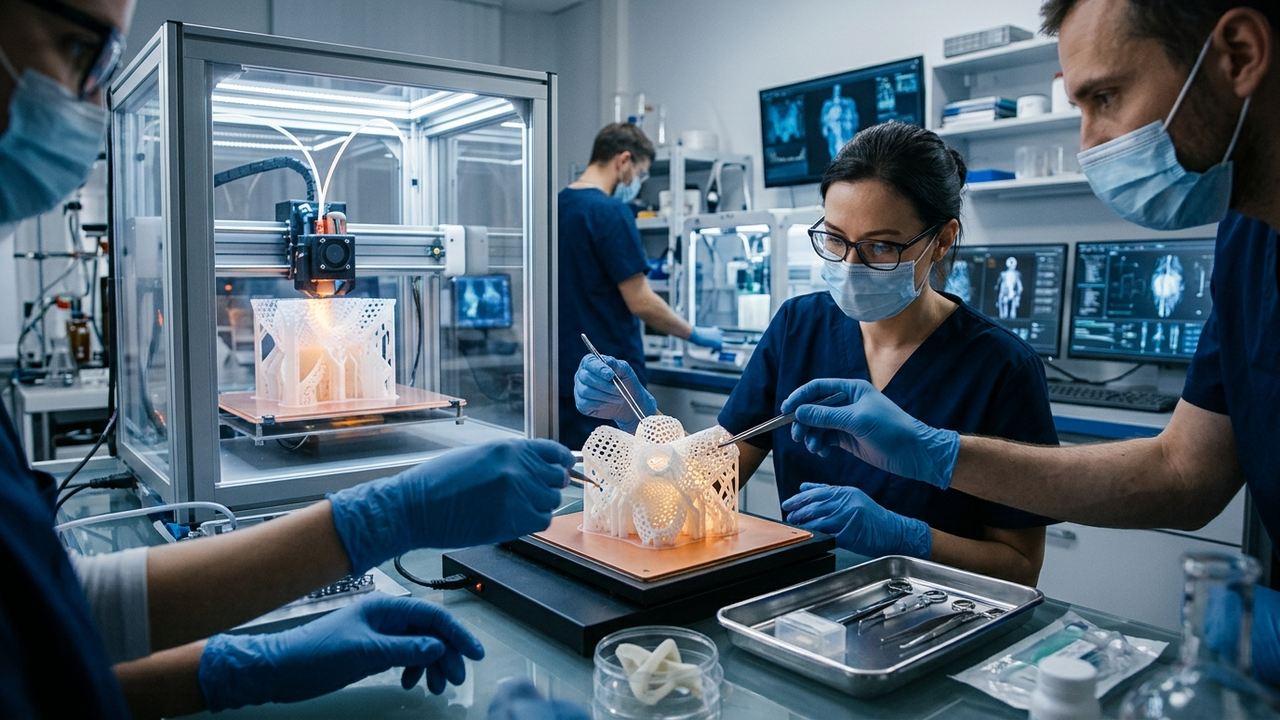
Researchers have developed a 3D-printable shape memory polymer that can be customized to individual patient needs, announcing their findings as a preprint. This innovative polymer possesses the ability to change its shape in vivo in response to specific stimuli (e.g., body temperature, pH, light), presenting groundbreaking potential for non-invasive surgical techniques and as medical implants that facilitate the functional recovery of damaged tissues or organs.
Technical / Clinical Details
Shape memory polymers (SMPs) are smart materials that can ‘remember’ a temporary shape and then revert to their ‘original shape’ (permanent shape) when exposed to a specific external stimulus. The SMP developed in this research is compatible with high-resolution 3D printing technologies (e.g., Digital Light Processing or Selective Laser Sintering), enabling the precise manufacturing of complex custom implants based on patient-specific CT scan or MRI data. Critically, it is designed to change shape in vivo in response to physiological stimuli such as temperature or pH changes. For example, it could be inserted through a narrow catheter and then expand due to body temperature to fill or fix specific areas. Furthermore, biocompatibility tests have confirmed that the material does not induce harmful reactions in surrounding tissues, demonstrating its safety as a medical device. Compatibility with common medical sterilization processes (e.g., gamma irradiation, ethylene oxide sterilization) has also been verified, indicating steady progress towards its introduction into clinical practice.
Background & Context
In modern medicine, there is a growing need for ‘personalized medicine’ tailored to each patient’s unique body structure and disease state. In the field of implants, standardized products often have less-than-perfect fit, leading to risks of postoperative complications or functional failure. Shape memory materials have garnered attention for their dynamic properties, offering potential as implants that can deploy and fixate within the body, or as scaffolds that promote tissue regeneration. However, challenges such as manufacturing complexity, biocompatibility, and difficulty in precise control have limited their application. The fusion of 3D printing technology with shape memory polymers overcomes these challenges, opening new possibilities for the manufacturing and functionality of custom medical implants.
Strategic Significance & Outlook
This 3D-printable shape memory polymer holds the potential to revolutionize various medical fields, including cardiovascular interventions, fracture treatment, soft tissue repair, and regenerative medicine. The ability to perform surgery through non-invasive approaches and precisely adjust implant shapes after insertion is expected to shorten patient recovery times, reduce pain, and improve treatment outcomes. Moving forward, as the technology progresses from animal studies to human clinical trials, its efficacy and safety will be evaluated in more detail. This technology is poised to become a crucial foundational technology for realizing the future of medicine: ‘patient-centered, more effective, and safer treatment.’
Source: #
Get our weekly technology intelligence — free
Receive an infographic that lets you judge at a glance whether each field’s analysis report is worth reading.
Subscribe Free — Weekly Tech Intelligence
By subscribing, you’ll receive Troy-Technical’s weekly technology intelligence newsletter.
- Your email and selected fields are used only to deliver the newsletter.
- We never share your information with third parties.
- You can unsubscribe anytime via the link in each email.
See our Privacy Policy for details.
Takes about a minute · Unsubscribe anytime





Comments