Key Findings
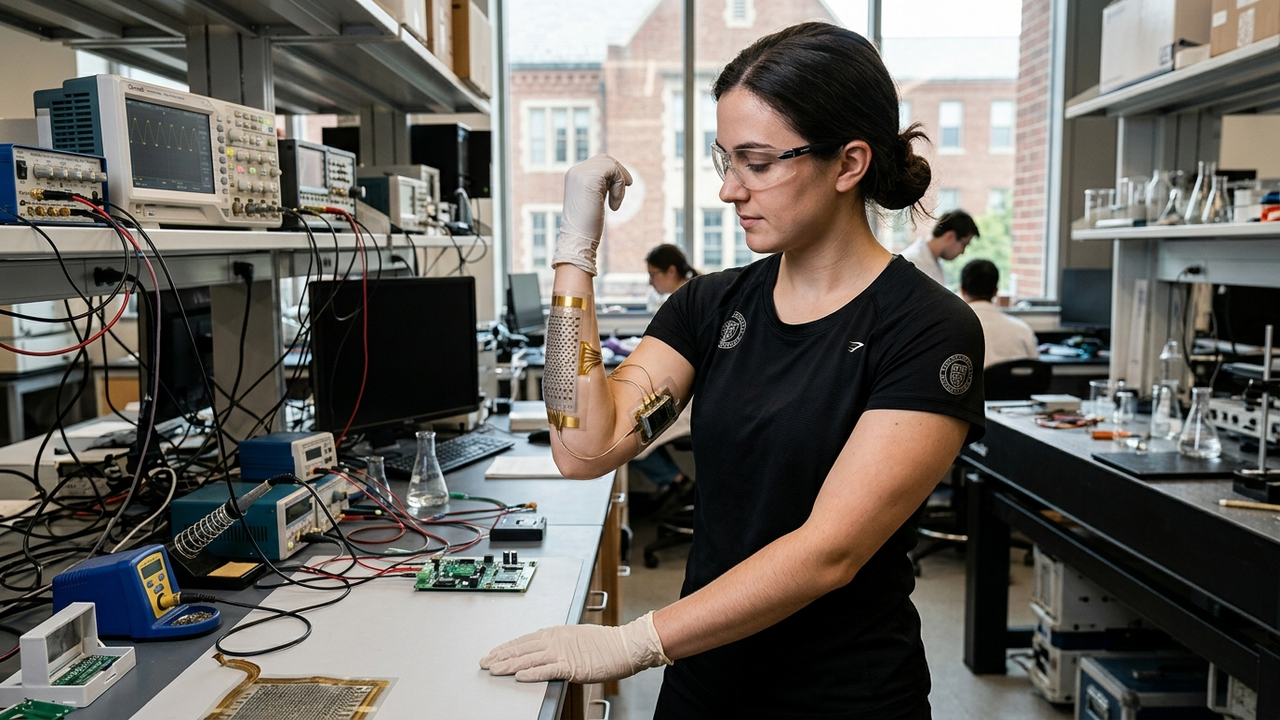
Researchers at Cornell University have successfully developed a groundbreaking, high-efficiency flexible piezoelectric energy harvester that effectively generates electricity from everyday human movements. This innovative device, built upon specific polyvinylidene fluoride (PVDF) composite materials, holds significant potential for dramatically extending the battery life of wearable sensors and compact electronic devices.
Technical / Clinical Details
Piezoelectric energy harvesting is a technology that converts mechanical strain or vibration into electrical energy. The harvester developed in this study optimizes the composition and structure of a PVDF-based composite material to achieve both flexibility and high piezoelectric response. Specifically, by uniformly dispersing specific nanostructured materials within a PVDF polymer matrix, the device is designed to generate electricity with high efficiency even from subtle human movements (e.g., walking, arm swings, finger bending and extending). Compared to conventional piezoelectric materials, the power generated for equivalent mechanical input has significantly improved; for instance, it has been demonstrated that a few thousand steps of daily walking can supply enough power to operate a small wearable sensor for several hours. Furthermore, excellent durability, capable of withstanding over tens of thousands of bending and stretching cycles, has been confirmed, indicating its performance for practical long-term use. Being thin, lightweight, and designed with biocompatibility in mind, this device can be integrated into clothing or directly affixed to the skin.
Background & Context
While the adoption of wearable electronic devices and IoT devices is accelerating, one of their biggest challenges remains power supply. Limitations on the charging frequency and lifespan of small batteries restrict user experience and device functionality. Energy harvesting technologies, particularly piezoelectric harvesters that utilize kinetic energy from the human body, have garnered attention as a promising solution to eliminate the hassle of battery replacement or charging, enabling ‘always-on’ device operation. However, traditional piezoelectric harvesters often suffered from low power generation efficiency, lack of flexibility, or durability issues, making practical implementation difficult.
Strategic Significance & Outlook
This flexible piezoelectric energy harvester developed by Cornell University has the potential to revolutionize the wearable device market. As batteries become smaller and require less frequent replacement, it will enable lighter, more comfortable smartwatches, fitness trackers, and healthcare monitors. Furthermore, applications are expected in various fields, such as safety monitoring sensors for workers in factories and construction sites, and portable power sources for military use. Future work will focus on further increasing power output, evaluating performance under different operating environments, and optimizing manufacturing costs. This technology is predicted to become a crucial foundational technology paving the way for a future of sustainable, self-powered electronic devices.
Source: #
Get our weekly technology intelligence — free
Receive an infographic that lets you judge at a glance whether each field’s analysis report is worth reading.
Subscribe Free — Weekly Tech Intelligence
By subscribing, you’ll receive Troy-Technical’s weekly technology intelligence newsletter.
- Your email and selected fields are used only to deliver the newsletter.
- We never share your information with third parties.
- You can unsubscribe anytime via the link in each email.
See our Privacy Policy for details.
Takes about a minute · Unsubscribe anytime









Comments