Key Findings
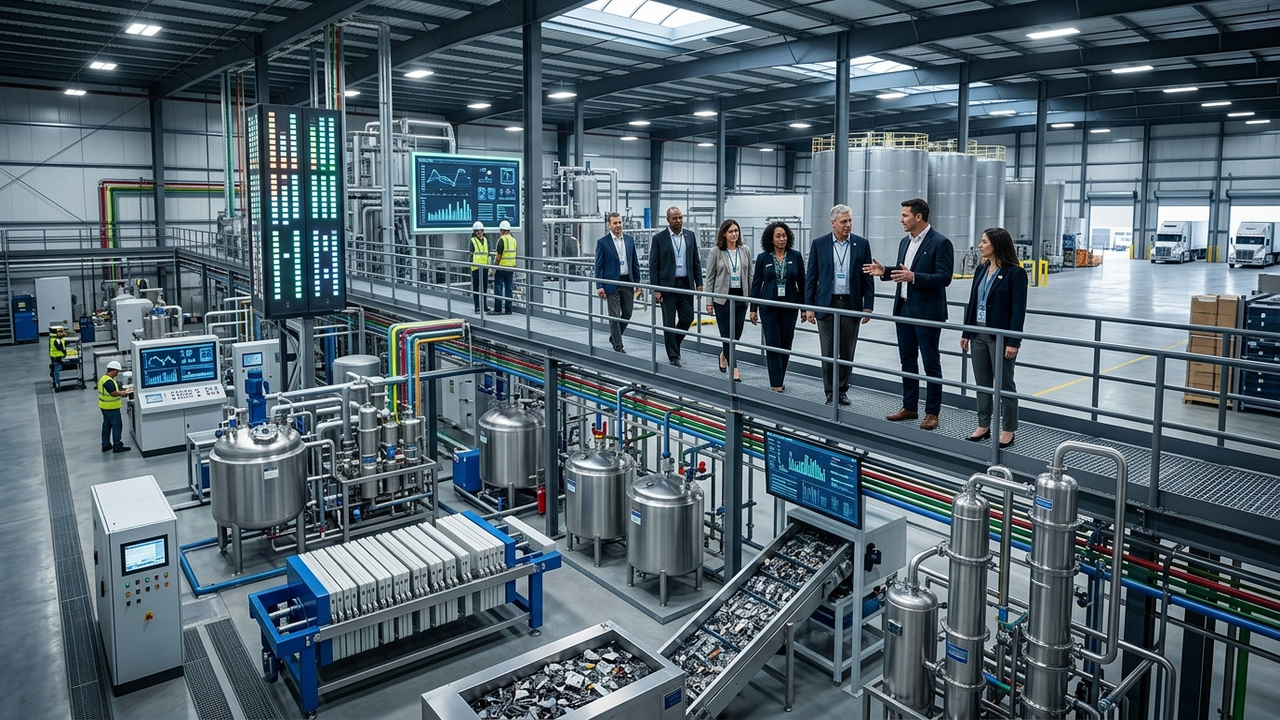
American Battery Technology Company (ABTC) hosted U.S. Department of Energy (DOE) and state executives at its facilities near Reno, Nevada, showcasing its commercial-scale lithium-ion battery recycling technology and a demonstration plant for producing lithium hydroxide from domestically sourced claystone. This event highlighted ABTC’s significant contributions toward strengthening the U.S. critical minerals supply chain.
Technical & Clinical Details
- ABTC has developed proprietary recycling processes designed for efficient recovery of high-quality battery materials from end-of-life lithium-ion batteries. This technology aims to reduce environmental impact while securing domestic supplies of scarce mineral resources.
- The company also operates a demonstration plant for extracting high-purity lithium hydroxide from abundant domestic claystone resources. This initiative seeks to reduce import dependency and establish a sustainable lithium supply.
- Backed by a $150 million grant from the U.S. Department of Energy (DOE), ABTC is planning a second commercial-scale lithium-ion battery recycling facility. This expansion will allow the processing of approximately five times the volume of battery materials compared to the current facility, dramatically increasing the domestic production capacity for battery-grade critical minerals, potentially recovering tens of thousands of tons annually.
Background & Context
The rapid expansion of the electric vehicle (EV) market has made the stable supply of critical battery minerals such as lithium, cobalt, and nickel a pressing global issue. Many nations are heavily reliant on imports for these resources, raising concerns about supply chain vulnerabilities. The U.S. government is actively promoting policies to enhance domestic critical mineral production and recycling capabilities, aiming for both economic security and climate change mitigation.
Strategic Significance & Outlook
ABTC’s efforts are integral to building a robust U.S. battery supply chain and will substantially improve domestic self-sufficiency in critical mineral production. The substantial DOE grant signifies the high national strategic value placed on the company’s technology. The second recycling facility’s construction is a crucial milestone in establishing a comprehensive EV battery recycling ecosystem and advancing a circular economy model. This initiative is expected to bolster the competitiveness of the U.S. clean energy industry and generate significant employment opportunities.
Get our weekly technology intelligence — free
Receive an infographic that lets you judge at a glance whether each field’s analysis report is worth reading.
Subscribe Free — Weekly Tech Intelligence
By subscribing, you’ll receive Troy-Technical’s weekly technology intelligence newsletter.
- Your email and selected fields are used only to deliver the newsletter.
- We never share your information with third parties.
- You can unsubscribe anytime via the link in each email.
See our Privacy Policy for details.
Takes about a minute · Unsubscribe anytime









Comments