Key Findings
Physical Superintelligence (PSI), an AI physics startup based in Cambridge, Massachusetts, has emerged from stealth mode after securing an impressive $58 million in seed funding, led by Breakthrough Energy Ventures. This substantial investment underscores the strong investor confidence in the transformative potential of AI for scientific discovery and the design of complex physical systems.
Technical / Clinical Details
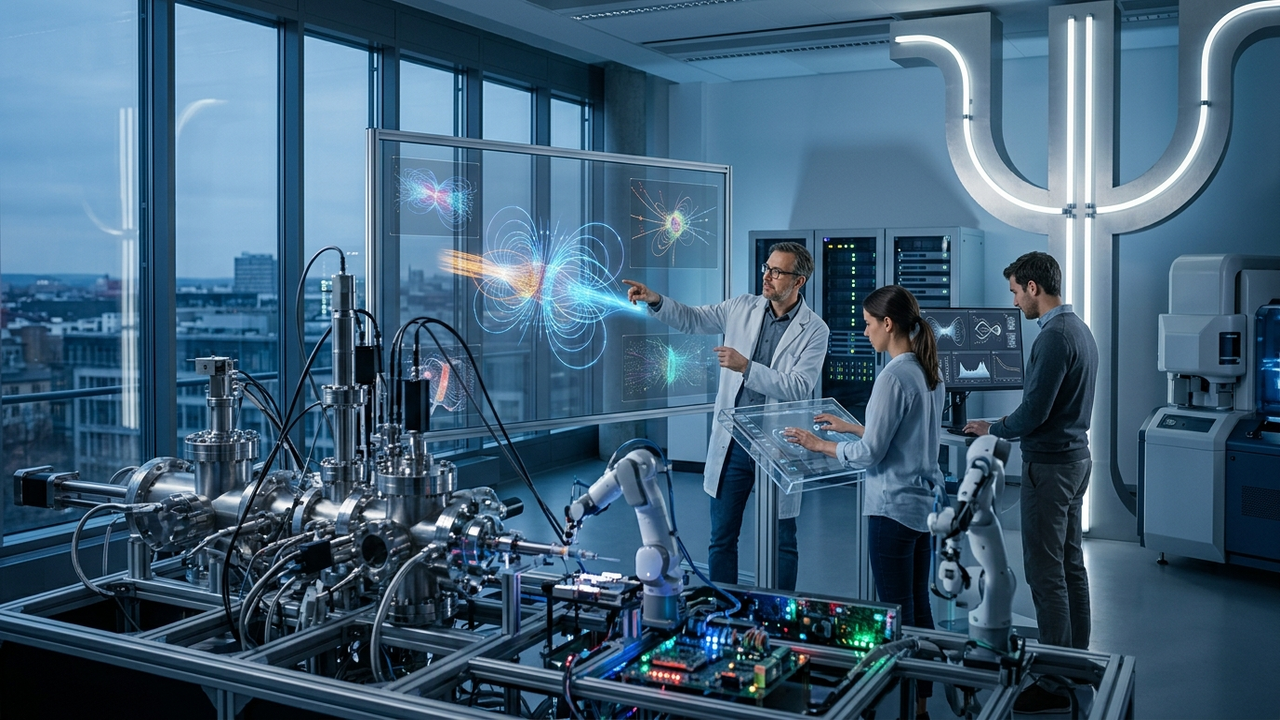
PSI is at the forefront of developing an AI-native physics lab, a platform engineered to conduct simulations, rigorously test hypotheses, and design physical systems at an unprecedented machine scale. This approach dramatically accelerates processes that traditionally consume vast computational resources and time, such as predicting material properties, designing novel substances, and optimizing existing systems. The platform leverages advanced AI algorithms to model complex physical interactions with high fidelity and efficiency. Initially, PSI is concentrating its efforts on optimizing AI data centers, an area with immense energy consumption. By applying AI to enhance cooling systems, power efficiency, and material selection within data centers, the company aims to deliver significant reductions in operational costs and environmental impact. Looking ahead, the technology holds promise for broader applications in materials science, including energy storage, new energy sources, and quantum materials.
Background & Context
Artificial intelligence has increasingly been recognized as a powerful accelerator for discovery in scientific domains such as computational chemistry, materials science, and biology. Addressing challenges in the ‘hard sciences’—the physical world—requires extensive data analysis and sophisticated modeling of complex interactions, areas where AI offers revolutionary capabilities. The lead investment from Breakthrough Energy Ventures, founded by Bill Gates, reflects a clear understanding that the fusion of AI and physical sciences is crucial for achieving large-scale goals like combating climate change and transitioning to clean energy. Such deep tech investments are characterized by a long-term vision and a focus on fundamental challenges that cannot be solved with incremental technological improvements.
Strategic Significance & Outlook
The $58 million in seed funding provides a robust foundation for PSI to accelerate the development of its AI-native physics lab and expand its platform’s capabilities. While the initial focus on AI data center optimization could yield immediate practical impacts, the long-term vision positions this technology to drive groundbreaking breakthroughs in materials science, energy-efficient computing, and broader scientific discovery. PSI’s success will demonstrate that AI can serve not just as a data analysis tool, but as a ‘scientific discovery engine’ that revolutionizes our fundamental understanding and design capabilities within the physical world. This represents a prime example of how the convergence of AI and physics is set to drive future innovation and address some of humanity’s most pressing challenges, solidifying the role of AI in shaping the future of industrial science.
Get our weekly technology intelligence — free
Receive an infographic that lets you judge at a glance whether each field’s analysis report is worth reading.
Subscribe Free — Weekly Tech Intelligence
By subscribing, you’ll receive Troy-Technical’s weekly technology intelligence newsletter.
- Your email and selected fields are used only to deliver the newsletter.
- We never share your information with third parties.
- You can unsubscribe anytime via the link in each email.
See our Privacy Policy for details.
Takes about a minute · Unsubscribe anytime







Comments