Key Findings
To meet the continuous increase in battery demand and deliver higher-performance, cost-effective next-generation batteries, establishing a robust, domestically rooted critical materials supply chain is indispensable. It is emphasized that AI and advanced process modeling technologies will play a crucial role in optimizing the entire supply chain and enhancing its sustainability.
Technical / Clinical Details
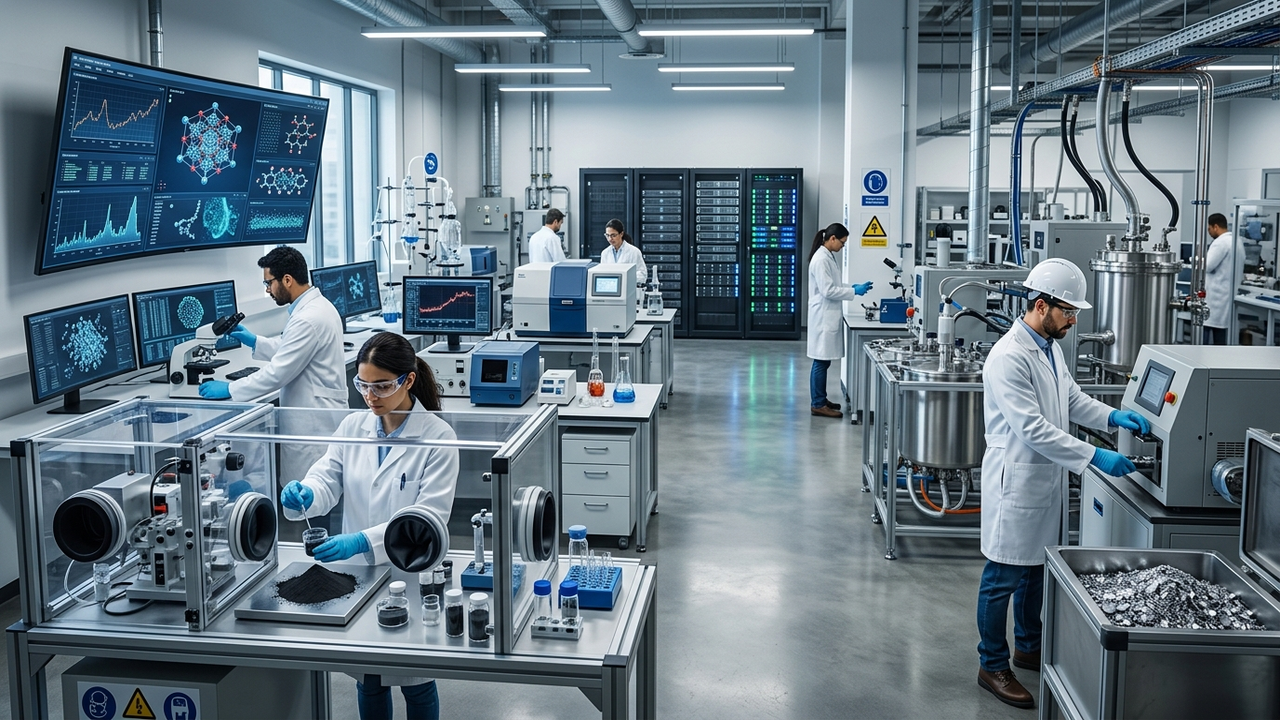
The development of next-generation energy storage technologies extends beyond merely improving the electrochemical performance of batteries. It necessitates a profound understanding and diligent management of the availability, production efficiency, and environmental impact of critical materials (such as lithium, cobalt, nickel, and rare earths) required for their manufacture. A new collaboration between Aclara Resources, a rare earth mineral company, and the U.S. Department of Energy’s Argonne National Laboratory illustrates a concrete approach to addressing this challenge. Their partnership aims to optimize the entire supply chain, from mining, refining, and processing to recycling of critical materials, by integrating AI-driven data analytics with advanced process modeling. AI will contribute to predicting material properties, optimizing process conditions, and identifying bottlenecks within the supply chain, thereby expecting improvements in material yield, reductions in energy consumption, and lower costs. For example, AI can aid in exploring new material formulations or discovering highly efficient metal recovery pathways in recycling processes.
Background & Context
As the adoption of electric vehicles (EVs) and stationary energy storage systems (ESS) accelerates, the stable supply of critical minerals and the resilience of their supply chains have become top priorities for national economic security. The current concentration of production and processing of many critical minerals in specific countries heightens geopolitical risks and exposes supply chain vulnerabilities. The U.S. government is actively working to reduce these dependencies by strengthening domestic production capacity and technological expertise in critical materials, thereby ensuring a steady transition to a clean energy economy. The collaboration between Aclara Resources and Argonne National Laboratory demonstrates how public-private partnerships can serve as a powerful model for accelerating innovation from fundamental research to commercialization and reinforcing domestic supply chains.
Strategic Significance & Outlook
The integration of AI and critical materials will be an indispensable element in reshaping the future of the battery supply chain. Advanced data analytics and predictive modeling will not only mitigate risks and enhance efficiency across the entire supply chain but also contribute to the discovery of new materials and the development of sustainable manufacturing processes. Continued research and development in this field, coupled with enhanced public-private cooperation, will be key for the U.S. to maintain competitiveness in the global battery market and lead next-generation energy storage technologies. Investors, engineers, and policymakers should observe how AI transforms the critical materials supply chain and how it can realize a more sustainable and secure energy future.
Get our weekly technology intelligence — free
Receive an infographic that lets you judge at a glance whether each field’s analysis report is worth reading.
Subscribe Free — Weekly Tech Intelligence
By subscribing, you’ll receive Troy-Technical’s weekly technology intelligence newsletter.
- Your email and selected fields are used only to deliver the newsletter.
- We never share your information with third parties.
- You can unsubscribe anytime via the link in each email.
See our Privacy Policy for details.
Takes about a minute · Unsubscribe anytime





Comments