Key Findings
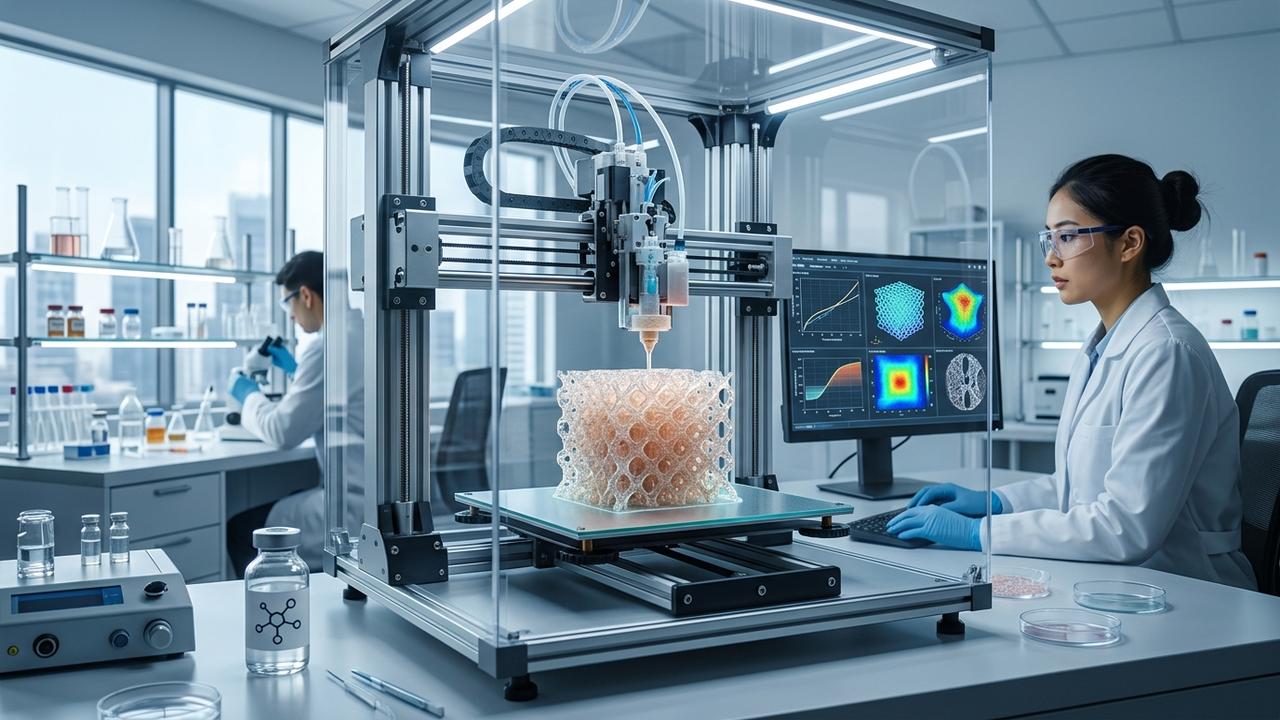
A recent study published in ACS Publications reports the development of a novel pectin-GPTMS-based biomaterial, representing a breakthrough platform for the sustainable manufacturing of 3D bioprinting scaffolds in tissue engineering. This innovative approach combines pectin, a natural plant-derived polymer, with GPTMS, a silane-based crosslinker offering tunable properties, to create highly biocompatible 3D scaffolds that robustly support cell proliferation. This discovery holds significant implications for tissue regeneration in regenerative medicine and the broader biomanufacturing sector.
Technical/Clinical Details
- Pectin-GPTMS Hybrid Material: The study focused on developing a new hydrogel material primarily composed of pectin, utilizing 3-(2,3-epoxypropoxy)propyltrimethoxysilane (GPTMS) as an effective crosslinking agent. The incorporation of GPTMS enhances the mechanical properties and stability of pectin-based hydrogels, achieving optimal viscosity and rigidity for bioprinting applications.
- Tunable Physical Properties: By adjusting the concentration of GPTMS, researchers can precisely control the hydrogel’s physical characteristics, such as stiffness and degradation rate. This flexibility allows for the customization of scaffold properties to match the specific tissue type and regeneration requirements.
- Enhanced hMSC Proliferation: Human mesenchymal stem cells (hMSCs) demonstrated excellent adhesion and efficiently proliferated with high viability on the fabricated pectin-GPTMS scaffolds. Given hMSCs’ capacity to differentiate into various tissues like bone, cartilage, and adipose tissue, their enhanced proliferation on these scaffolds is critically important for tissue engineering.
- Sustainable Bioprinting: Pectin is abundantly available and biodegradable, lending this material system an environmental advantage over traditional synthetic polymers. This contributes significantly to the realization of more sustainable manufacturing processes in the biomedical field.
- Application in 3D Bioprinting: The developed material is well-suited for extrusion-based bioprinting processes, enabling the construction of complex 3D structures with high precision. This capability opens avenues for patient-specific tissue replacement and the creation of advanced disease models.
Background & Context
The field of tissue engineering actively seeks to develop 3D scaffolds for repairing or replacing damaged tissues and organs. However, ideal scaffold materials must possess a combination of biocompatibility, mechanical strength, cell proliferation support, and an appropriate degradation rate. Furthermore, sustainability and manufacturing costs are crucial considerations. This research offers a novel solution that addresses these requirements using naturally derived materials, thereby holding the potential to accelerate the commercialization of regenerative medicine.Strategic Significance & Outlook
The development of pectin-GPTMS biomaterials elevates bioprinting technology in tissue engineering to a new level. This platform is expected to find applications as a next-generation 3D scaffold material for bone, cartilage, and even complex organ regeneration. The tunable properties and high compatibility with hMSCs significantly contribute to the advancement of personalized medicine. Future in vivo evaluations using this material will further clarify its path towards clinical application. Researchers, engineers, and investors should take note of the broad medical applications and market opportunities presented by this sustainable and high-performance biomaterial.
Source: https://pubs.acs.org/bomaf6/article/21/2/319/591642/Pectin-GPTMS-Based-Biomaterial-toward-a
Get our weekly technology intelligence — free
Receive an infographic that lets you judge at a glance whether each field’s analysis report is worth reading.
Subscribe Free — Weekly Tech Intelligence
By subscribing, you’ll receive Troy-Technical’s weekly technology intelligence newsletter.
- Your email and selected fields are used only to deliver the newsletter.
- We never share your information with third parties.
- You can unsubscribe anytime via the link in each email.
See our Privacy Policy for details.
Takes about a minute · Unsubscribe anytime









Comments