Key Findings
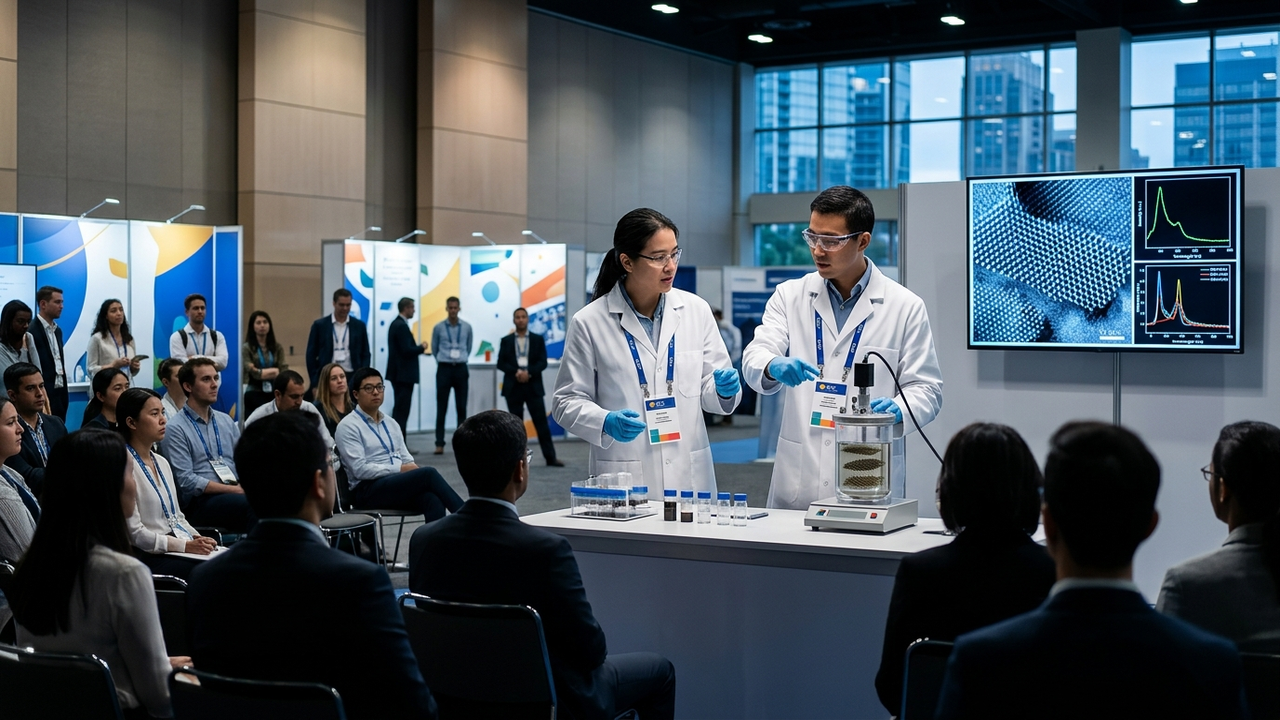
At the ACS Fall 2026 conference, a groundbreaking study presented a new, inherently safer pathway for MXene production, fundamentally improving upon traditional hazardous synthetic processes. This novel method successfully bypasses the long-standing challenge of using molten fluoride salts and highly concentrated hydrofluoric acid (HF) in MXene synthesis. This innovation represents a quantum leap in manufacturing safety and environmental compatibility, effectively removing one of the most significant barriers to the large-scale commercialization of MXene materials.
Technical Details
MXenes are a family of two-dimensional transition metal carbides, nitrides, or carbonitrides renowned for their excellent electrical conductivity, high surface area, and robust mechanical strength. They hold immense promise for applications in energy storage, electromagnetic interference shielding, sensors, and catalysis. However, their conventional synthesis typically relies on an etching process involving hydrofluoric acid (HF), a chemical known for its extreme corrosivity and high hazard profile. This has historically led to high manufacturing costs, stringent facility requirements, and environmental concerns. The newly proposed safer production process addresses these critical issues. While specific methodological details were not fully disclosed, it is inferred that the method employs HF-free or minimal HF generation techniques. This approach promises to simplify manufacturing infrastructure, ensure a safer working environment, and reduce overall production costs.
The development of such a safe synthesis method will also contribute to improved quality control and reproducibility of MXenes, ultimately enabling a stable supply for diverse high-performance devices in the future.
Background and Industry Context
In the advanced materials industry, safety and sustainability are pressing concerns. For nanomaterials, in particular, despite their unique properties garnering significant attention, the use of hazardous substances and environmental impacts during manufacturing often create commercialization bottlenecks. If promising materials like MXenes can be produced through safer and more environmentally friendly means, their industrial adoption will accelerate exponentially. This breakthrough will streamline the transition from research and development to industrial-scale production, encouraging more companies to enter the MXene-based product development arena.
Strategic Significance and Outlook
The announcement of this “inherently safer MXene production” technology marks a critical step towards sustainable innovation in the nanomaterials sector. It is anticipated that as this technology gains wider adoption, MXenes will be increasingly integrated into various end-products, including electric vehicle batteries, next-generation wearable devices, smart sensors, high-performance filters, and medical devices. Enhanced safety profiles will reduce risks across the entire supply chain and boost investor confidence in MXene-related technologies, potentially leading to rapid growth in the MXene market over the coming years.
Source: #
Get our weekly technology intelligence — free
Receive an infographic that lets you judge at a glance whether each field’s analysis report is worth reading.
Subscribe Free — Weekly Tech Intelligence
By subscribing, you’ll receive Troy-Technical’s weekly technology intelligence newsletter.
- Your email and selected fields are used only to deliver the newsletter.
- We never share your information with third parties.
- You can unsubscribe anytime via the link in each email.
See our Privacy Policy for details.
Takes about a minute · Unsubscribe anytime









Comments