Key Findings
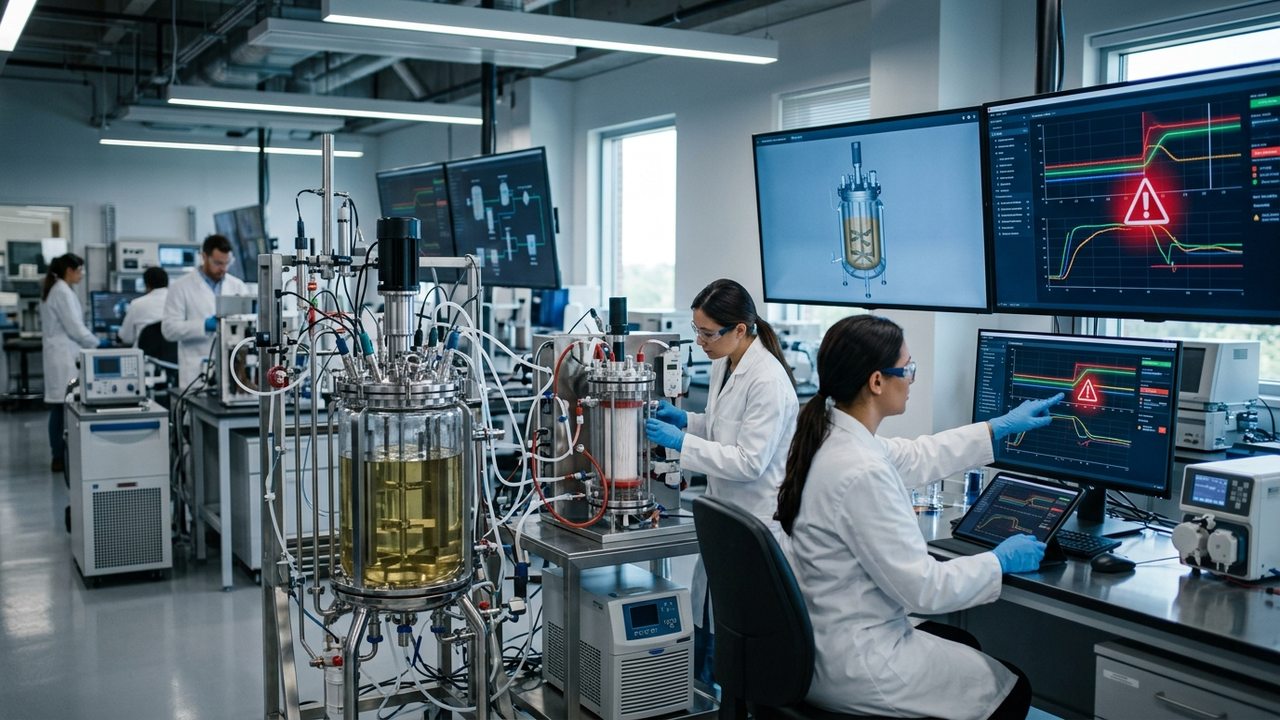
Equipment-level digital twin technology for bioprocessing significantly enhances the efficiency and reliability of biopharmaceutical manufacturing by providing real-time predictive analytics and operational guidance. This innovative approach, applied to core unit operations like stirred-tank and perfusion bioreactors, uses continuous monitoring of process data and integration with advanced models to predict future behavior, offer early deviation warnings, and recommend optimal operating conditions.
Technical and Clinical Details
Digital twins collect sensor data directly from physical bioreactors and combine it with machine learning and simulation models to evaluate process states in real-time. For instance, they monitor fluctuations in cell density, metabolite concentrations, pH, and dissolved oxygen, using this data to forecast batch endpoints and automatically detect deviations from acceptable ranges. This enables operators to intervene before process issues escalate, preventing production failures and quality compromises. In continuous processes such as perfusion bioreactors, this technology automates the optimization of cell bleed and media exchange rates, drastically reducing manual intervention.
Background and Industry Context
The biopharmaceutical industry continually grapples with challenges in process robustness and reproducibility due to inherent complexities and stringent regulatory demands. Traditional batch manufacturing often relies on historical data and empirical rules for process control. The advent of digital twins shifts this to a more data-driven, predictive approach, aligning with Industry 4.0 principles. This transformation directly translates into increased productivity, reduced costs, and enhanced product quality consistency. The growing demand for advanced cell and gene therapies further emphasizes the urgent need for efficient and scalable manufacturing platforms.
Strategic Significance and Outlook
The scope of equipment-level digital twin technology is expected to expand across the entire bioprocess lifecycle, including upstream, downstream, and fill-finish operations. In the future, integrating multiple digital twins could pave the way for smart, factory-wide automation. This evolution will further strengthen quality assurance, shorten time-to-market for biopharmaceuticals, and ultimately make innovative therapies more accessible to patients globally. This technology is poised to be a central driver of digital transformation in biomanufacturing.
Get our weekly technology intelligence — free
Receive an infographic that lets you judge at a glance whether each field’s analysis report is worth reading.
Subscribe Free — Weekly Tech Intelligence
By subscribing, you’ll receive Troy-Technical’s weekly technology intelligence newsletter.
- Your email and selected fields are used only to deliver the newsletter.
- We never share your information with third parties.
- You can unsubscribe anytime via the link in each email.
See our Privacy Policy for details.
Takes about a minute · Unsubscribe anytime






Comments