Key Findings
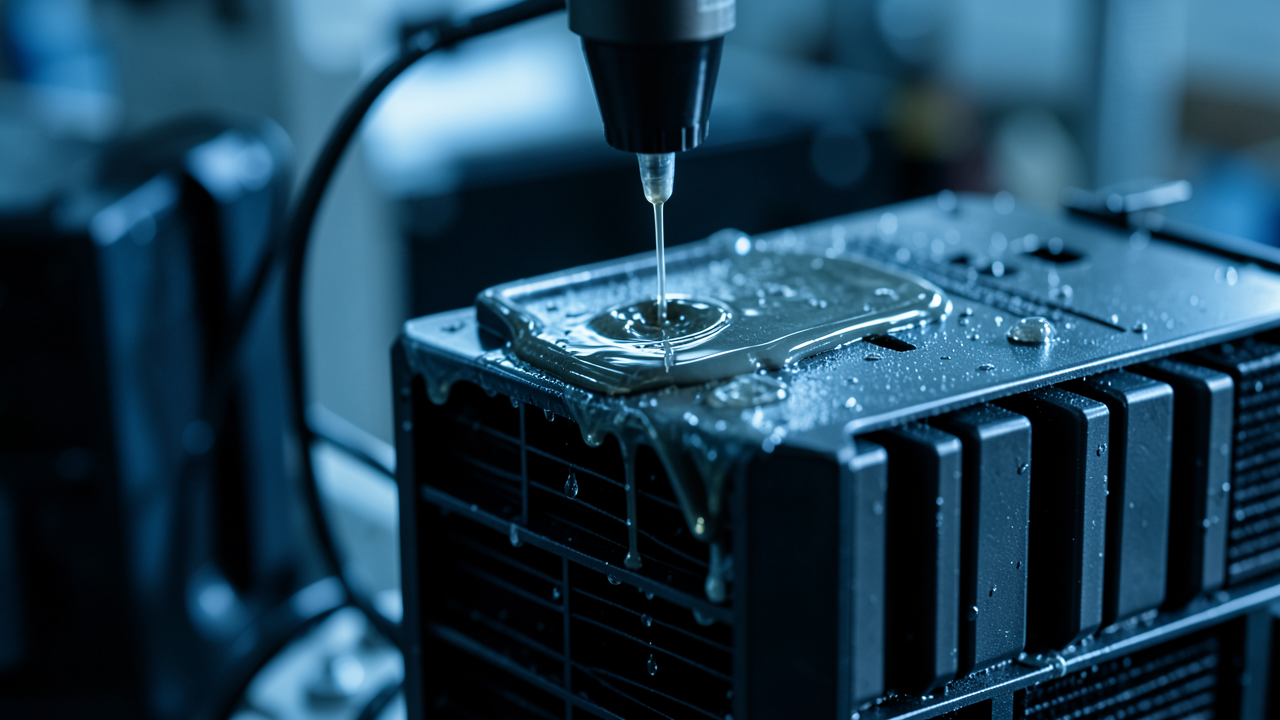
The rapid proliferation of AI workloads is catalyzing a revolution in data center cooling infrastructure, with the industry undergoing a significant shift from conventional air-cooling systems to liquid-cooling solutions. This transition is evident as leading data center operators such as Equinix and Digital Realty have already implemented liquid cooling, and Nvidia is designing its next-generation servers to be optimized for these systems. Liquid cooling is emerging as a critical technology for efficiently dissipating the immense heat generated by AI chips, thereby substantially enhancing data center operational efficiency.
Technical / Clinical Details
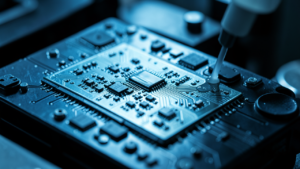
High-performance GPUs used for AI applications, particularly the training and inference of Large Language Models (LLMs), generate significantly more heat per unit area compared to traditional CPUs. To manage this concentrated thermal load, liquid cooling systems have become indispensable. Primarily, two methods are employed: ‘direct-to-chip liquid cooling’ (cold plate method), which directly cools the chips, and ‘immersion cooling,’ where entire servers are submerged in a dielectric fluid. Direct-to-chip cooling achieves much higher thermal conductivity than air cooling by attaching cold plates directly to the surfaces of GPUs and CPUs to absorb heat with liquid. This not only dramatically increases power density per rack but also reduces noise and vibration from fans, improving the data center’s Power Usage Effectiveness (PUE). However, implementing liquid cooling necessitates substantial infrastructure modifications, including the installation of piping systems, liquid management, and integration with existing air-cooling setups.
Background & Context
The widespread adoption of AI is imposing a fundamental paradigm shift in data center design and operation. Over the past decade, data center power consumption has surged, with AI workloads being a primary driver. Utility companies are increasingly pressured to build new power plants and reinforce transmission grids to accommodate the unpredictable growth in AI data center demand. Liquid cooling technology offers a direct solution to these power and cooling challenges. With chip manufacturers like Nvidia standardizing liquid-cooled hardware, this technology is rapidly moving from a niche application to a mainstream solution in the data center industry. This enables data center operators to achieve higher computational densities and maintain competitiveness in providing AI services.
Strategic Significance & Outlook
Liquid cooling is poised to become an indispensable component of data center infrastructure in the AI era. Most newly constructed data centers are expected to incorporate liquid cooling into their designs. Retrofitting existing facilities with liquid cooling will also accelerate, though it demands significant investment and specialized technical expertise. Advances in liquid cooling technology will enable further performance enhancements in AI chips, expanding the possibilities for AI applications. In the future, integration with energy recovery systems that reclaim heat from liquid cooling systems will likely increase, further boosting the sustainability and efficiency of data centers. This technological innovation will lay a crucial foundation for maximizing the benefits AI brings to society.
Source: https://www.connectcre.com/stories/data-centers-get-ready-for-a-liquid-cooled-future/
Get our weekly technology intelligence — free
Receive an infographic that lets you judge at a glance whether each field’s analysis report is worth reading.
Subscribe Free — Weekly Tech Intelligence
By subscribing, you’ll receive Troy-Technical’s weekly technology intelligence newsletter.
- Your email and selected fields are used only to deliver the newsletter.
- We never share your information with third parties.
- You can unsubscribe anytime via the link in each email.
See our Privacy Policy for details.
Takes about a minute · Unsubscribe anytime





Comments