Key Findings: Nature-Inspired 3D Bioprinting Accelerates Living Tissue Growth
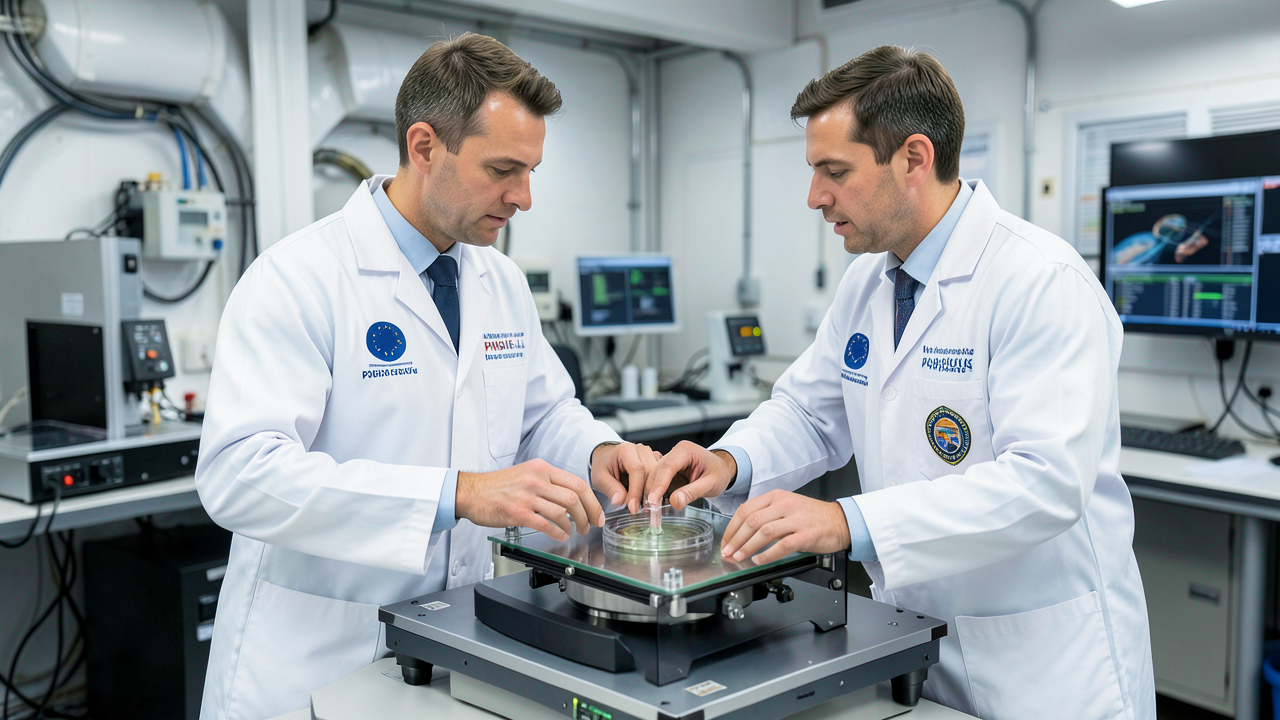
The EU-funded PRISM-LT project has developed a groundbreaking 3D bioprinting technology capable of growing living bone, fat, and muscle tissues in the laboratory with unprecedented efficiency and precision. This innovative platform utilizes stem cells as raw materials to design and construct more complex and functional biological tissues. This capability is expected to unlock significant potential in areas such as creating more physiologically relevant disease models for leukemia research and enabling sustainable cultivated meat production as an alternative protein source.
Technical Details: 3D Bioprinting as Engineered Living Materials
The technology developed by the PRISM-LT project is based on the concept of ‘Engineered Living Materials (ELMs).’ This means constructing living cellular structures that not only arrange cells structurally but also possess the ability to grow, respond to external stimuli, and adapt to their environment. This 3D bioprinting technique allows for the simultaneous placement of multiple types of stem cells in specific geometric patterns, mimicking the complex microarchitecture of natural tissues. This methodology goes beyond the limitations of traditional tissue engineering, enabling the creation of structures with more advanced tissue functions, such as vascularization and innervation. For example, in leukemia research, it could be used to construct 3D models replicating the bone marrow microenvironment from patient-derived stem cells, facilitating drug screening and disease mechanism elucidation.
Background and Industry Context: Innovation Needs in Regenerative Medicine and Food Production
In the field of regenerative medicine, the scarcity of tissues and organs for transplantation remains a major challenge, while demand for clinically relevant in vitro models for new drug development is increasing. Concurrently, there is growing interest in cultivated meat (cellular agriculture) due to environmental burdens and ethical concerns associated with conventional meat production. Traditional tissue engineering techniques and 2D cell cultures have been insufficient to meet these complex requirements. 3D bioprinting technologies like those from the PRISM-LT project address these unmet needs, possessing the potential to accelerate innovation in both fields by enabling the production of more scalable and functional biological tissues.
Strategic Significance and Outlook: From Therapeutic Applications to Sustainable Food Systems
This nature-inspired 3D bioprinting technology holds the potential to revolutionize a wide range of fields. In regenerative medicine, it can enable the manufacturing of custom-made biological tissues for repairing or replacing damaged tissues and organs, realizing patient-specific treatments. It can also provide high-precision disease models to support the development of more effective drugs for intractable diseases like leukemia. Furthermore, in the cultivated meat sector, it will serve as a foundational technology for producing meat more efficiently and sustainably without raising animals, contributing to improved food security and reduced environmental impact. The achievements of the PRISM-LT project represent a significant step in the transformative power of biotechnology on society.
Source: https://cordis.europa.eu/article/id/467379-nature-inspired-tech-accelerates-living-tissues-growth
Get our weekly technology intelligence — free
Receive an infographic that lets you judge at a glance whether each field’s analysis report is worth reading.
Subscribe Free — Weekly Tech Intelligence
By subscribing, you’ll receive Troy-Technical’s weekly technology intelligence newsletter.
- Your email and selected fields are used only to deliver the newsletter.
- We never share your information with third parties.
- You can unsubscribe anytime via the link in each email.
See our Privacy Policy for details.
Takes about a minute · Unsubscribe anytime





Comments