Key Findings
The University of the District of Columbia (UDC) has received a renewed CREST (Centers for Research Excellence in Science and Technology) grant from the National Science Foundation (NSF), totaling approximately $5 million. This substantial funding will enable UDC to continue vigorously promoting its research and educational programs in nanotechnology. This significant financial support strengthens UDC’s foundation for conducting cutting-edge nanoscience research and fostering the next generation of scientists and engineers from diverse backgrounds. Breakthroughs are particularly anticipated in areas critical to future technologies.
Technical / Clinical Details
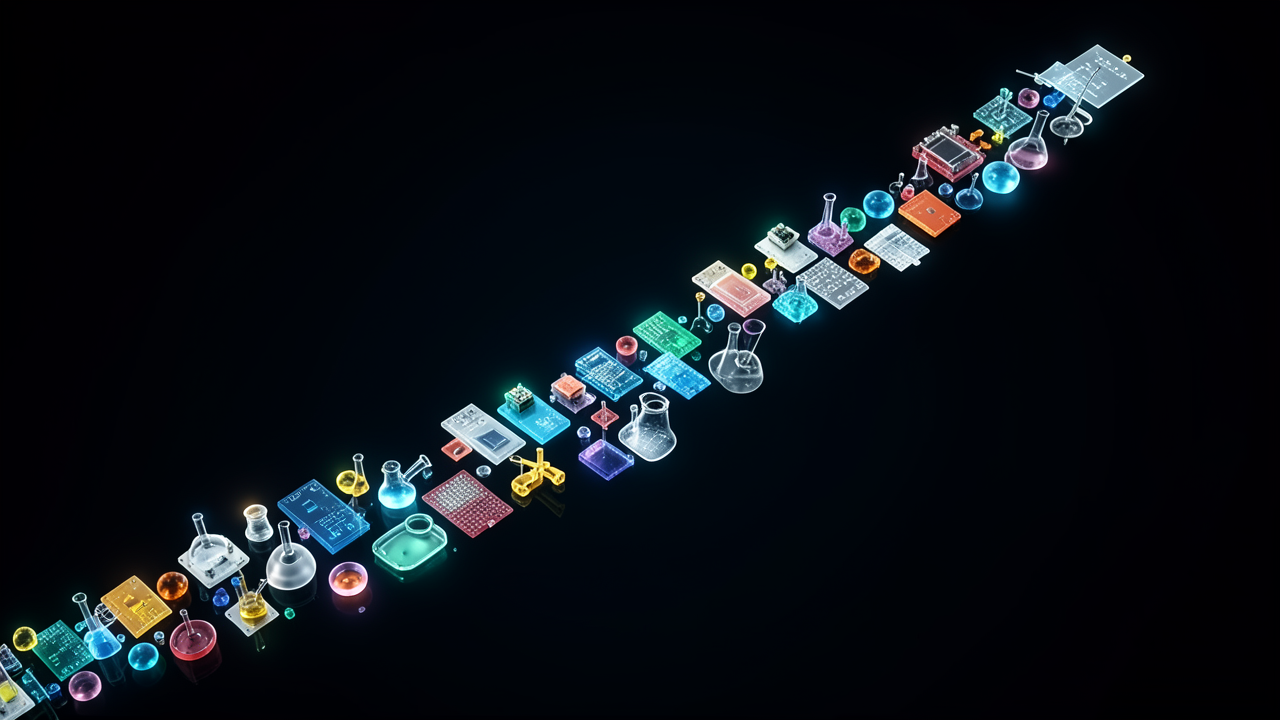
The renewed CREST grant focuses on four interconnected research areas that form the core of UDC’s nanotechnology initiatives:
- Molecular Spintronics: Development of next-generation computing technologies that utilize not only electron charge but also spin. This aims to enhance data storage capacity and dramatically accelerate processing speeds.
- Powder-based Electrochemical Additive Manufacturing: An advanced additive manufacturing technique that uses metal and ceramic powders to produce components with highly precise three-dimensional structures. It is applied to manufacturing complex nano-devices and customized materials.
- Nano/Microscale Thermal Management: Efficient heat dissipation technologies to solve overheating issues in miniaturizing electronic devices. This explores new cooling solutions using thermoelectric materials and nanostructures.
- Molecular Catalysis: Development of nanoscale catalysts to promote efficient chemical reactions. This is applied to sustainable energy conversion and environmental remediation processes.
These research efforts will be conducted through an interdisciplinary approach, with experts from each field collaborating. Students will gain practical research skills and specialized knowledge by directly participating in these cutting-edge projects.
Background & Context
Nanotechnology is a foundational technology that drives innovation across all scientific and technological fields, including materials science, electronics, medicine, and energy. The U.S. government emphasizes investment in nanotechnology research to maintain international competitiveness and develop talent that will lead future industries. The NSF’s CREST program specifically supports Minority-Serving Institutions (MSIs) and Historically Black Colleges and Universities (HBCUs) to enhance diversity and inclusivity in Science, Technology, Engineering, and Mathematics (STEM) fields. Grants to institutions like UDC are crucial for these institutions to conduct excellent research and provide high-quality STEM education to economically disadvantaged and minority students.Strategic Significance & Outlook
This grant to UDC holds immense significance for shaping future industries such as next-generation computing, advanced manufacturing, and sustainable energy systems. Molecular spintronics will contribute to the advancement of quantum computing, while electrochemical additive manufacturing will enable rapid prototyping and production of customized nano-devices. Nano/microscale thermal management will support the proliferation of high-performance devices like AI chips and 5G communication equipment, and molecular catalysis will contribute to the progress of clean energy technologies and CO2 reduction techniques. Through this research, UDC is expected to not only generate new intellectual property but also produce highly skilled STEM talent, contributing to the strengthening of U.S. scientific and technological capabilities. This investment is an essential component in solidifying U.S. leadership in the field of nanotechnology.
Get our weekly technology intelligence — free
Receive an infographic that lets you judge at a glance whether each field’s analysis report is worth reading.
Subscribe Free — Weekly Tech Intelligence
By subscribing, you’ll receive Troy-Technical’s weekly technology intelligence newsletter.
- Your email and selected fields are used only to deliver the newsletter.
- We never share your information with third parties.
- You can unsubscribe anytime via the link in each email.
See our Privacy Policy for details.
Takes about a minute · Unsubscribe anytime






Comments