Key Findings
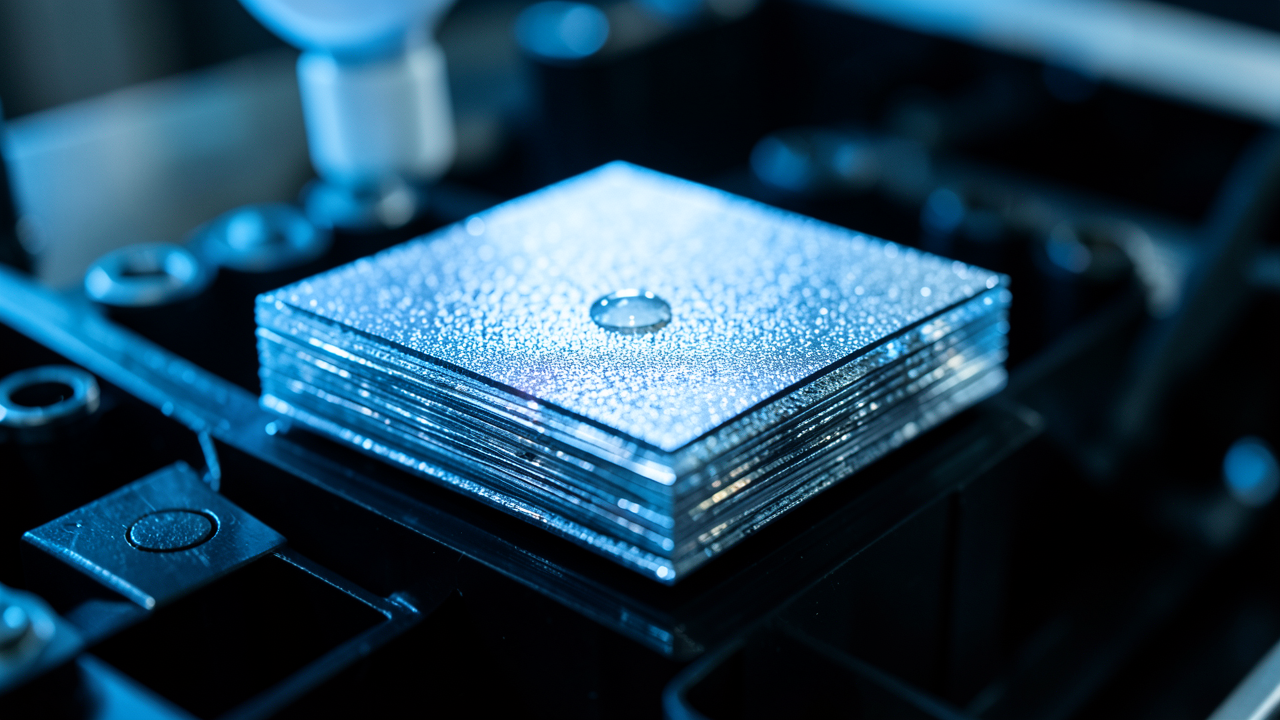
MXene nanomaterials are rapidly gaining prominence as frontier materials for both high-performance supercapacitors and clean hydrogen production, exhibiting exceptional dual-functionality. Notably, a MXene/polyaniline (PANI) hybrid composite engineered for supercapacitors maintained an outstanding 98.3% capacitance retention after 10,000 cycles, achieving high specific and volumetric capacitances of approximately 503 F g-1 and 1682 F cm-3, respectively. Concurrently, a Ni3Se4-NiSe2-Co3O4 heterostructure constructed on MXene demonstrated highly efficient bifunctional electrocatalytic activity, reaching 100 mA cm-2 at a cell voltage of 1.64 V with remarkable stability over 100 hours for hydrogen production.
Technical / Clinical Details
For supercapacitor applications, the MXene/PANI hybrid capitalizes on the high electrical conductivity of MXene and the significant pseudocapacitance of PANI, leading to a synergistic enhancement in energy storage performance. The long-term reliability is evidenced by the impressive 98.3% capacitance retention over 10,000 cycles, indicating minimal degradation of the electrode material. In hydrogen production, the Ni3Se4-NiSe2-Co3O4 heterostructure on MXene demonstrates robust catalytic activity for both oxygen evolution reaction (OER) and hydrogen evolution reaction (HER). The 100-hour stable operation and a current density of 100 mA cm-2 at 1.64 V underscore its potential for practical water electrolysis systems, surpassing many conventional catalysts.
Background & Context
The global demand for sustainable energy solutions is driving intense research into advanced materials for energy storage and conversion. Supercapacitors, known for their rapid charge-discharge capabilities and long cycle life, are vital for applications ranging from electric vehicles to grid-scale energy storage and portable electronics. Simultaneously, clean hydrogen production via water electrolysis is crucial for decarbonizing various sectors and establishing a future hydrogen economy. MXenes, a class of two-dimensional transition metal carbides, nitrides, or carbonitrides, are highly promising due to their unique properties, including high surface area, excellent electrical conductivity, and tunable surface chemistry, which make them ideal for these demanding applications.
Strategic Significance & Outlook
This dual functionality of MXene-based materials opens new avenues for integrated energy system design. Enhanced supercapacitor performance can extend the range of electric vehicles and improve the lifespan of electronic devices, while highly efficient catalysts for hydrogen production will accelerate the transition to a clean energy economy. Future research will focus on scaling up the synthesis of these MXene-based materials, further optimizing their composite structures, and rigorously evaluating their long-term stability and cost-effectiveness in real-world conditions. The exploration of novel MXene compositions and their integration into advanced devices will play a central role in the development of next-generation energy technologies.
Get our weekly technology intelligence — free
Receive an infographic that lets you judge at a glance whether each field’s analysis report is worth reading.
Subscribe Free — Weekly Tech Intelligence
By subscribing, you’ll receive Troy-Technical’s weekly technology intelligence newsletter.
- Your email and selected fields are used only to deliver the newsletter.
- We never share your information with third parties.
- You can unsubscribe anytime via the link in each email.
See our Privacy Policy for details.
Takes about a minute · Unsubscribe anytime





Comments