
Key Findings
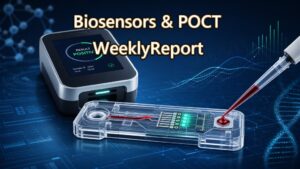
A seminal perspective article published in Frontiers underscores the transformative potential of electrochemical biosensors for the rapid and precise quantification of cytokine concentrations, particularly for the diagnosis and monitoring of sepsis. The paper indicates that meticulously optimized sensor designs can achieve an exceptionally low detection limit of 1 pg/mL for biomarkers such as IL-6 in whole blood, within a broad linear range of 1-10,000 pg/mL, and with remarkably swift detection times of just 5 minutes. This technological breakthrough is poised to revolutionize the early detection and timely intervention for time-critical conditions like sepsis.
Technical/Clinical Details
The perspective article meticulously discusses the paramount importance of tailored sensor designs that specifically account for the complex physiological demands of sepsis. Electrochemical biosensors function by immobilizing selective recognition elements, such as antibodies or aptamers, onto an electrode surface. Upon binding with target cytokines, these elements induce measurable changes in electrical signals, allowing for precise quantification of cytokine concentrations. The capability to directly measure from whole blood samples eliminates cumbersome pre-processing steps, dramatically accelerating detection times. For inflammatory cytokines like IL-6, the reported detection limit of 1 pg/mL is highly sensitive, enabling the capture of even initial cytokine surges in sepsis. The broad linear detection range of 1-10,000 pg/mL ensures the sensors can cover various disease states from mild to severe. A 5-minute response time is particularly advantageous in acute conditions like sepsis where rapid clinical decisions are critical for patient survival.
Background & Context
Sepsis is a life-threatening syndrome caused by a dysregulated host response to infection, carrying a high global mortality rate. Early diagnosis and prompt therapeutic intervention are crucial determinants of patient outcomes, yet current diagnostic tools often suffer from delays and lack specificity. Cytokines are central biomarkers in sepsis pathophysiology, and their real-time, high-sensitivity monitoring is indispensable for tracking disease progression and personalizing treatment strategies. Electrochemical biosensors, owing to their speed, potential low cost, and portability, are emerging as revolutionary tools for point-of-care sepsis diagnostics in intensive care units and beyond.
Strategic Significance & Outlook
The advancements in this field offer immense promise for addressing the unmet needs in sepsis diagnosis and monitoring. Future research should prioritize the development of multiplexed cytokine detection capabilities, enhance long-term sensor stability, and undertake large-scale clinical validation in diverse patient cohorts. Furthermore, continued miniaturization and automation of these devices will accelerate their adoption as user-friendly point-of-care diagnostic tools for non-specialists. The evolution of electrochemical biosensors is set to significantly contribute to earlier detection, more personalized treatment regimens, and ultimately, a substantial reduction in sepsis-related mortality, thereby profoundly improving the quality of patient care.
Source: https://www.frontiersin.org/articles/10.3389/fbioe.2026.1942504
Get our weekly technology intelligence — free
Receive an infographic that lets you judge at a glance whether each field’s analysis report is worth reading.
Subscribe Free — Weekly Tech Intelligence
By subscribing, you’ll receive Troy-Technical’s weekly technology intelligence newsletter.
- Your email and selected fields are used only to deliver the newsletter.
- We never share your information with third parties.
- You can unsubscribe anytime via the link in each email.
See our Privacy Policy for details.
Takes about a minute · Unsubscribe anytime





Comments