Key Findings
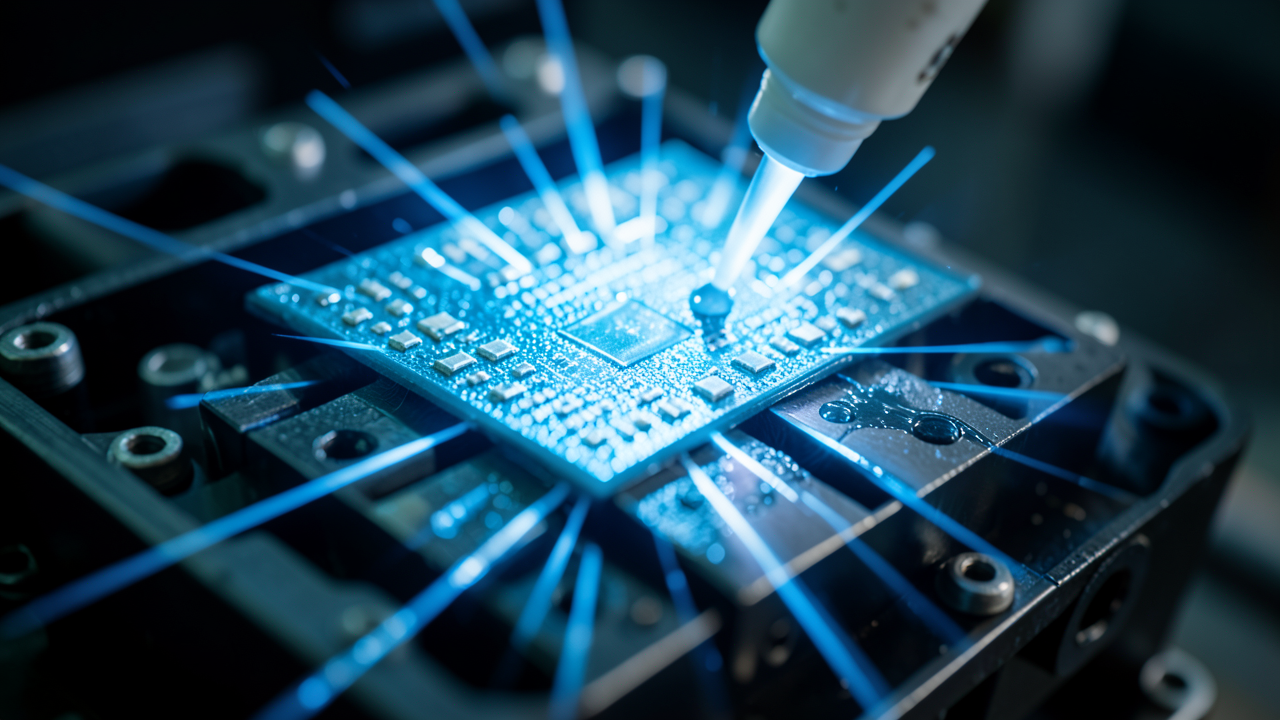
Optical fiber technology is attracting significant interest in the automotive sector as a high-speed zone backbone and inter-computer link, primarily due to its inherent advantages: high bandwidth capacity, low susceptibility to electromagnetic interference (EMI), and reduced weight. Within this context, silicon photonics is positioned as a pivotal enabling technology for realizing compact, low-power, and highly reliable optical I/O solutions specifically for automotive applications.
Technical / Clinical Details
Silicon photonics allows for the integration of optical and electronic circuits onto a single silicon chip, utilizing existing CMOS manufacturing processes. This capability facilitates significantly higher data transmission rates and lower power consumption compared to traditional copper cabling. In automotive applications, this technology is critical for handling the massive data flows between various sensors, processors, and displays within a vehicle. However, the automotive environment is notoriously harsh, demanding that solutions withstand wide temperature fluctuations (from -40°C to 125°C), high-frequency vibrations, long-term reliability, and cost-effectiveness. Connector durability is also a crucial factor to ensure stable performance over the entire lifespan of a vehicle.
Background & Context
Modern vehicles are experiencing an exponential increase in the volume of data generated and processed due to advanced features such as autonomous driving, infotainment, and connected services. This necessitates vehicle network architectures that can support substantially higher bandwidth and lower latency. Traditional electrical wiring has reached its limits in terms of weight, EMI, and signal degradation over transmission distances, making the transition to optical communication almost inevitable. Automotive manufacturers and suppliers are actively investing in technological innovations like silicon photonics to successfully navigate this transition.
Strategic Significance & Outlook
The adoption of silicon photonics in automotive applications is expected to begin incrementally, primarily in specific high-bandwidth applications such as data transmission from ADAS sensors and links between central computing units. As the technology matures and costs decrease, its use will likely expand to a broader range of in-vehicle networks. Overcoming the remaining challenges, particularly optimizing long-term reliability under extreme conditions and achieving cost-effectiveness, will be key to the widespread proliferation of this technology in the automotive industry. Ultimately, optical I/O is anticipated to become a standard part of automotive electronic architectures, accelerating the realization of fully autonomous driving and new mobility services.
Get our weekly technology intelligence — free
Receive an infographic that lets you judge at a glance whether each field’s analysis report is worth reading.
Subscribe Free — Weekly Tech Intelligence
By subscribing, you’ll receive Troy-Technical’s weekly technology intelligence newsletter.
- Your email and selected fields are used only to deliver the newsletter.
- We never share your information with third parties.
- You can unsubscribe anytime via the link in each email.
See our Privacy Policy for details.
Takes about a minute · Unsubscribe anytime






Comments