Key Findings
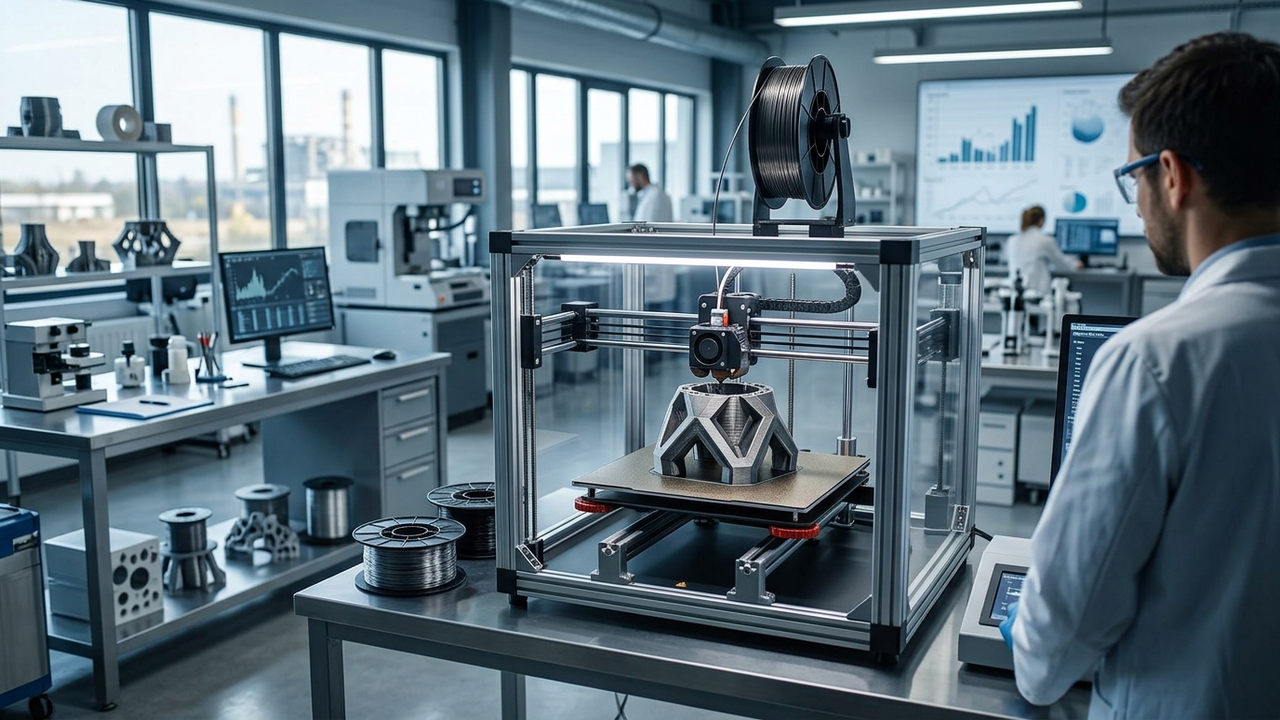
Sumitomo Chemical and Gutenberg Co. have successfully co-developed an advanced Liquid Crystal Polymer (LCP) filament and associated molding technology for Fused Filament Fabrication (FFF) 3D printers. This innovation delivers exceptional thermal conductivity and mechanical strength on par with aluminum alloys, enabling the 3D printing of complex geometries that are difficult to achieve with conventional injection molding, all while maintaining lightweight properties.
Technical / Clinical Details
The newly developed LCP filament exhibits remarkable high thermal conductivity, making it highly promising for thermal management applications in electronic components. Its mechanical strength, equivalent to that of aluminum alloys, also positions it for use in structural components. As an FFF material, it leverages the inherent properties of LCP—including high strength, superior heat resistance, and low water absorption—to facilitate precise and intricate 3D printing. This technology eliminates the need for molds typically associated with injection molding, significantly increasing design freedom and catering to diverse needs from rapid prototyping to low-volume production.
Background & Context
Sectors such as semiconductors, robotics, and next-generation mobility are increasingly demanding improved heat dissipation, lightweighting, and the integrated manufacturing of complex parts. Traditional materials and manufacturing processes often fall short of these requirements. The convergence of high-performance polymer materials and additive manufacturing offers a compelling solution. LCPs are renowned for their excellent electrical properties and thermal stability as super engineering plastics, but their processability via FFF has been a challenge; this joint development represents a significant overcoming of that barrier.
Strategic Significance & Outlook
Sumitomo Chemical and Gutenberg plan to aggressively deploy this innovative LCP filament into critical application areas including peripheral components for semiconductor manufacturing, humanoid robot parts, advanced telecommunication devices, and next-generation mobility solutions like electric Vertical Take-Off and Landing (eVTOL) aircraft. The commencement of sample provision in 2026 marks a crucial milestone set to accelerate new product development in these cutting-edge industries. This material is poised to significantly contribute to performance enhancement, energy efficiency, and manufacturing process optimization, potentially transforming industrial structures globally.
Source: https://www.adsalecprj.com/en/news/article_details/89722.html
Get our weekly technology intelligence — free
Receive an infographic that lets you judge at a glance whether each field’s analysis report is worth reading.
Subscribe Free — Weekly Tech Intelligence
By subscribing, you’ll receive Troy-Technical’s weekly technology intelligence newsletter.
- Your email and selected fields are used only to deliver the newsletter.
- We never share your information with third parties.
- You can unsubscribe anytime via the link in each email.
See our Privacy Policy for details.
Takes about a minute · Unsubscribe anytime








Comments