Key Findings
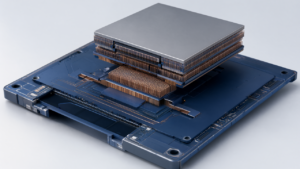
Tecman has developed innovative Anti-Thermal Propagation (ATP) pads, available in framed and encapsulated versions, designed to serve as cell barriers to effectively prevent thermal runaway propagation in Battery Energy Storage Systems (BESS). These pads significantly enhance the safety of BESS installations by allowing for cell expansion while crucially preventing heat transfer between adjacent cells.
Technical / Clinical Details
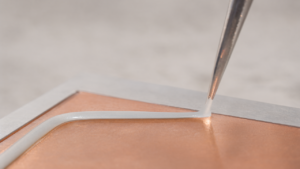
Tecman’s ATP pads employ a multi-layered structure combining advanced thermally insulating materials with a physical spacer layer. The thermally insulating component provides excellent insulation, slowing down or entirely blocking the transfer of high-temperature energy from a thermal runaway cell to its neighbors. The physical spacer layer is engineered to accommodate the volumetric expansion of cells during a thermal runaway event, preventing mechanical stress and potential damage to the battery package. This design maintains the structural integrity between cells and ensures gas venting pathways remain clear. The pads are securely bonded to cells during the assembly process using adhesive tapes, ensuring stable and consistent performance. This robust design effectively prevents a single cell failure from escalating into a catastrophic chain reaction affecting the entire system.
Background & Context
Battery Energy Storage Systems are vital for integrating renewable energy and stabilizing grids, but the risk of thermal runaway remains a primary concern for their broader adoption. In large-scale BESS facilities, a thermal runaway incident in one cell can rapidly propagate, leading to devastating fires. Consequently, preventing thermal runaway propagation is an urgent issue from both industry standards and regulatory perspectives. Tecman’s ATP pads offer a cost-effective and practical solution to this challenge, supporting the safe operation of BESS installations.
Strategic Significance & Outlook
Tecman’s ATP pads are anticipated to see rapid adoption as an essential technology for improving BESS safety. This technology is expected to be widely applied across various BESS applications, from grid-scale large storage systems to commercial and residential smaller systems. In the future, further advancements in material science could lead to the development of thinner, lighter, and even higher-performance ATP pads. This would enhance BESS design flexibility and energy density, further accelerating the deployment of renewable energy and modernization of grids. Through this innovation, Tecman aims to contribute to the realization of a safe and sustainable energy future.