Key Findings
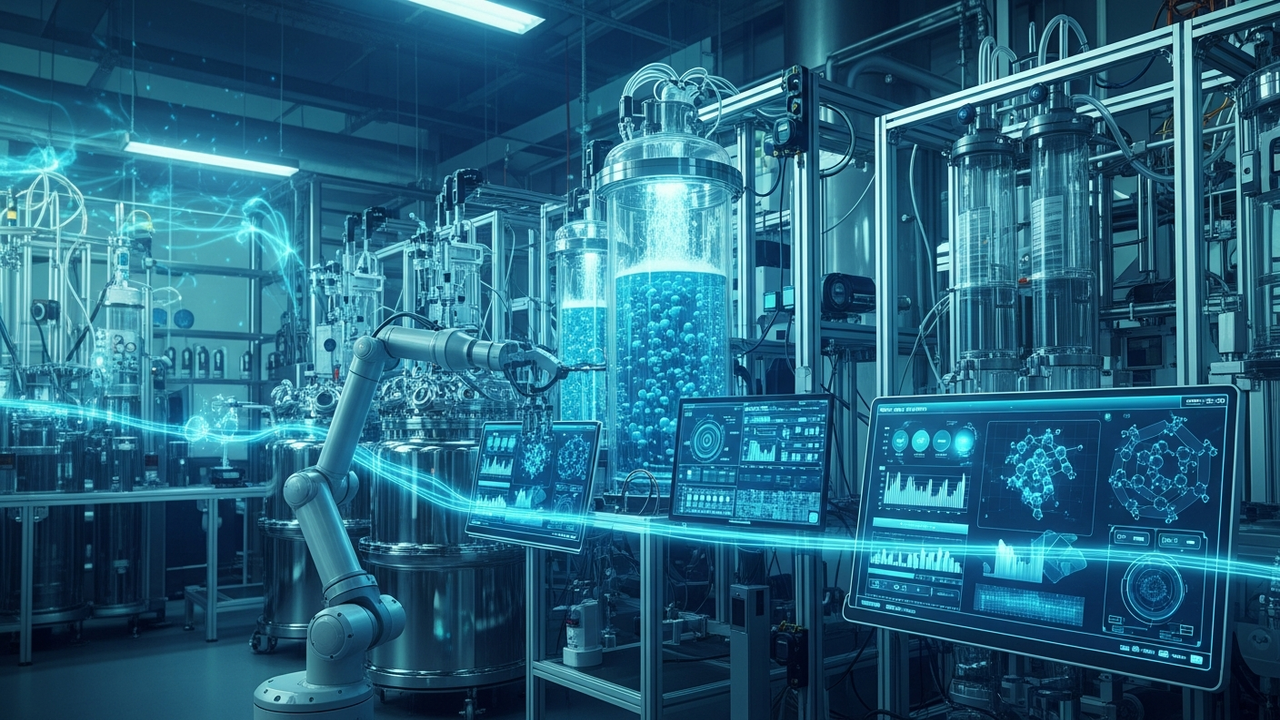
AI bioprocess control systems are delivering groundbreaking capabilities for real-time monitoring, prediction, and optimization across fermentation, cell culture, and purification processes in biomanufacturing. These systems leverage a combination of advanced sensor data, rich historical data, and sophisticated predictive modeling to significantly enhance process stability and productivity. This technological advancement is a powerful driver for the realization of ‘Bioprocessing 4.0’ in pharmaceutical development and manufacturing.
Technical / Clinical Details
AI bioprocess control systems demonstrate their efficacy through several key functionalities:
- AI-Driven Feed Control: Real-time optimization of nutrient and additive delivery during cultivation to maximize cell growth and product yield.
- Continuous Bioprocess Control: Adaptive management of processes to ensure consistent product quality and rapid response to varying conditions within continuous manufacturing setups.
- Digital Twin-Based Process Simulation: Creation of virtual models of physical processes, allowing for testing optimization scenarios and proactive identification of potential issues.
- Predictive Maintenance: Forecasting equipment failures to enable planned maintenance, thereby reducing unexpected downtime and operational disruptions.
These capabilities are underpinned by significant advancements in sensor technology and computational power, enabling unprecedented precision in controlling complex bioprocesses.
Background & Context
The biopharmaceutical manufacturing industry faces ongoing challenges in reducing costs, improving production efficiency, and ensuring consistent product quality. Bioprocessing 4.0 is an initiative designed to overcome these hurdles by promoting continuous manufacturing and data-driven smart manufacturing, moving away from traditional batch production. AI control systems are central to this vision, becoming indispensable for managing the complexity and ensuring the scalability required for personalized medicine products, such as cell and gene therapies.
Strategic Significance & Outlook
The adoption of AI bioprocess control systems is expected to make the concept of ‘autonomous labs’ a reality in the future, enabling fully automated manufacturing environments with minimal human intervention. This will lead to shorter lead times from R&D to commercial production, accelerating the market entry of biopharmaceuticals. Investors should recognize the long-term growth opportunities presented by these technological innovations. For engineers, this era demands new specialized skills in designing, implementing, and operating these advanced systems, marking a significant evolution in bioprocess engineering.
Source: https://www.devopsschool.com/blog/top-10-best-ai-bioprocess-control-systems/