
Key Findings
Researchers have successfully developed next-generation tactile sensors that bestow robots with the ability to gather detailed physical information akin to human fingertips, encompassing pressure, surface texture, and temperature. This groundbreaking sensor integrates pressure detection with signals for vibration, proximity, temperature, and texture into a single, flexible layer, providing robots with practical tactile perception capabilities.
Technical / Clinical Details
The new tactile sensor technology achieves high-density and flexible tactile information acquisition by consolidating multiple sensing principles into a single layer, utilizing composite materials and intricate microstructure designs. This method surpasses the limitations of simply arranging multiple discrete sensors. The sensor can perceive proximity information before contact, detailed pressure distribution upon contact, fine textures via subtle vibrations, and even temperature in real-time. Critically, its ability to detect unforeseen events like slippage or jamming early is paramount for precision tasks and safe human-robot collaboration in various applications.
- Multi-Functional Sensing Integration: Detects pressure, vibration, proximity, temperature, and texture within a single flexible layer.
- Human Fingertip-Level Tactile Perception: Comprehensively grasps the detailed physical properties of objects.
- Early Anomaly Detection: Identifies slippage or jamming in real-time, ensuring safer robot operation.
Background & Context
While visual information processing in robotics has advanced significantly, the lack of tactile feedback has been a persistent challenge. Human dexterity in manipulating objects is underpinned by a sophisticated integration of vision and touch. Conventional tactile sensors for robots often measure a single physical quantity or increase complexity and cost by arranging multiple sensors in parallel. This next-generation sensor overcomes these limitations, paving the way for robots to perform more complex and delicate tasks with human-like reliability.
Strategic Significance & Outlook
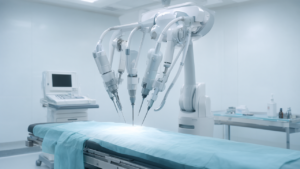
This multi-functional tactile sensor dramatically expands the application possibilities for robots across numerous fields, including medicine, manufacturing, and service robotics. For instance, surgical robots could more accurately discern tissue stiffness, and manufacturing robots could detect minute assembly errors. Furthermore, caregiving robots could offer more natural and safer interactions with humans. This technology represents a crucial step in the evolution of robots from mere automation tools to more perceptive and adaptable “collaborators.”
Source: https://www.azosensors.com/article.aspx?ArticleID=3368
Get our weekly technology intelligence — free
Receive an infographic that lets you judge at a glance whether each field’s analysis report is worth reading.
Subscribe Free — Weekly Tech Intelligence
By subscribing, you’ll receive Troy-Technical’s weekly technology intelligence newsletter.
- Your email and selected fields are used only to deliver the newsletter.
- We never share your information with third parties.
- You can unsubscribe anytime via the link in each email.
See our Privacy Policy for details.
Takes about a minute · Unsubscribe anytime






Comments