Key Findings
CATL, the world’s largest battery manufacturer, has set a target to commence small-batch production of all-solid-state batteries by 2027. However, the company’s current solid-state battery technology is assessed at Technology Readiness Level 4 (TRL-4), indicating that it is still at the laboratory principle verification stage, with numerous technical challenges remaining before commercialization.
Technical Details
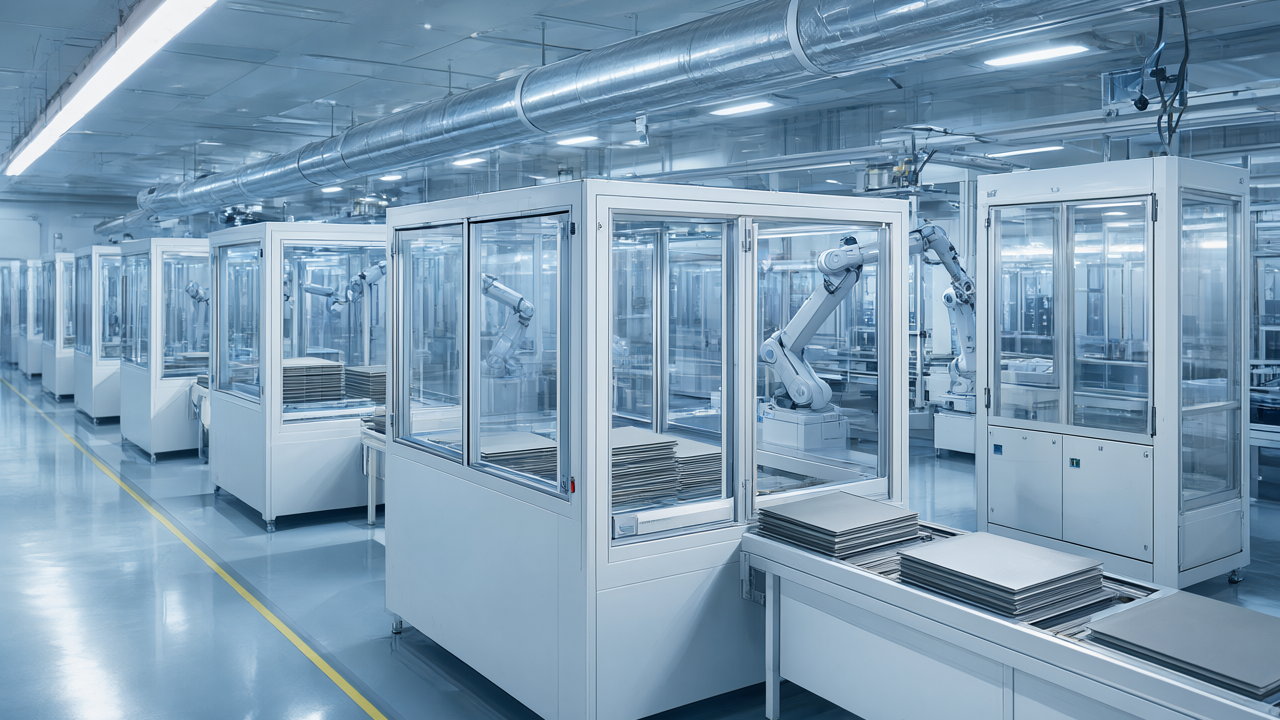
One of the primary technical hurdles CATL faces is related to the properties of sulfide solid electrolytes. While these electrolytes offer excellent ionic conductivity, they are highly sensitive to moisture and can produce toxic hydrogen sulfide gas upon contact with water. This characteristic means that most existing wet-process liquid electrolyte tools used in conventional lithium-ion battery manufacturing cannot be reused. Instead, dedicated production lines capable of maintaining ultra-dry environments are essential, leading to increased capital investment and manufacturing complexity.
Furthermore, several unresolved process risks have been identified:
- Solid-solid electrode interface challenges: It remains difficult to establish technologies that reduce interfacial resistance between electrodes and solid electrolytes and maintain stable contact over long periods.
- Hot Isostatic Pressing (HIP) yield: The yield of the HIP process, which is critical for uniformly forming solid electrolyte and electrode materials, is currently low, potentially leading to higher costs.
- Dry electrode coating challenges: Dry coating technology, which uniformly applies electrode materials without liquids, offers environmental benefits but presents significant technical difficulties in achieving consistency and performance.
Background & Context
All-solid-state batteries are considered the ultimate form of next-generation batteries due to their advantages in safety, high energy density, and long lifespan. The focus of major companies like CATL on this sector could shape the future of the EV market. However, the announced TRL level and specific challenges highlight that commercializing solid-state batteries remains technically complex and requires substantial R&D investment.
Strategic Significance & Outlook
For CATL to achieve its 2027 small-batch production target, it must rapidly resolve the material science and manufacturing process challenges outlined above. Key areas of focus will be moisture management, interface optimization, and improving production yields. Overcoming these hurdles will enable CATL to establish leadership in the solid-state battery market and contribute to the further advancement of the electric vehicle industry.
Source: https://pandaily.com/catl-2027-all-solid-state-small-batch
Get our weekly technology intelligence — free
Receive an infographic that lets you judge at a glance whether each field’s analysis report is worth reading.
Subscribe Free — Weekly Tech Intelligence
By subscribing, you’ll receive Troy-Technical’s weekly technology intelligence newsletter.
- Your email and selected fields are used only to deliver the newsletter.
- We never share your information with third parties.
- You can unsubscribe anytime via the link in each email.
See our Privacy Policy for details.
Takes about a minute · Unsubscribe anytime






Comments