Key Findings
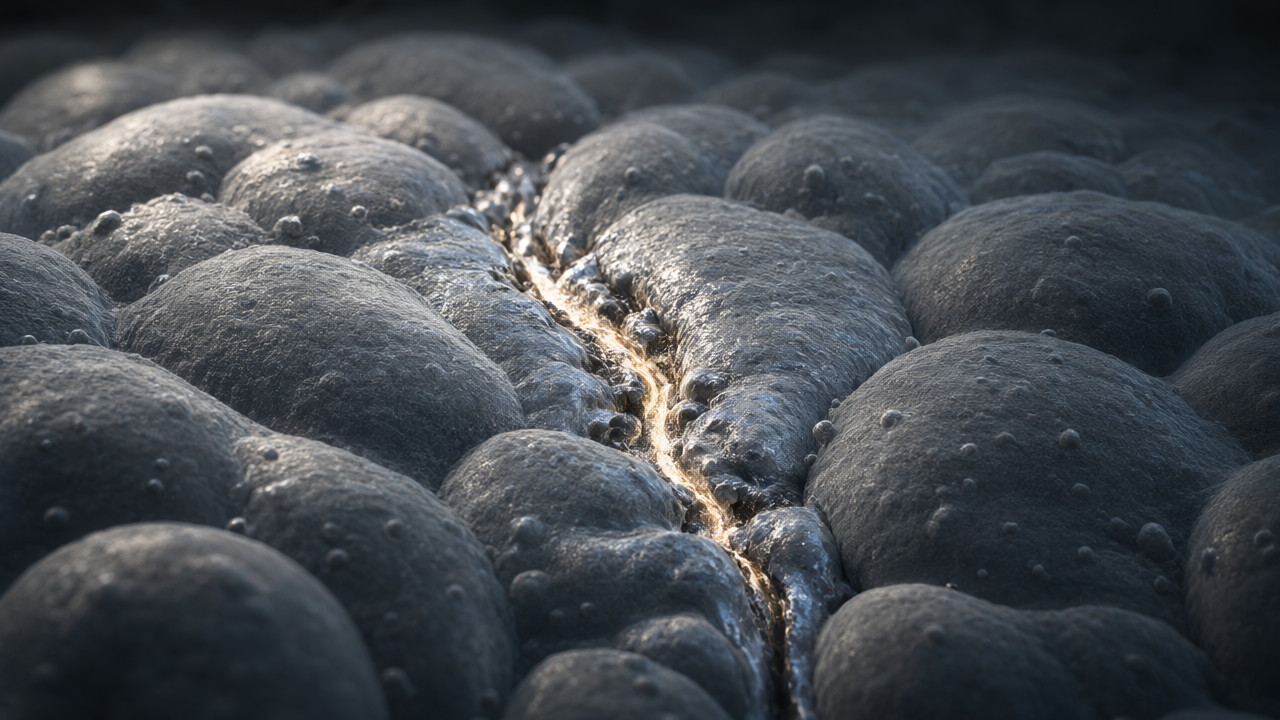
Researchers from Osaka University have achieved a significant milestone in materials science by discovering a specific metal alloy that exhibits autonomous self-healing capabilities for micro-cracks. This pioneering finding expands the scope of self-healing materials, traditionally explored in polymers, to robust structural materials such as metals and concrete. The development holds the potential to dramatically extend the service life and enhance the safety of various structures by allowing materials to repair damage without human intervention, marking a paradigm shift in material durability.
Technical Details
The Osaka University team elucidated the mechanism by which certain metal alloys detect and re-bond along micro-cracks under specific conditions. This self-healing process is intimately linked to the material’s nanostructure and chemical composition, operating through an intrinsic repair mechanism activated upon damage. When a crack forms, it triggers a rearrangement of the atomic structure within the material, leading to the closure of the crack and restoration of structural integrity. This mechanism enables the recovery of strength and extended lifespan in metallic materials, a feat previously deemed challenging. The technology is particularly promising for improving resistance against fatigue fractures and corrosion, critical failure modes in many engineering applications.
Background & Context
The lifespan of infrastructure and mechanical components is often limited by progressive degradation from micro-cracks and corrosion, necessitating expensive and labor-intensive inspection, repair, and replacement cycles. Undetected damage poses severe safety risks, making robust materials a global priority. While self-healing materials have been extensively researched as a fundamental solution, practical application in metallic systems has remained elusive. Osaka University’s research addresses this long-standing challenge, paving the way for applications in diverse industries, including bridges, aircraft, automobiles, and electronic devices, where high reliability and longevity are paramount.
Strategic Significance & Outlook
The discovery of this self-healing metal alloy represents a transformative development for materials science and engineering. It promises substantial reductions in maintenance costs for structures and equipment, contributing significantly to a more sustainable and resilient society. Future research will focus on optimizing the self-healing capacity for more complex damage scenarios and across varying environmental conditions. Successful commercialization of this technology could lead to the development of safer, more reliable infrastructure and industrial components, fundamentally altering how materials are designed, managed, and utilized throughout their lifecycle.
Get our weekly technology intelligence — free
Receive an infographic that lets you judge at a glance whether each field’s analysis report is worth reading.
Subscribe Free — Weekly Tech Intelligence
By subscribing, you’ll receive Troy-Technical’s weekly technology intelligence newsletter.
- Your email and selected fields are used only to deliver the newsletter.
- We never share your information with third parties.
- You can unsubscribe anytime via the link in each email.
See our Privacy Policy for details.
Takes about a minute · Unsubscribe anytime






Comments