UNSW’s Professor Green Launches Field-Testing Facility for Perovskite, Driving Commercialization of 35.2% Tandem Cells
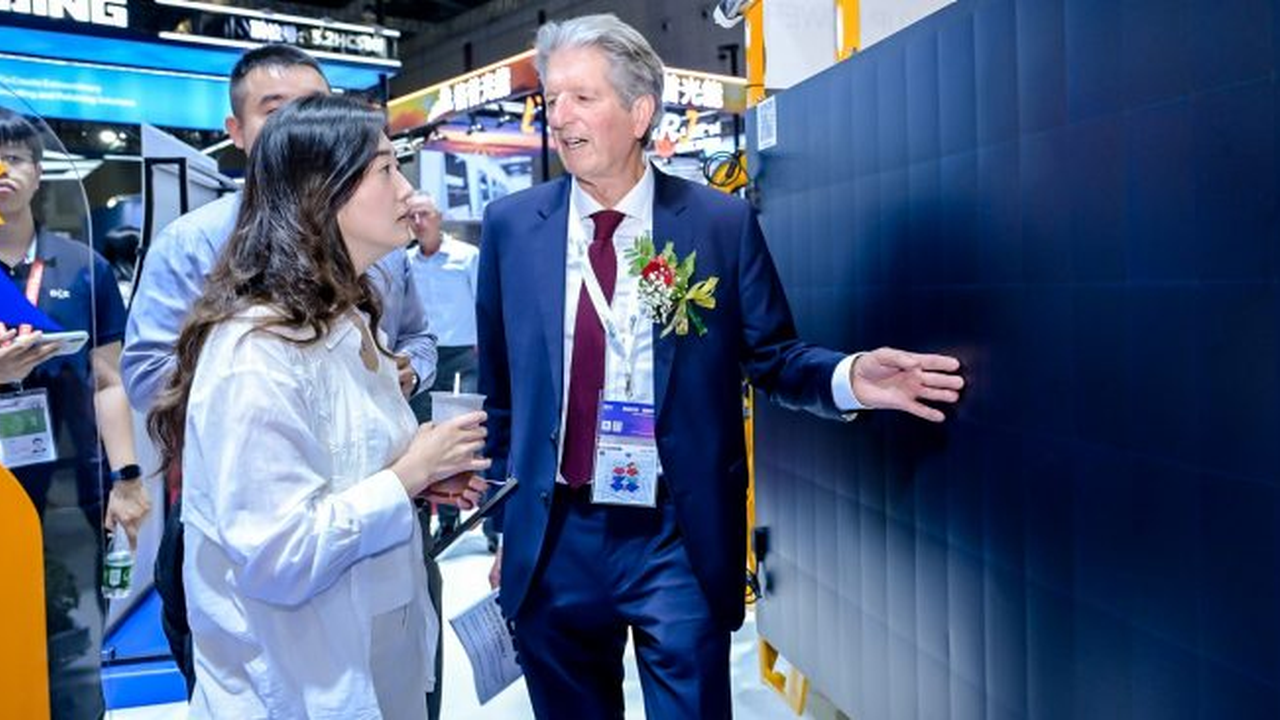
Professor Martin Green of the University of New South Wales (UNSW), globally recognized as the “father of modern photovoltaics,” has announced a new initiative to accelerate the commercialization of perovskite solar cells. This move comes as conventional silicon solar cells approach their theoretical efficiency limits. As part of this effort, an independent field-testing facility will be established to evaluate the long-term durability of perovskite solar modules under real-world environmental conditions.
Technical and Clinical Details
- World Record Efficiency Update: According to the latest international solar cell efficiency tables (NREL Chart), laboratory-scale perovskite-on-silicon tandem cells have recorded an extraordinary power conversion efficiency of 35.2%. This significantly surpasses the highest efficiencies for single-junction silicon cells (28.1% for large areas) and small perovskite cells (28.0%), unequivocally demonstrating the potential of tandem structures to exceed the Shockley-Queisser limit.
- Importance of Durability Assessment: Professor Green’s research focuses on transforming this high-efficiency technology into a commercially sustainable product. While silicon solar cell modules offer long-term warranties of 25 to 40 years, current perovskite modules have yet to achieve comparable long-term stability. The new field-testing facility will meticulously analyze perovskite behavior under complex outdoor environmental factors such as temperature fluctuations, humidity, and UV radiation, providing crucial data for durability improvements.
Background and Industry Context
Solar power is a cornerstone of the global clean energy transition, but silicon technology is mature, facing physical limits for further efficiency gains. Perovskite solar cells, with their excellent light absorption properties and relatively inexpensive manufacturing processes, are anticipated as a “game-changer” to overcome these limitations. Specifically, tandem structures combining perovskites with existing silicon solar cells offer the potential for efficiencies unattainable by either technology alone, promising significant improvements in solar power’s cost-effectiveness.
Future Outlook
Professor Green states that the insights gained from this field-testing facility will be indispensable for resolving the long-term stability issues of perovskite solar cells and clarifying their path to commercialization. The collection and analysis of real-world performance data are expected to accelerate the optimization of material composition, refinement of device architecture, and advancement of protective layer technologies. This initiative represents a critical step for perovskite technology to play a major role in the global energy mix.
Source: https://www.unsw.edu.au/newsroom/news/2026/06/father-of-modern-solar-approaches-the-next-frontier