Key Findings
While 2026 is recognized as the ‘mass production year’ for all-solid-state batteries (ASSBs), the current high cost remains the primary barrier to widespread adoption. Nevertheless, Gotion High-Tech is advancing with its >400Wh/kg ‘Jinshi’ ASSB and has developed an innovative, low-cost synthesis method for Li₂S, aiming to dramatically reduce ASSB costs to usher in an ‘RMB 1/Wh era’.
Technical & Clinical Details
- Current ASSB cell costs range from RMB 1.6 to 2.2 per Wh, which is 3 to 5 times higher than mainstream lithium iron phosphate (LFP) batteries. This high cost is predominantly driven by material expenses and complex manufacturing processes.
- For sulfide-based ASSBs in particular, the solid electrolyte constitutes 70-80% of the total battery cost, with Li₂S accounting for 50-64% of the electrolyte cost, presenting a significant challenge.
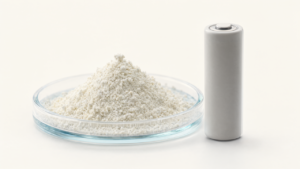
- To address this, Gotion High-Tech has developed a ‘gas-liquid-solid three-phase synthesis method’ for Li₂S. The company plans to activate a kiloton-scale production line in 2026 and expand to an annual capacity of 50,000 tons by 2030.
- The ambitious price targets for Li₂S are RMB 500,000 per ton, and for the solid electrolyte, RMB 300,000 per ton. These reductions are projected to bring the ASSB cell cost down to ‘RMB 1 per Wh’.
- Manufacturing challenges include the extreme sensitivity of solid electrolytes to air and moisture, necessitating strict processing in inert atmospheres, which further contributes to elevated production costs.
Background & Context
Major battery manufacturers in the electric vehicle (EV) market, including CATL, BYD, and Gotion High-Tech, are actively pursuing early mass production of ASSBs, with timelines announced for 2027-2028. ASSBs offer superior safety, energy density, and longer lifespan compared to conventional lithium-ion batteries, but their high cost has been the greatest impediment to widespread EV integration. Gotion High-Tech’s initiative to lower Li₂S costs represents a direct approach to solving this industry-wide challenge.
Strategic Significance & Outlook
If Gotion High-Tech successfully reduces Li₂S manufacturing costs and achieves the RMB 1/Wh era, the market penetration of ASSBs could accelerate dramatically. This would enhance the price competitiveness of EVs, making high-performance and safer electric vehicles accessible to a wider consumer base. This breakthrough is expected not only to advance battery technology but also to transform the entire electric vehicle industry landscape and optimize the battery material supply chain. Such a development could also catalyze other battery manufacturers to accelerate their pursuit of similar cost-reduction technologies.
Source: #