Key Findings
In autonomous driving systems, the geometric and kinematic cues provided by 4D radar significantly complement traditional visual semantics, enabling more robust environmental perception. This research introduces a novel framework, ‘RCVLA,’ that successfully integrates the advantages of 4D radar into Vision-Language-Action (VLA) models, thereby enhancing autonomous driving planning accuracy and safety. RCVLA’s effectiveness has been demonstrated through evaluations on the Cap4DR and OmniHD-QA datasets.
Technical / Clinical Details
The RCVLA framework is primarily composed of two innovative stages:
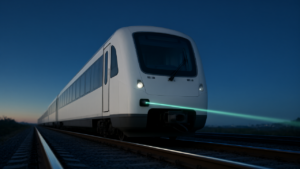
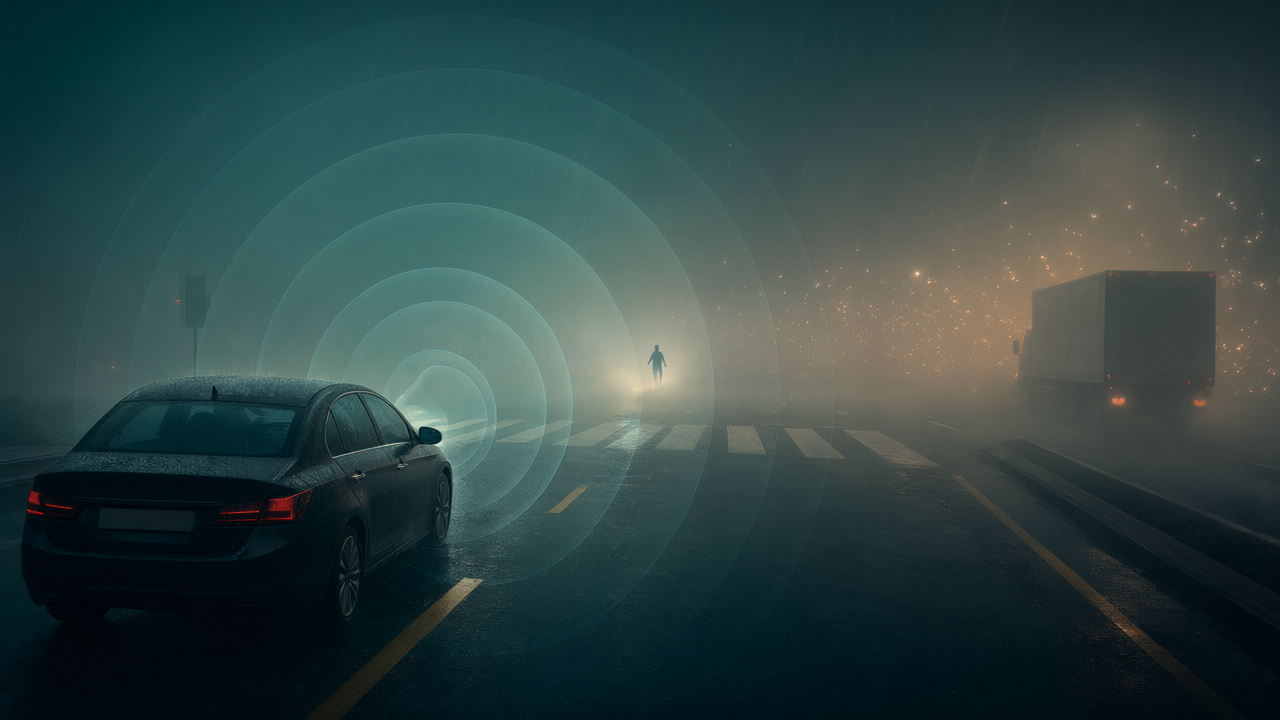
- Radar-Based Semantic Reasoning Stage: 4D radar data, with its point cloud information, can extract detailed geometric and kinematic data such as object position, velocity, and direction. In RCVLA, this radar data is fused with visual information to enable the VLA model to achieve a deeper ‘semantic understanding’ of the surrounding environment. This leads to improved detection accuracy for distant vehicles’ speed changes and the presence of vehicles or pedestrians, even in adverse weather conditions like rain or fog.
- Trajectory Arbitration Stage: Based on the results of semantic reasoning, RCVLA evaluates multiple possible driving trajectories and performs ‘arbitration’ to determine the safest and most efficient path. This directly impacts critical decisions in real driving, such as collision risk reduction, smooth lane changes, and maintaining optimal speed profiles. Particularly in situations of high uncertainty or scenarios where visual information alone is insufficient, the robust data from the radar enhances the reliability of the final trajectory selection.
Through this integrated approach, RCVLA has demonstrated superiority in robustness and planning performance, especially under adverse conditions, when compared to existing purely vision-based VLA models in tests conducted on datasets like Cap4DR and OmniHD-QA.
Background & Context
The evolution of autonomous driving technology heavily relies on sensor fusion and advanced AI models. While cameras provide rich visual information, they are susceptible to poor weather and lighting conditions and have limitations in distance measurement accuracy. LiDAR offers highly precise 3D point clouds but is expensive and can be affected by rain or snow. 4D radar, on the other hand, performs relatively stably in adverse weather and has the unique advantage of directly measuring object velocity. RCVLA integrates the strengths of 4D radar into VLA models, overcoming the limitations of single sensors and paving the way for more reliable all-weather autonomous driving systems. This represents an indispensable technological advancement for accelerating the widespread adoption of autonomous driving.
Strategic Significance & Outlook
The RCVLA framework holds the potential to drive the next phase of autonomous driving technology. The seamless integration of 4D radar and VLA models will significantly enhance the safety and reliability of autonomous vehicles in real-world scenarios, enabling autonomous driving in more complex environments. In the future, this technology is expected to be implemented in production vehicles, helping to achieve safe autonomous driving even in adverse conditions such as rain, snow, and fog. Further research will focus on optimizing RCVLA’s real-time processing capabilities and its adaptability to various vehicle types and driving styles. This advancement will be a crucial milestone for autonomous vehicles to become truly all-weather and all-environment capable.
Source: https://arxiv.org/abs/2609.32681
Get our weekly technology intelligence — free
Receive an infographic that lets you judge at a glance whether each field’s analysis report is worth reading.
Subscribe Free — Weekly Tech Intelligence
By subscribing, you’ll receive Troy-Technical’s weekly technology intelligence newsletter.
- Your email and selected fields are used only to deliver the newsletter.
- We never share your information with third parties.
- You can unsubscribe anytime via the link in each email.
See our Privacy Policy for details.
Takes about a minute · Unsubscribe anytime