Key Findings
The UVPolyZell project, spearheaded by Fraunhofer FFB, has achieved a significant breakthrough in lithium-ion battery manufacturing by developing a novel polymer binder system for NMC (nickel-manganese-cobalt) cathodes. This new system entirely avoids the use of toxic NMP (N-methyl-2-pyrrolidone) solvents and fluorine-based PVDF (polyvinylidene fluoride) polymers, addressing critical environmental and health concerns in battery production.
Technical / Clinical Details
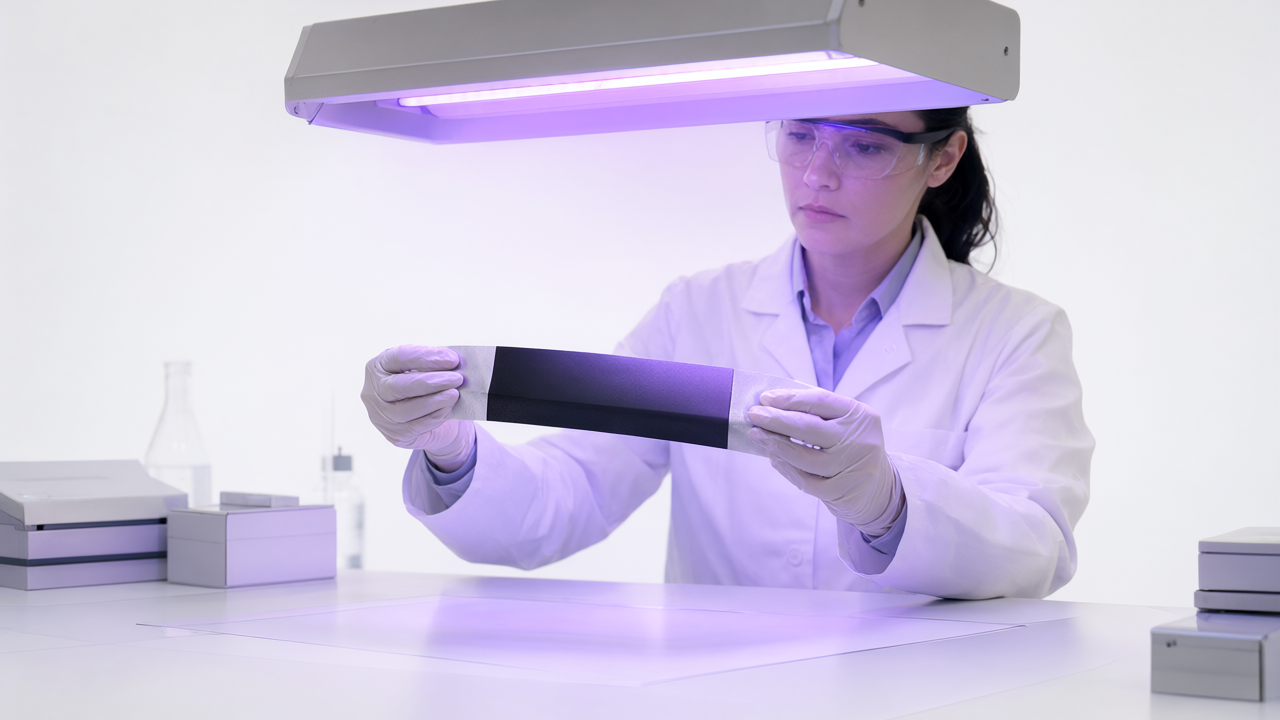
The innovative binder system leverages UV (ultraviolet) light for induced crosslinking, allowing for rapid and efficient curing. Traditionally, battery manufacturing processes involving NMP-based slurries necessitate extensive high-temperature drying, which accounts for a substantial portion of manufacturing costs and energy consumption. By implementing UV-induced crosslinking, the UVPolyZell project anticipates reducing energy consumption for electrode drying by up to 80%. Furthermore, the project is actively developing innovative continuous mixing processes for electrode paste, utilizing alternative solvents and stability-enhancing additives. This approach not only boosts production efficiency but also ensures the material’s stability and homogeneity. Test battery cells incorporating this new material system and UV light sources for crosslinking have been assembled and are currently undergoing performance evaluation.
Background & Context
The demand for lithium-ion batteries is soaring due to the rapid growth of electric vehicles and renewable energy storage solutions. However, the conventional manufacturing processes present notable environmental and health challenges, primarily through the use of toxic solvents like NMP and non-biodegradable fluorine polymers such as PVDF. NMP, in particular, poses significant health risks to workers and incurs high costs for wastewater treatment, prompting an urgent need for sustainable alternatives. The UVPolyZell project directly addresses these issues, aiming to establish more sustainable and energy-efficient battery production technologies.
Strategic Significance & Outlook
The development of an NMP- and PVDF-free UV-curable binder system represents a monumental step towards greener manufacturing of lithium-ion batteries. Should this technology be successfully commercialized, it could dramatically reduce the environmental footprint of battery production facilities, simultaneously lowering manufacturing costs. This advancement would accelerate the widespread adoption of more affordable and high-performance next-generation batteries. The technology is expected to play a crucial role in supporting the further proliferation of electric vehicles and the deployment of grid-scale energy storage solutions, marking a new era for sustainable energy.
Get our weekly technology intelligence — free
Receive an infographic that lets you judge at a glance whether each field’s analysis report is worth reading.
Subscribe Free — Weekly Tech Intelligence
By subscribing, you’ll receive Troy-Technical’s weekly technology intelligence newsletter.
- Your email and selected fields are used only to deliver the newsletter.
- We never share your information with third parties.
- You can unsubscribe anytime via the link in each email.
See our Privacy Policy for details.
Takes about a minute · Unsubscribe anytime