Key Findings
DIC Corporation has announced the development of an active ester-based epoxy curing agent designed to suppress electrical charge accumulation within epoxy resins, a critical advancement for high-frequency communication electronic devices. This new technology effectively reduces signal loss at high speeds, while preserving the superior processability, adhesive strength, and crucial heat resistance inherent to epoxy resins.
Technical Details
- The newly developed active ester-based curing agent operates by significantly inhibiting the buildup of electrical charges within the epoxy resin matrix. This mechanism minimizes dielectric loss—the energy dissipation of a signal as it passes through the material—which is critical for high-frequency signal integrity.
- Utilizing this curing agent, epoxy resins retain their traditional advantageous properties such as excellent processability, ease of handling, and strong adhesion to various substrates, all while achieving enhanced performance characteristics.
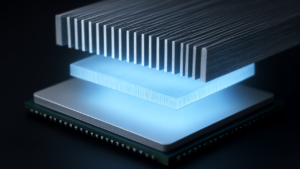
- Furthermore, the material offers high heat resistance, making it particularly suitable for packaging high-performance devices like AI processors that generate substantial heat, as well as for applications in high-temperature environments.
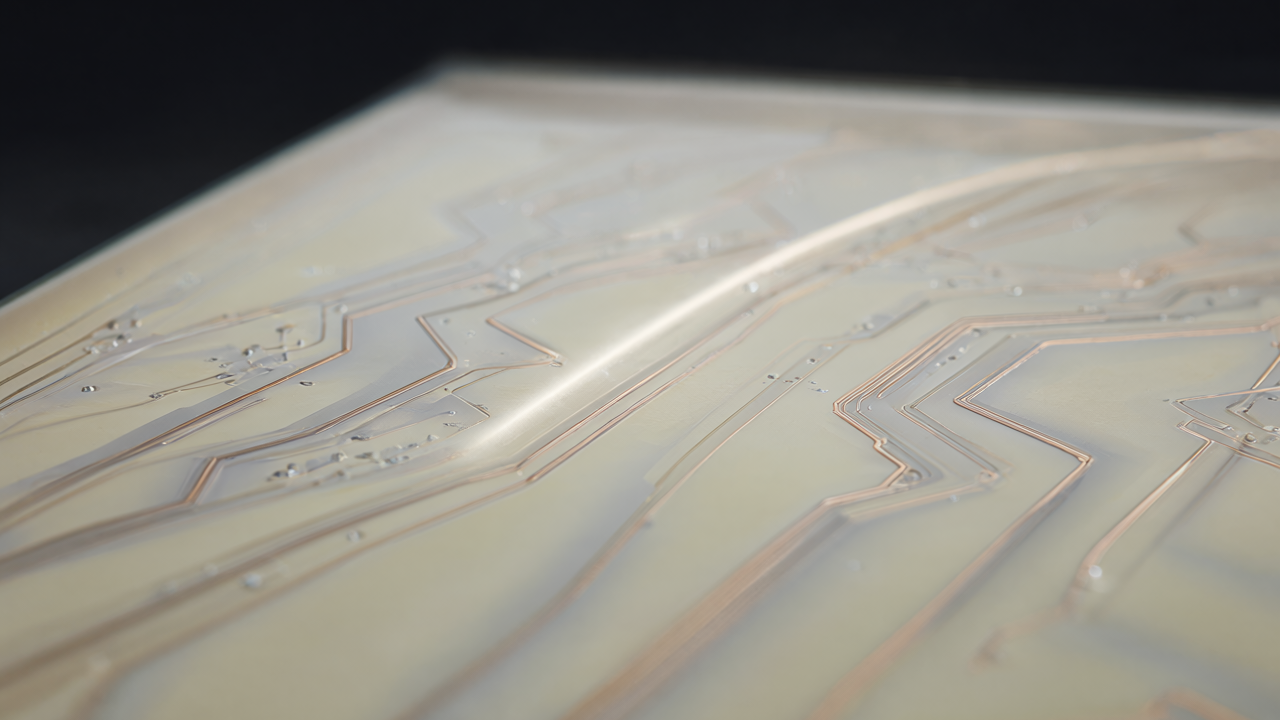
- This technology is already being deployed in circuit boards for 5G communication infrastructure and generative AI systems, which demand robust computational capabilities, underscoring its readiness for practical application.
Background & Context
The proliferation of advanced technologies such as 5G communication and generative AI has led to an exponential increase in data transfer rates and processing power. Consequently, electronic device circuit boards require materials with exceptionally low dielectric loss and high heat resistance to support signal transmission at ever-higher frequencies. While conventional epoxy resins are versatile, signal loss in high-frequency domains has been a persistent challenge. DIC’s new curing agent directly addresses this technical gap, enabling the next generation of electronics.
Strategic Significance & Outlook
DIC’s active ester-based curing agent is poised to become increasingly vital in electronics sectors underpinning next-generation high-speed and high-capacity communication and computing, including 5G base stations, data centers, autonomous vehicle systems, and AI accelerators. This technology is expected to facilitate the creation of more reliable and higher-performing electronic devices, thereby contributing to the continued evolution of digital infrastructure on a global scale.
Source: https://www.dic-global.com/en/contents/column/39.html
Get our weekly technology intelligence — free
Receive an infographic that lets you judge at a glance whether each field’s analysis report is worth reading.
Subscribe Free — Weekly Tech Intelligence
By subscribing, you’ll receive Troy-Technical’s weekly technology intelligence newsletter.
- Your email and selected fields are used only to deliver the newsletter.
- We never share your information with third parties.
- You can unsubscribe anytime via the link in each email.
See our Privacy Policy for details.
Takes about a minute · Unsubscribe anytime