Key Findings
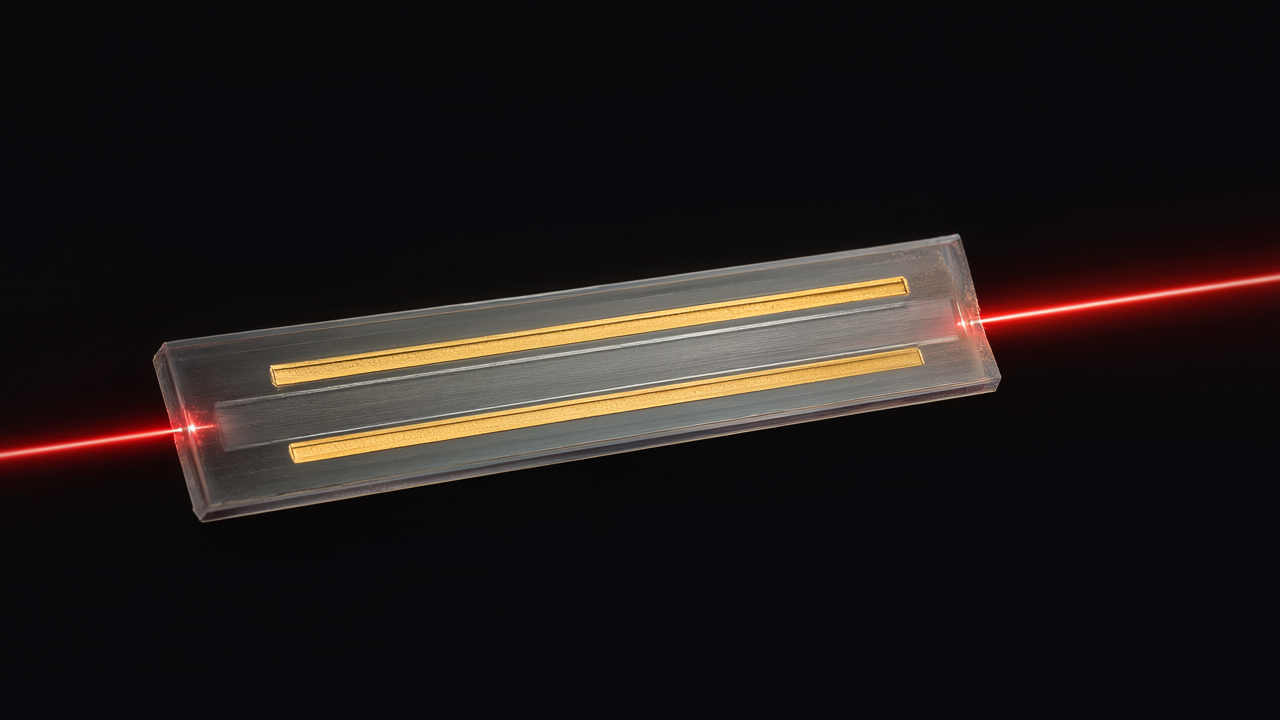
Murata Manufacturing has publicly released its technology roadmap for Co-Packaged Optics (CPO), designed to meet the escalating demands of AI data centers. Central to this roadmap is a groundbreaking optical modulator utilizing Thin-Film Lithium Niobate (TFLN) technology. The first samples of this TFLN modulator are slated for completion by the fourth quarter of 2026, with mass production targeted for 2028, signifying a major leap forward in next-generation optical communication performance.
Technical / Clinical Details
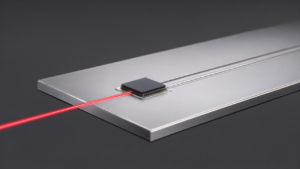
Murata’s TFLN optical modulator is engineered to achieve an electro-optical (EO) bandwidth exceeding 100GHz and ultra-high transmission speeds of over 400Gbps per channel. Lithium niobate is intrinsically a material with excellent electro-optical properties, but its thin-film form factor facilitates hybrid integration with silicon photonics while simultaneously reducing power consumption and miniaturizing the device. This high bandwidth and speed are critically important for alleviating data bottlenecks between CPU/GPU and optical modules within AI data center CPO configurations. Beyond CPO, this technology is also being considered for a wide range of advanced applications, including coherent communication for long-haul, high-capacity transmission, Wavelength Division Multiplexing (WDM) for simultaneous multi-wavelength transmission, and future quantum communication systems.
Background & Context
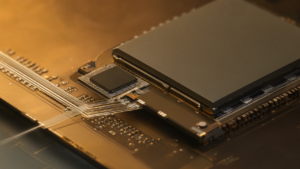
The explosive growth in power consumption and data processing volumes in AI data centers has exposed the limitations of conventional pluggable optical transceivers. CPO, as a next-generation integration technology, dramatically reduces signal loss and power consumption by shortening electrical interconnects through placing optical components in close proximity to, or within the same package as, electrical chips (CPUs/GPUs). Murata’s integration of TFLN technology into its CPO roadmap underscores its belief that this technology will be an indispensable component of AI-era data center infrastructure. The high-precision component manufacturing and novel material development capabilities of Japanese companies, in particular, are key to establishing competitive advantages in this field.
Strategic Significance & Outlook
The mass production of Murata’s TFLN optical modulators will significantly accelerate the practical implementation of CPO technology, elevating the performance and energy efficiency of AI data centers to new levels. This technology is expected to have a profound impact across the optical communication industry, not only enabling higher performance in existing technologies like coherent communication and WDM but also contributing to the realization of optical interconnects in nascent areas such as quantum computing and quantum networks. The targeted mass production date of 2028 represents a critical milestone that will shape the future direction of optical communication technology.
Source: https://www.thelec.net/news/articleView.html?idxno=14362
Get our weekly technology intelligence — free
Receive an infographic that lets you judge at a glance whether each field’s analysis report is worth reading.
Subscribe Free — Weekly Tech Intelligence
By subscribing, you’ll receive Troy-Technical’s weekly technology intelligence newsletter.
- Your email and selected fields are used only to deliver the newsletter.
- We never share your information with third parties.
- You can unsubscribe anytime via the link in each email.
See our Privacy Policy for details.
Takes about a minute · Unsubscribe anytime