Key Findings
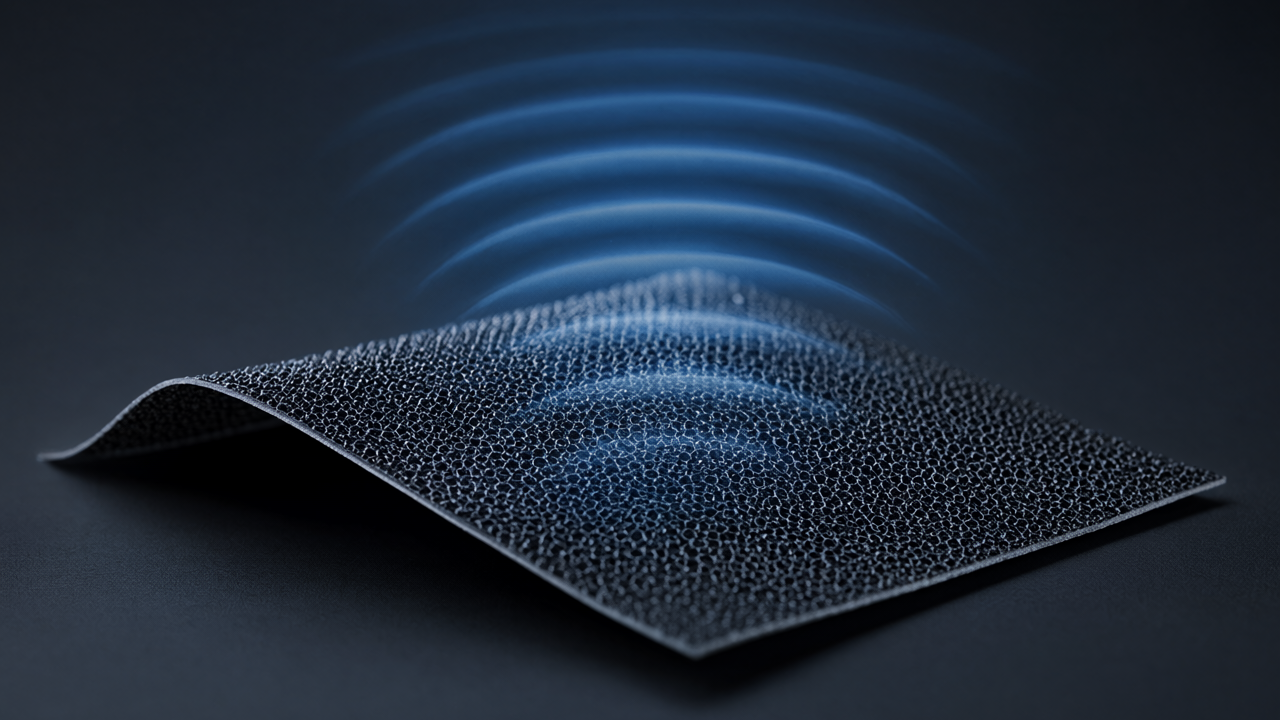
A Chinese research team has successfully engineered a composite material combining high-entropy alloys and reduced graphene oxide in a hollow, porous microsphere structure, achieving exceptional microwave absorption across the C, X, and Ku frequency bands. This innovative material, only 2 millimeters thick, exhibits an effective absorption bandwidth from 10.8 to 14.4 GHz and boasts a remarkable minimum reflection loss of -40.48 decibels at 17.08 GHz. This represents a substantial leap forward in the development of advanced electromagnetic wave absorbing materials.
Technical / Clinical Details
The core of this innovation lies in the synergistic properties of high-entropy alloys (HEAs) and reduced graphene oxide (rGO) within a precisely engineered hollow microsphere architecture. HEAs, characterized by their multi-element composition, offer unique structural and functional advantages, while rGO contributes high electrical conductivity and surface area. The porous, hollow nature of the microspheres promotes multiple scattering and dielectric loss of electromagnetic waves, significantly enhancing absorption efficiency. This design surpasses conventional radar-absorbing materials by offering superior performance in terms of thickness, weight, and broad-band absorption.
Background & Context
Electromagnetic wave absorbing materials are critical for stealth technology, electromagnetic interference (EMI) shielding, and enhancing the performance of various communication devices. The long-standing challenge has been to develop materials that offer high absorption across broad frequency ranges while remaining lightweight and thin. This research addresses these limitations by leveraging the intrinsic properties of HEAs and graphene to create a highly efficient absorber, paving the way for more compact and powerful electronic systems and stealth platforms.
Strategic Significance & Outlook
This breakthrough has profound strategic implications for military applications, including the development of advanced stealth aircraft, drones, and satellites, which require materials that can effectively evade radar detection. In the civilian sector, it could revolutionize 5G/6G communication devices, IoT sensors, and wearable electronics by enabling more efficient EMI shielding and heat management in increasingly miniaturized and high-performance systems. The ability to achieve such high absorption with minimal thickness (-40.48dB at 2mm) sets a new benchmark for electromagnetic stealth capabilities, promising to drive significant innovation in defense and high-tech industries.
Get our weekly technology intelligence — free
Receive an infographic that lets you judge at a glance whether each field’s analysis report is worth reading.
Subscribe Free — Weekly Tech Intelligence
By subscribing, you’ll receive Troy-Technical’s weekly technology intelligence newsletter.
- Your email and selected fields are used only to deliver the newsletter.
- We never share your information with third parties.
- You can unsubscribe anytime via the link in each email.
See our Privacy Policy for details.
Takes about a minute · Unsubscribe anytime