

Key Findings
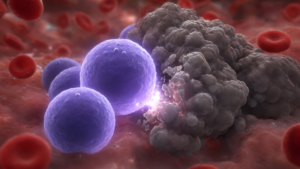
Researchers at the University of Southern California (USC) have discovered a method to produce a potentially renewable source of engineered immune cells to fight cancer. By utilizing granulocyte-monocyte progenitors (GMPs), the team created a system capable of generating large quantities of genetically modified cells that recognize tumors and activate the body’s natural defenses. In mouse models, these engineered cells successfully established themselves in the bone marrow and inhibited the progression of blood cancers and solid tumors.
Technical Details
The platform focuses on GMPs, which are immature immune cells that typically develop into macrophages and other defenders. The researchers developed a specific chemical mixture that allows GMPs to multiply extensively in a laboratory setting without prematurely maturing. This process preserves the cells’ identity and their capacity to generate functional immune cells. These GMPs can be genetically modified to recognize specific cancer markers and strengthen broader immune responses before being administered.
Background & Context
This discovery challenges the traditional understanding of blood system development. Previously, long-term self-renewal was believed to be a property exclusive to hematopoietic stem cells. Progenitor cells, such as GMPs, were thought to have limited self-renewal capacity. The USC study demonstrates that under controlled conditions, GMPs can indeed self-renew, providing a scalable starting point for cellular therapies.
Significance & Outlook
The use of GMPs addresses several limitations associated with mature macrophages, which are difficult to multiply outside the body, hard to modify genetically, and prone to damage during freezing and storage. Furthermore, mature macrophages often accumulate in the lungs and liver rather than spreading throughout the body. Because macrophages can naturally penetrate solid tumors—an area where engineered T-cell therapies have struggled—this scalable GMP platform offers a promising path toward longer-lasting, ready-made immunotherapies for cancer, infectious diseases, and other conditions.
Source: https://www.sciencedaily.com/releases/2026/10/261015003803.htm
Get our weekly technology intelligence — free
Receive an infographic that lets you judge at a glance whether each field’s analysis report is worth reading.
Subscribe Free — Weekly Tech Intelligence
By subscribing, you’ll receive Troy-Technical’s weekly technology intelligence newsletter.
- Your email and selected fields are used only to deliver the newsletter.
- We never share your information with third parties.
- You can unsubscribe anytime via the link in each email.
See our Privacy Policy for details.
Takes about a minute · Unsubscribe anytime