

Key Findings
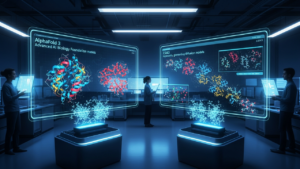
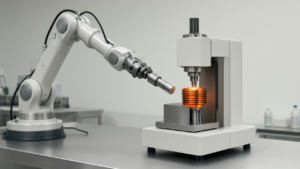
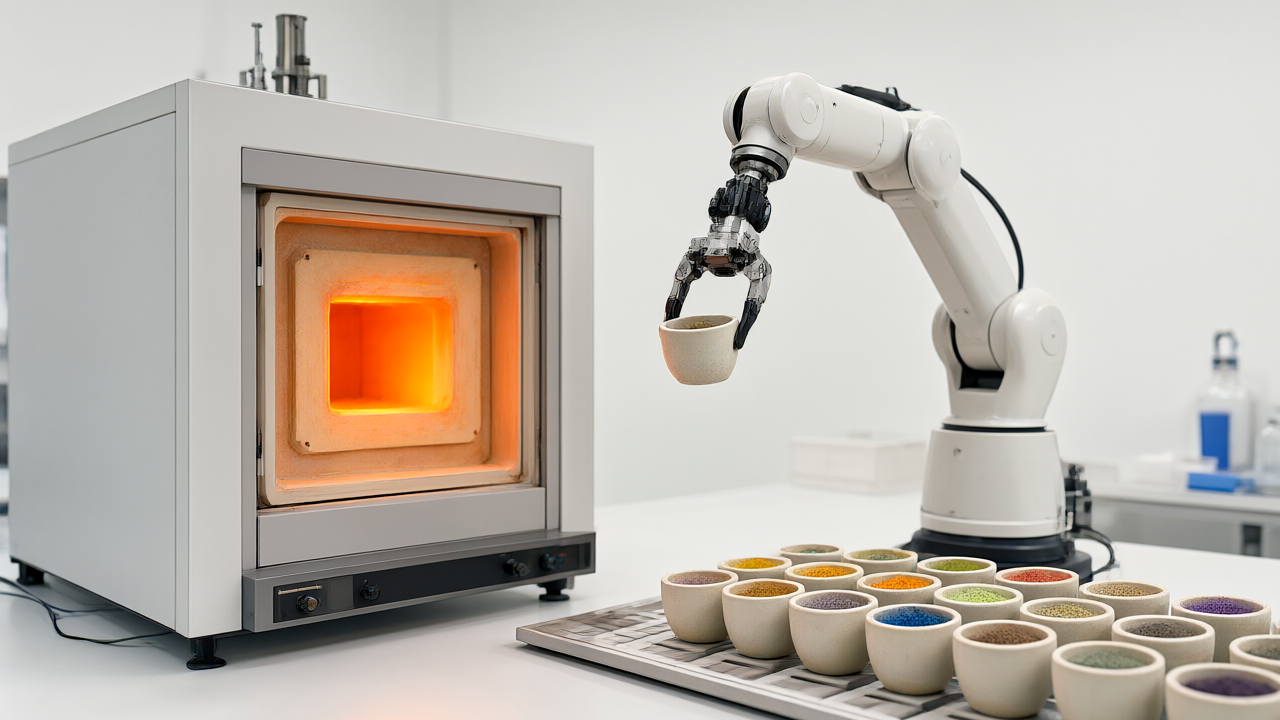
The integration of AI and robotics has expanded the library of known stable inorganic crystal structures nearly ten-fold. GNoME (Graph Networks for Materials Exploration) predicted 2.2 million new crystal structures, including 380,000 novel thermodynamically stable inorganic materials. Complementing this, Berkeley Lab’s A-Lab demonstrated the ability to physically realize these predictions; in a 17-day run, it performed 355 synthesis attempts and successfully synthesized 41 novel predicted inorganic compounds.
Technical Details
Traditional discovery relies on Density Functional Theory (DFT) to solve quantum mechanical equations, a process that can take hours or days per complex crystal. GNoME utilizes Graph Neural Networks, representing atoms as nodes and chemical bonds as edges, to predict structural stability thousands of times faster than DFT. For catalysts, Meta AI FAIR and Carnegie Mellon University’s Open Catalyst Project uses models trained on 1.2 million chemical reaction trajectories to predict atomic binding energies 10,000 times faster than conventional simulations.
Background and Context
Historically, humanity cataloged roughly 280,000 stable inorganic crystal structures through decades of trial-and-error. The transition to AI introduces specific trade-offs: Graph Neural Networks prioritize speed over absolute quantum mechanical precision, which can result in false positives. Additionally, the high upfront energy and capital expenditure required for GPU clusters must be weighed against the ongoing costs of traditional supercomputing workflows.
Significance and Outlook
Closed-loop discovery reshapes the R&D workflow, shifting researchers from manual synthesis to system architects managing automated pipelines. However, commercialization faces economic hurdles, as theoretical stability does not guarantee cheap scalability. Factors such as the need for rare Earth elements, expensive precursors, and the requirement for long-term physical durability and moisture resistance remain critical challenges that computational predictions cannot fully guarantee without real-world endurance testing.
Source: https://trackfuture.ai/article/can-ai-help-discover-new-materials
Get our weekly technology intelligence — free
Receive an infographic that lets you judge at a glance whether each field’s analysis report is worth reading.
Subscribe Free — Weekly Tech Intelligence
By subscribing, you’ll receive Troy-Technical’s weekly technology intelligence newsletter.
- Your email and selected fields are used only to deliver the newsletter.
- We never share your information with third parties.
- You can unsubscribe anytime via the link in each email.
See our Privacy Policy for details.
Takes about a minute · Unsubscribe anytime