

Key Findings
Engineers from the University of California, San Diego, and the Toyota Research Institute of North America have developed a fluorine-free binder that dissolves in water. This new binder maintains stability through thousands of charge cycles and is compatible with various battery types, including silicon and graphite anodes.
Technical Details
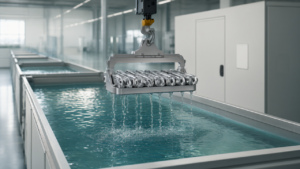
The binder is composed of a mixture of two affordable polymers: polyacrylic acid and carboxymethyl cellulose. To connect these polymers, the researchers utilized citric acid. Unlike conventional binders, this formulation is water-soluble, allowing the binder to dissolve when battery parts are soaked in water. This process enables the electrode material to separate from the metal foil without leaving chemical residues.
Background & Context
Most current lithium-ion battery binders contain fluorine, which necessitates the use of toxic solvents during the manufacturing process. According to Jiao Lin, a postdoctoral researcher in Professor Zheng Chen’s lab, traditional production requires large drying ovens to remove these solvents, which increases energy consumption, costs, and environmental impact. Furthermore, Professor Zheng Chen notes that the stability of conventional fluorine binders makes the resulting batteries significantly harder to recycle, producing hazardous waste.
Significance & Outlook
The new design eliminates the need for energy-intensive drying ovens and toxic solvents, reducing the overall environmental footprint of battery manufacturing. Testing indicates that materials recovered via the water-dissolution method can be used to create new batteries that perform as well as those made with traditional components. The research team, whose findings appear in Nature Communications, now plans to adjust the formula for various industry battery types and scale up production for commercial application.
Get our weekly technology intelligence — free
Receive an infographic that lets you judge at a glance whether each field’s analysis report is worth reading.
Subscribe Free — Weekly Tech Intelligence
By subscribing, you’ll receive Troy-Technical’s weekly technology intelligence newsletter.
- Your email and selected fields are used only to deliver the newsletter.
- We never share your information with third parties.
- You can unsubscribe anytime via the link in each email.
See our Privacy Policy for details.
Takes about a minute · Unsubscribe anytime