

Key Findings
The research indicates that the specific application duty cycle materially influences the efficiency, reliability, and degradation of sodium-ion batteries. After 500 equivalent full cycles, the capacity state of health varied by application: 85.2% for reference cycling, 81.9% for microgrid cycling, and 79.8% for off-grid cycling. Corresponding resistance growth was recorded at 39%, 58%, and 74% for these three categories, respectively.
Technical Details
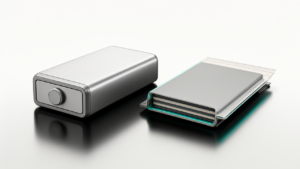
The evaluation utilized 24 5.0-Ah sodium-ion pouch cells. Researchers performed baseline electrochemical characterization and identified a second-order Thevenin electrochemical-thermal model. Discharge behavior was tested across rates of 0.20–2.00 C and temperatures from 10–40 °C, with pulse and impedance measurements covering 10–90% state of charge. Results showed that increasing the discharge rate reduced usable capacity and energy efficiency, though coulombic efficiency remained above approximately 99%.
The calibrated model was applied to two simulated scenarios over 365 days at 15-minute resolution:
- Grid-connected microgrid (504-kWh): Achieved 91.6% round-trip efficiency, 18.7-kW tracking RMSE, and 4.3% renewable curtailment.
- Standalone off-grid system (120.96-kWh): Achieved 89.8% round-trip efficiency, 6.4% curtailment, and a 1.6% annual loss-of-power-supply probability.
Background & Context
Sodium-ion batteries are increasingly considered for stationary energy storage. This study aimed to determine how experimentally measured electrochemical behavior translates to realistic grid-connected and standalone duty cycles. The model used in the study reproduced measured voltage response with millivolt-scale prediction errors and captured resistance trends dependent on temperature and state-of-charge.
Significance & Outlook
The data demonstrates that sodium-ion batteries are viable for stationary storage, but their longevity and performance are highly dependent on the operational environment. The higher degradation and resistance growth observed in off-grid configurations compared to microgrid or reference cycling highlight the need for application-specific management when deploying sodium-ion technology in standalone energy systems.
Source: https://www.frontiersin.org/journals/chemistry/articles/10.3389/fchem.2026.2007977/full
Get our weekly technology intelligence — free
Receive an infographic that lets you judge at a glance whether each field’s analysis report is worth reading.
Subscribe Free — Weekly Tech Intelligence
By subscribing, you’ll receive Troy-Technical’s weekly technology intelligence newsletter.
- Your email and selected fields are used only to deliver the newsletter.
- We never share your information with third parties.
- You can unsubscribe anytime via the link in each email.
See our Privacy Policy for details.
Takes about a minute · Unsubscribe anytime