

Key Findings
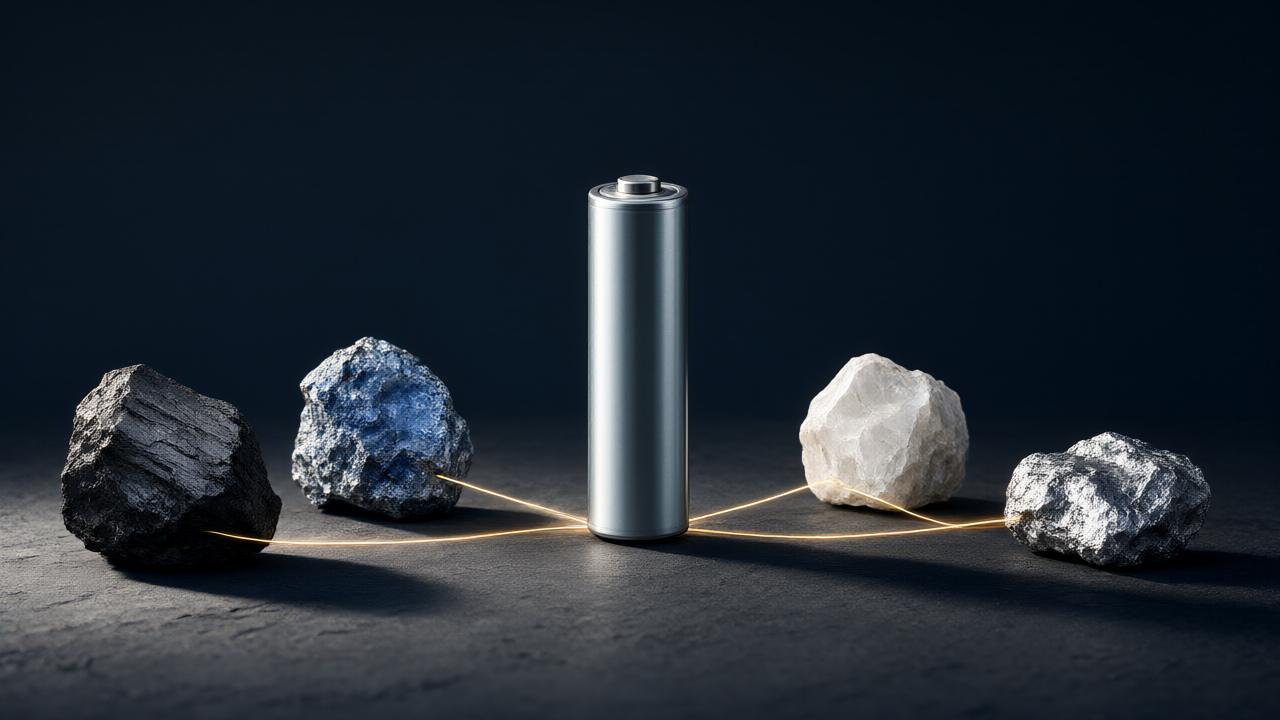
From 18 August 2027, any battery entering the European Union must be backed by verified evidence that its cobalt, lithium, nickel, and natural graphite were sourced responsibly. This requirement, established under Chapter VII (Articles 47–53) of Regulation (EU) 2023/1542, was previously set for August 2025 but was postponed by the “stop-the-clock” Regulation (EU) 2025/1561.
Technical Details
Operators exceeding the turnover threshold must implement a third-party-verified system based on four pillars:
- Management System: A board-approved sourcing policy integrated into company risk management with an accountable senior manager.
- Risk Identification: Mapping the supply chain from mine and refiner to cell maker, utilizing on-the-ground assessments to screen for environmental harm and human rights abuses.
- Risk Management: Documented plans to mitigate risks and a process to suspend or exit non-remediating suppliers.
- Verification: Annual due diligence reports independently audited by a notified body.
Additionally, the digital battery passport is scheduled for implementation on 18 February 2027. Recycling efficiency targets are also tightening: lithium-based batteries must reach 65% efficiency by the end of 2025 (70% by 2030), with lithium recovery rates rising from 50% by the end of 2027 to 80% by 2031.
Background & Context
The regulation directly targets economic operators with a net turnover of at least €40 million. While a proposal under the Omnibus IV review suggests raising this to €150 million, the €40 million limit remains the current planning benchmark. This differs from the Corporate Sustainability Due Diligence Directive (CSDDD), which targets larger groups (roughly 5,000+ employees and €1.5 billion turnover) and is expected around 2028–2029.
Significance & Outlook
Non-compliance after August 2027 will result in market withdrawal and border rejections. This creates an indirect mandate for smaller wholesalers and installers; large brands auditing their chains will de-list any suppliers unable to provide smelter lists, audit certificates, and EPR registration numbers. Furthermore, access to 2026 support schemes, such as Germany’s KfW 270 loans and France’s MaPrimeRénov’ 2026, effectively requires CE conformity and traceable supply chains.
Source: https://www.insumenergy.com/eu-battery-supply-chain-due-diligence-2026-buyers-guide/
Get our weekly technology intelligence — free
Receive an infographic that lets you judge at a glance whether each field’s analysis report is worth reading.
Subscribe Free — Weekly Tech Intelligence
By subscribing, you’ll receive Troy-Technical’s weekly technology intelligence newsletter.
- Your email and selected fields are used only to deliver the newsletter.
- We never share your information with third parties.
- You can unsubscribe anytime via the link in each email.
See our Privacy Policy for details.
Takes about a minute · Unsubscribe anytime