


Key Findings
A new battery chemistry has demonstrated the ability to increase sulfur’s charge-storage capacity by approximately 58% and raise average operating voltage from 2.05 volts to 2.54 volts. In experimental cells, this combination allowed one kilogram of sulfur to store more than 1,700 watt-hours of energy. When accounting for all major battery components, the researchers estimate a stack-level specific energy of 477 watt-hours per kilogram.
Technical Details
The team expanded sulfur’s redox capability by introducing chlorine into the chemistry. While conventional lithium-sulfur batteries allow each sulfur atom to exchange two electrons, this new system enables the exchange of a third electron, which occurs at a higher voltage.
To ensure the reaction remained reversible, the researchers focused on electrolyte design using molecular simulations. The resulting electrolyte prevents the sulfur-chlorine compound from dissolving and traveling to the lithium-metal electrode, keeping the reaction localized within the positive electrode. Spectroscopy confirmed that sulfur repeatedly moved through this new chemical state during charge and discharge cycles.
Background and Context
Lithium-sulfur batteries are considered an experimental alternative to lithium-ion batteries due to the abundance and low cost of sulfur, as well as its high theoretical charge storage by weight. However, practical application has been hindered by durability issues and relatively low operating voltages, as total energy storage depends on both charge capacity and voltage.
Significance and Outlook
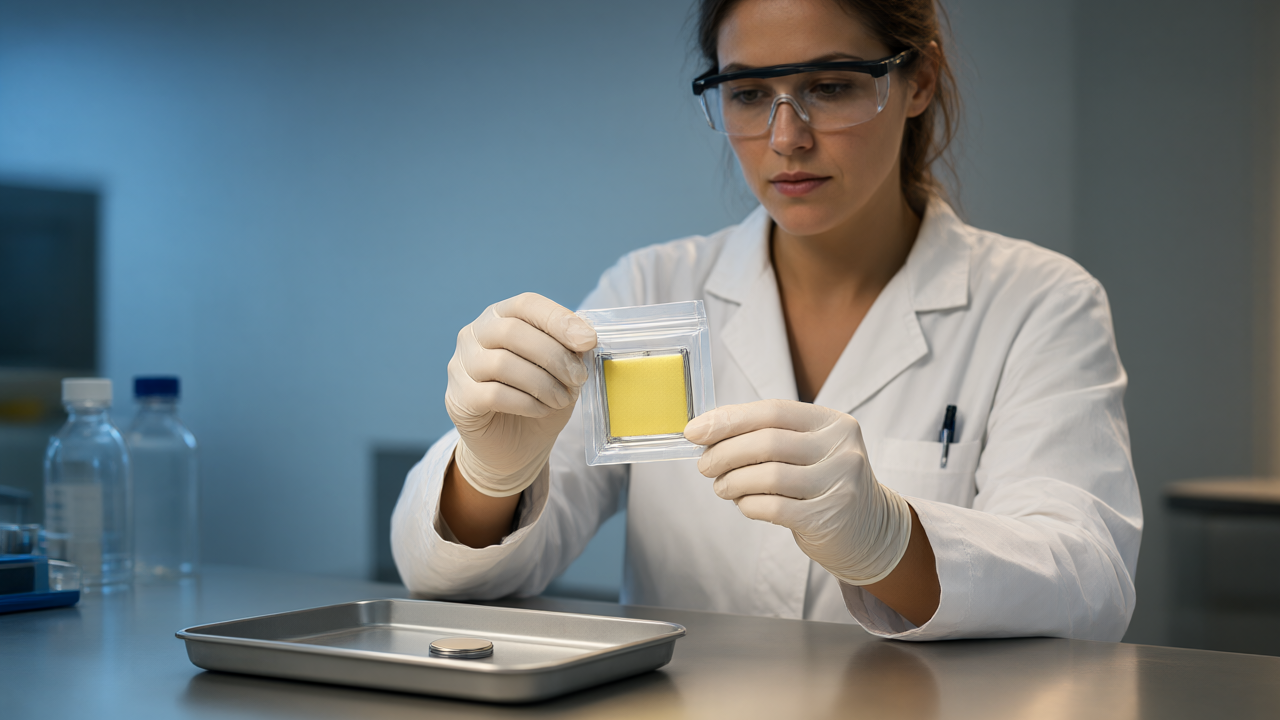
The researchers validated the chemistry in a small, single-layer pouch cell, which retained 78% of its initial capacity after 100 charging cycles. While this proves the chemistry works outside of standard coin cells, the team notes that significant work is required for commercialization. Current prototypes utilize a lithium-metal electrode and levels of sulfur and electrolyte that would be impractical for commercial products. The primary significance of the study is the demonstration that sulfur’s available chemistry can be expanded rather than simply optimizing conventional reactions.
Get our weekly technology intelligence — free
Receive an infographic that lets you judge at a glance whether each field’s analysis report is worth reading.
Subscribe Free — Weekly Tech Intelligence
By subscribing, you’ll receive Troy-Technical’s weekly technology intelligence newsletter.
- Your email and selected fields are used only to deliver the newsletter.
- We never share your information with third parties.
- You can unsubscribe anytime via the link in each email.
See our Privacy Policy for details.
Takes about a minute · Unsubscribe anytime