


Key Findings
HLHS iPSC-CMs demonstrate a failure to adapt to mechanical stress, characterized by blunted calcium transient responses and the activation of inflammatory signaling pathways. While control iPSC-CMs showed quicker rise times in calcium transients following cyclic stretch, this response was observed in only one of four HLHS iPSC-CM lines. Furthermore, transcriptomic analysis revealed that all four HLHS lines failed to upregulate genes associated with sarcomeres and calcium handling in response to stretch, a stark contrast to the adaptive response seen in control cells.
Technical Details
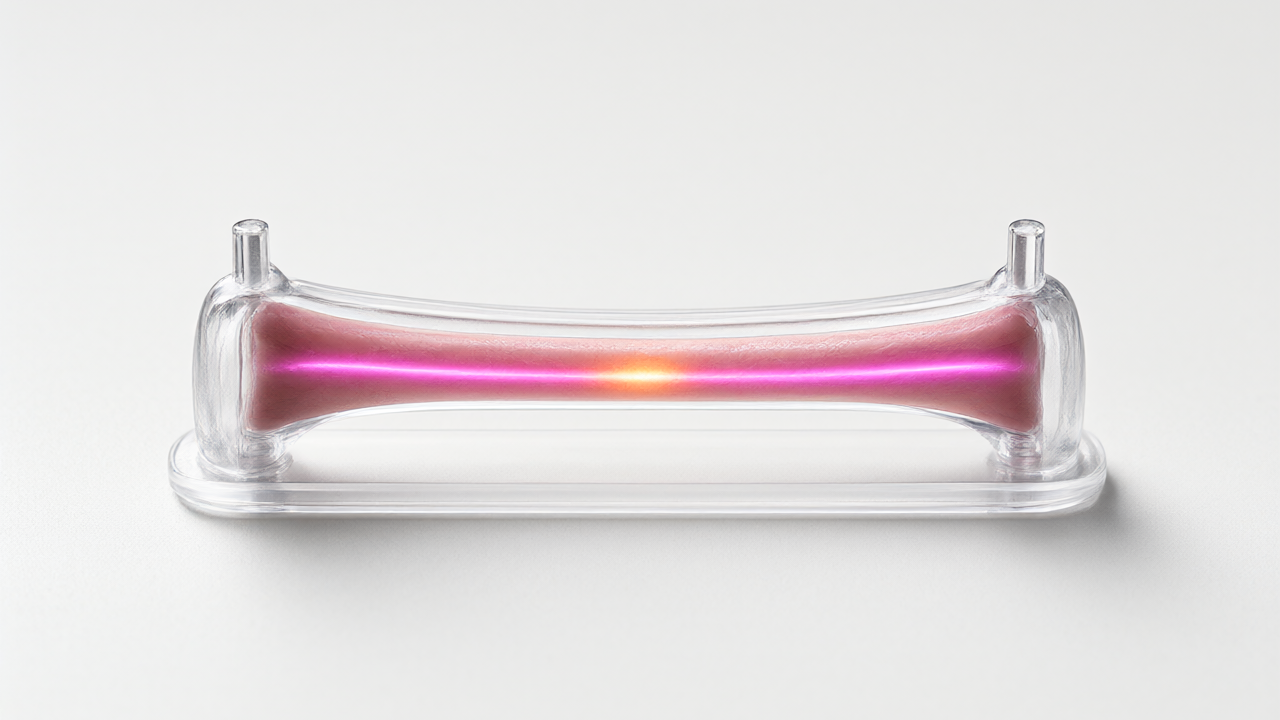
The study utilized iPSCs from two unaffected donors and four HLHS patients, which were differentiated into iPSC-CMs and engineered into aligned tissues. The researchers compared static culture conditions against a dynamic environment where tissues were exposed to cyclic 20% uniaxial stretch at 1 Hz for 48h. Evaluation methods included:
- Sarcomere Organization: Quantified via immunostained α-actinin images in static tissues.
- Calcium Transients: Evaluated using Fluo-4 calcium indicator dye at a 1 Hz pacing frequency.
- Transcriptomics: Bulk RNA sequencing to identify stretch-induced changes in gene expression.
In static culture, HLHS iPSC-CMs exhibited modest defects in calcium transient morphology and sarcomere organization compared to controls.
Background & Context
Hypoplastic Left Heart Syndrome (HLHS) is a severe congenital defect involving the underdevelopment of left-sided cardiac structures. Surgical palliation establishes the right ventricle as the single ventricle for systemic circulation. However, patients remain susceptible to heart failure, potentially due to the increased hemodynamic load on the single ventricle. Because the etiology is poorly understood, this study employed iPSC-CMs to capture patient-specific genetics and the mechanical environment of the ventricle.
Significance & Outlook
These results indicate that defective mechanoadaptation may contribute to the failure of the single ventricle in HLHS patients. The identification of aberrant inflammatory signaling and failed gene upregulation provides potential candidate biomarkers and new opportunities for therapeutic interventions.
Source: https://www.biorxiv.org/content/10.64898/2026.10.11.758388v1
Get our weekly technology intelligence — free
Receive an infographic that lets you judge at a glance whether each field’s analysis report is worth reading.
Subscribe Free — Weekly Tech Intelligence
By subscribing, you’ll receive Troy-Technical’s weekly technology intelligence newsletter.
- Your email and selected fields are used only to deliver the newsletter.
- We never share your information with third parties.
- You can unsubscribe anytime via the link in each email.
See our Privacy Policy for details.
Takes about a minute · Unsubscribe anytime