


Key Findings
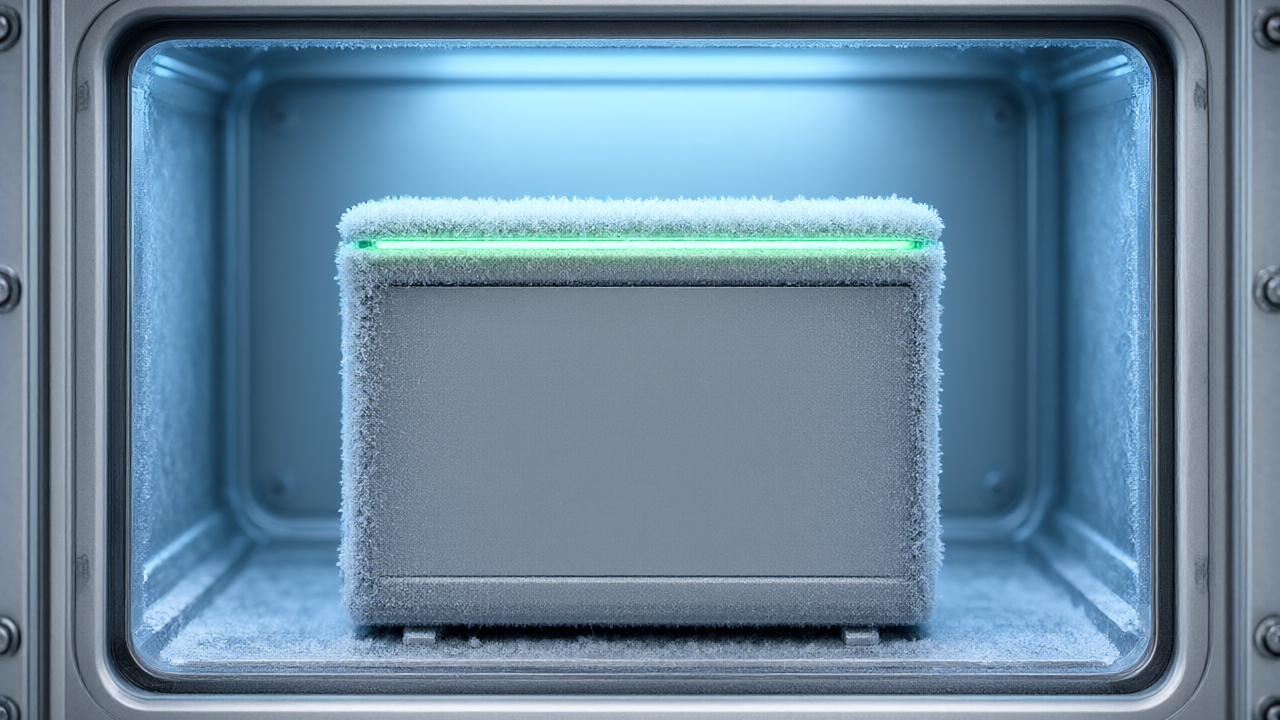
In tests conducted by VTT, a battery module from Donut Lab retained approximately 93% of its energy at -30°C (-22°F). The module delivered 1,254 watt-hours at this temperature, compared to 1,354 watt-hours at 25°C (77°F). Additionally, the module retained about 97% of its ampere-hour capacity, indicating limited capacity loss under these conditions.
Technical Details
The test utilized a complete module consisting of 14 first-generation Donut Battery cells with a nominal voltage of 48 volts and a small battery management system. To isolate the battery’s inherent performance, the setup excluded all thermal management systems, including heating elements, insulation, and cooling equipment.
- Baseline Test (25°C): Discharged at a 1C rate, delivering 27.77 ampere-hours and 1,354 watt-hours.
- Cold Test (-30°C): After five hours of exposure to the target temperature, the module was discharged at a 1C rate, delivering 26.8 ampere-hours and 1,254 watt-hours.
The discrepancy between charge capacity (97% retention) and energy retention (93% retention) is attributed to a further drop in voltage during cold-weather discharge.
Background & Context
Low temperatures typically slow chemical reactions in batteries, reducing the usable energy available for electric vehicles. While Donut Lab previously claimed 99% capacity retention at -30°C, these VTT results provide a measured figure from a complete module rather than a single cell. Ville Piippo, Donut Lab’s CTO, noted that the company intentionally eliminated all potential advantages, such as insulation, to test the cells’ raw performance.
Significance & Outlook
Donut Lab reported that the module continued to charge and discharge normally following the tests, with no adverse effects observed. However, as these were controlled laboratory tests on a single module, the results do not yet establish the actual driving range of a complete electric vehicle. Donut Lab is now focusing on next-generation battery technologies and further system-level demonstrations.
Source: https://interestingengineering.com/energy/donut-battery-cold-weather-test
Get our weekly technology intelligence — free
Receive an infographic that lets you judge at a glance whether each field’s analysis report is worth reading.
Subscribe Free — Weekly Tech Intelligence
By subscribing, you’ll receive Troy-Technical’s weekly technology intelligence newsletter.
- Your email and selected fields are used only to deliver the newsletter.
- We never share your information with third parties.
- You can unsubscribe anytime via the link in each email.
See our Privacy Policy for details.
Takes about a minute · Unsubscribe anytime