


Key Findings
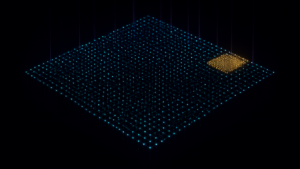
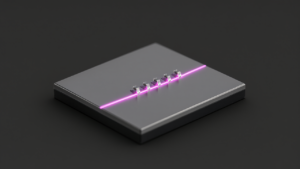
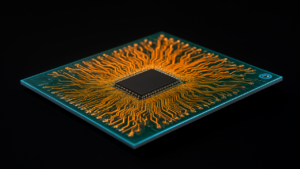
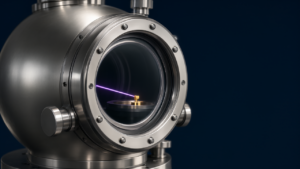
NVIDIA has completed a record-breaking simulation of a 104-qubit fault-tolerant quantum processor using the JUPITER supercomputer at the Jülich Supercomputing Centre. The primary achievement is the validation of a magic-state cultivation approach that requires 90% fewer qubits than previous methods to produce the magic states necessary for fault-tolerant computation.
Technical Details
The simulation was executed on a system of NVIDIA GH200 superchips, utilizing a total of 8,192 GPUs. To achieve optimized performance and scale, the team employed NVIDIA cuQuantum software and the NVIDIA CUDA-Q platform’s fault-tolerant logical layer to express the magic-state circuit. Unlike previous research from Jülich that simulated 50 qubits under ideal, noiseless conditions, this project modeled the process under realistic hardware noise to assess the impact of errors.
The development workflow involved a tiered approach to scaling:
- Initial development and testing were conducted at the NVIDIA Accelerated Quantum Research Center (NVAQC) using an NVIDIA GB200 NVL72 system.
- Tests were scaled from four GPUs to hundreds of GPUs at NVAQC before moving to the full 8,192 GPU deployment on JUPITER.
- This pipeline reduced simulation timelines from weeks to days.
Background & Context
Fault-tolerant quantum computing is required because qubit interactions introduce unavoidable, error-inducing noise. This process relies on “magic states”—specific qubit arrangements consumed during computation. Because the memory required for these simulations grows exponentially with the number of qubits, large-scale validation typically exceeds the capacity of conventional computing systems.
Significance & Outlook
By providing high-fidelity data on how fault-tolerant systems behave at scale, this simulation reduces the reliance on hardware trial and error. This capability allows researchers to predict the performance of future processor designs before they are physically built, accelerating the path toward practical applications in financial modeling, materials science, and drug discovery.
Get our weekly technology intelligence — free
Receive an infographic that lets you judge at a glance whether each field’s analysis report is worth reading.
Subscribe Free — Weekly Tech Intelligence
By subscribing, you’ll receive Troy-Technical’s weekly technology intelligence newsletter.
- Your email and selected fields are used only to deliver the newsletter.
- We never share your information with third parties.
- You can unsubscribe anytime via the link in each email.
See our Privacy Policy for details.
Takes about a minute · Unsubscribe anytime