


Key Findings
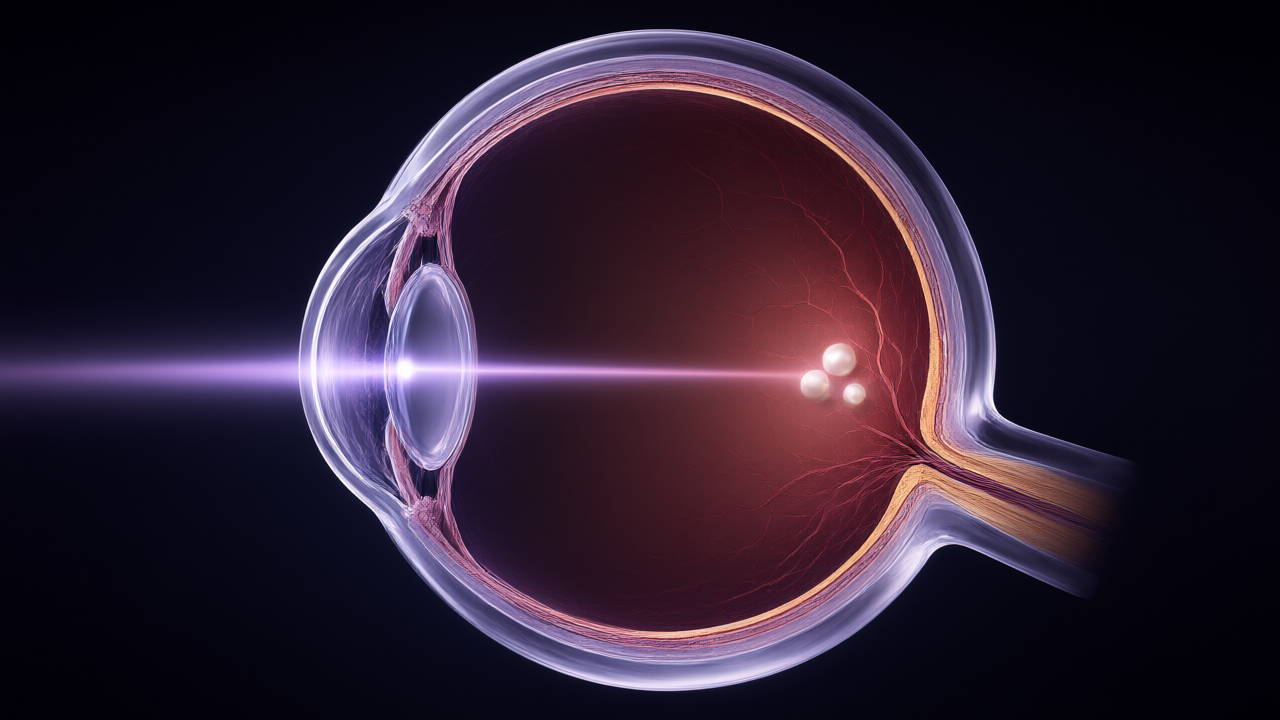
The study demonstrates that light-responsive lipid nanoparticles can deliver Cas9/sgRNA ribonucleoprotein (RNP) complexes to enable controlled genome editing of VEGFA. In human retinal pigment epithelial cells, light exposure increased the extent of VEGFA disruption compared to non-illuminated conditions, resulting in a corresponding decrease in VEGFA mRNA and protein expression. In a laser-induced rat CNV model, the combination of a single intravitreal injection and light illumination significantly reduced CNV-associated structural abnormalities and vascular leakage compared to vehicle and non-illuminated controls.
Technical Details
The developed LNP platform exhibits the following specifications:
- Mean hydrodynamic diameter: approximately 130 nm.
- Polydispersity: 0.296.
- sgRNA encapsulation efficiency: 90.33%.
The platform utilizes light illumination as the trigger for the release of the Cas9 RNP complexes. Targeted next-generation sequencing was used to confirm the extent of VEGFA disruption in human cells. Ocular safety assessments indicated no apparent nanoparticle-related structural abnormalities in the retina.
Background and Context
Choroidal neovascularisation (CNV) is a primary cause of irreversible vision loss. Current anti-VEGF therapies typically require repeated intravitreal injections, which increase the cumulative risk and treatment burden for patients. While genome editing offers a potential one-time durable suppression of VEGFA, unrestricted loss of the protein can lead to choriocapillaris atrophy and compromised retinal function, creating a significant safety barrier for clinical translation.
Significance and Outlook
By introducing light-controlled release, this platform allows for spatially controlled genome editing, mitigating the risks of total VEGFA depletion. This research provides a foundation for treating VEGFA-driven macular neovascular disease through a method that balances long-term efficacy with precise safety controls.
Source: https://www.biorxiv.org/content/10.64898/2026.10.24.761602v1
Get our weekly technology intelligence — free
Receive an infographic that lets you judge at a glance whether each field’s analysis report is worth reading.
Subscribe Free — Weekly Tech Intelligence
By subscribing, you’ll receive Troy-Technical’s weekly technology intelligence newsletter.
- Your email and selected fields are used only to deliver the newsletter.
- We never share your information with third parties.
- You can unsubscribe anytime via the link in each email.
See our Privacy Policy for details.
Takes about a minute · Unsubscribe anytime