
Key Findings
The complete formulation (Group 4), incorporating surface-flame-retardant-treated cotton fiber powder, achieved an average tensile strength of 37 kgf per square centimeter (3.63 megapascals), a 23.3% improvement over the control group’s 30 kgf per square centimeter (2.94 megapascals). Regarding adhesion, Group 2 (using an amino-silane coupling agent) showed the highest average strength at 31 kgf per square centimeter (3.04 megapascals), a 24.0% increase over the control. Group 4 also showed a 20.87% improvement in adhesion strength, reaching 30 kgf per square centimeter.
Technical Details
Researchers tested five groups based on 100 parts by weight of base polysulfide polymer with a 10:1 matrix-to-curing agent ratio. The experimental groups added components in stages:
- Group 1: Magnesium hydroxide, aluminum hydroxide, and expanded graphite.
- Group 2: Added an amino-silane-based adhesion promoter.
- Group 3: Added zinc stannate with inorganic nanofibers.
- Group 4: Added high aspect ratio surface-flame-retardant-treated cotton fiber powder.
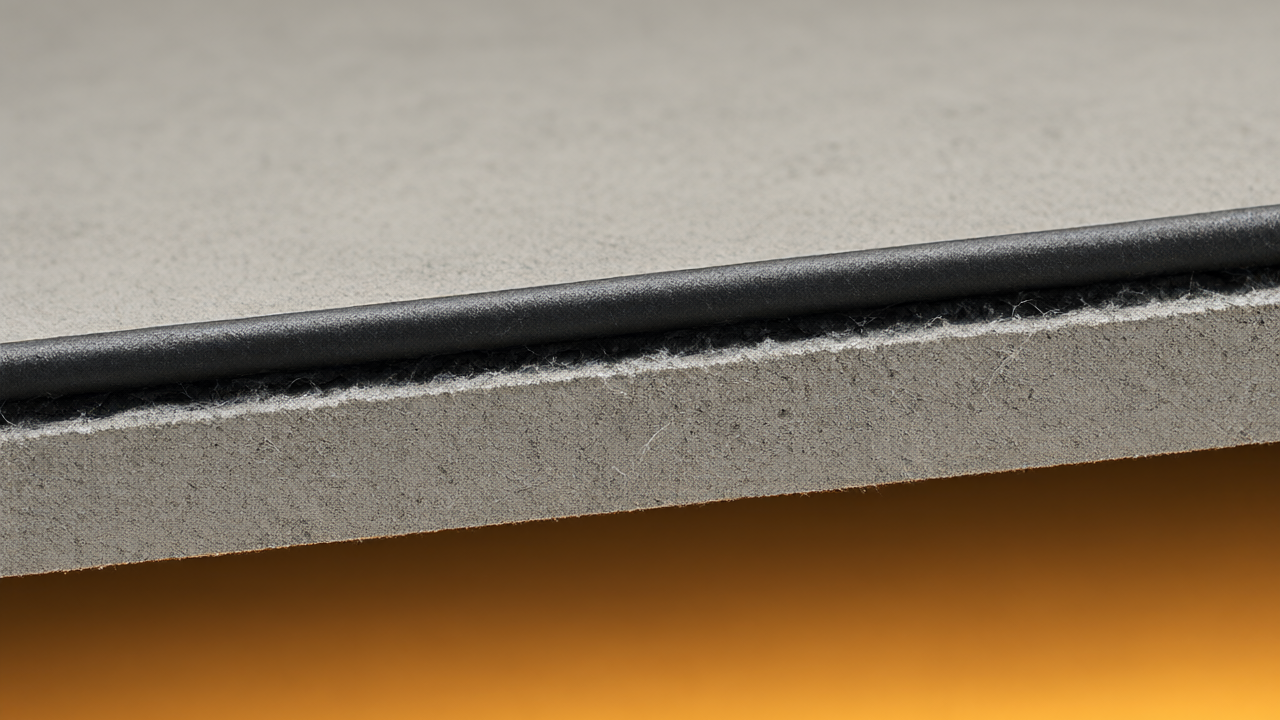
Fire performance was validated via KS F 2845:2013 vertical furnace tests using triple-pane tempered glass assemblies with a 7-millimeter sealant layer. While the control group failed quickly due to decomposition and detachment, Groups 1 through 4 all passed the 60-minute requirement without flame penetration or structural collapse.
Background & Context
Traditional fire-resistant sealants use high loads of inorganic flame retardants, which typically disrupt the polymer matrix’s cross-linking network and weaken tensile strength and glass adhesion. This study addresses this by using a layered defense: magnesium and aluminum hydroxides provide endothermic cooling, expanded graphite forms a porous char barrier, and zinc stannate stabilizes this char to resist convective airflow.
Significance & Outlook
The integration of cotton fibers with an aspect ratio exceeding 50 creates three-dimensional stress transfer pathways that bridge disconnected polymer segments. This physical reinforcement, combined with chemical siloxane cross-links, allows the sealant to carry structural loads at room temperature while maintaining the integrity of fire compartments during high-temperature exposure.
Get our weekly technology intelligence — free
Receive an infographic that lets you judge at a glance whether each field’s analysis report is worth reading.
Subscribe Free — Weekly Tech Intelligence
By subscribing, you’ll receive Troy-Technical’s weekly technology intelligence newsletter.
- Your email and selected fields are used only to deliver the newsletter.
- We never share your information with third parties.
- You can unsubscribe anytime via the link in each email.
See our Privacy Policy for details.
Takes about a minute · Unsubscribe anytime